Politics & Government
Millburn Voters Approved This New Commission: Here's What They've Been Working On So Far
What do Millburn's township employees think about their local government? Here's what the town's new Charter Study Commission found.


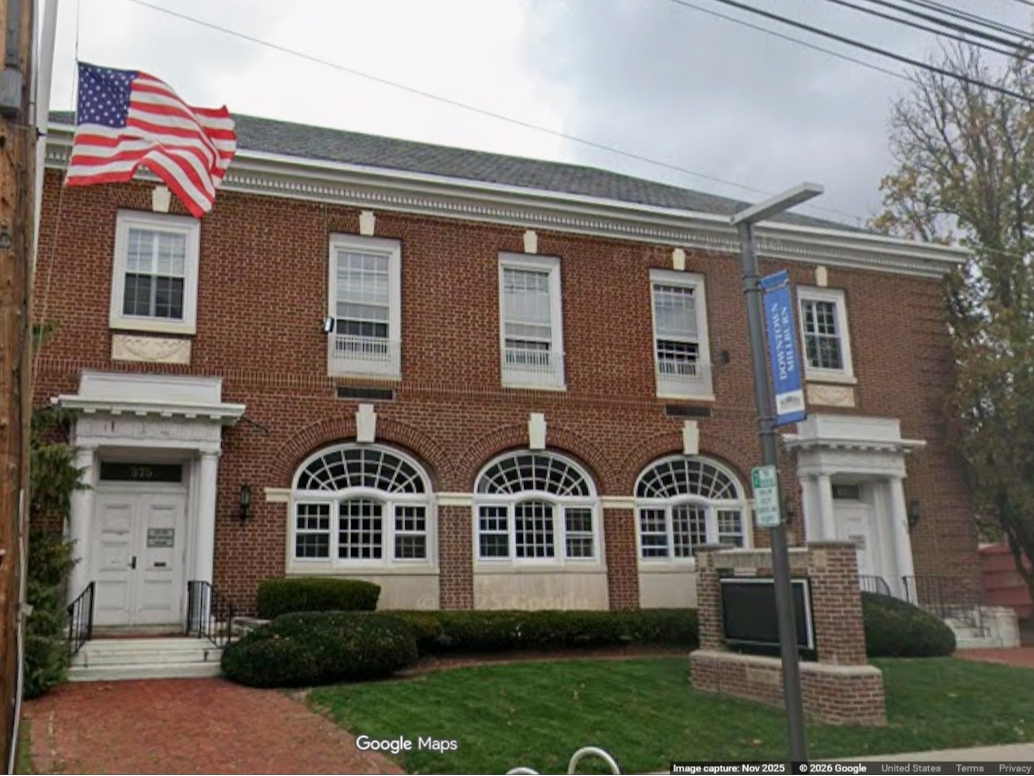
MILLBURN, NJ — What do Millburn’s township employees think about their local government? That’s one of the questions the Millburn Charter Study Commission is trying to answer as it begins digging into the way things are run on the municipal level – and coming up with some potential changes.
Last November, Millburn voters were asked to cast a "yes" or "no" vote on whether to elect a commission to study the town charter and potentially recommend changes to the town's form of government. After the work of the commission is complete and a recommendation is made, voters will have an opportunity to decide whether to enact the commission’s suggestion in a future election.
The measure passed by margin of more than 30 percent. Learn more about the commission and see its meeting schedule here.
Find out what's happening in Millburn-Short Hillsfor free with the latest updates from Patch.
>> READ MORE: Millburn 2025 Election Results Certified, See Winners
Since the election, the Millburn Charter Study Commission has been reaching out to department heads and staff across several township departments, including the business administrator, municipal clerk, police, fire, public works and recreation.
Find out what's happening in Millburn-Short Hillsfor free with the latest updates from Patch.
The commission presented preliminary findings from its municipal employee interviews at their Jan. 22 meeting. Watch video footage here, or view it below.
According to the commission, here are some things to know about their recent findings:
STRONG BUSINESS ADMINISTRATOR SYSTEM
The interviews confirmed the critical importance of Millburn’s strong Business Administrator (“BA”) structure – meaning a professional administrator with broad supervisory authority over departments and day-to-day operations – which was implemented in the early 1980s. As Commissioner Jerry Kung explained, Millburn’s 1972 Charter Study Commission had identified the lack of a professional administrator with full supervisory powers as a “major deficiency.”
Since centralizing administrative authority under a professional BA in the early 1980s, Millburn has had remarkable stability with only two Business Administrators in approximately 40 years: Tim Gordon (1985-2016) and Alex McDonald (2016-present).
Municipal employees told the commission that “as long as the BA is in charge in the form of government, then all will be good,” with one adding that without a strong BA “it would be the wild west.”
STRUCTURE DEPENDS ON PERSONALITIES
However, interviews revealed a concerning pattern: while the current Township Committee (“TC”) was described positively, multiple respondents emphasized that, generally, TC effectiveness “depends on who’s on the TC” and “has not always been true during recent memory.”
“The consistent theme across interviews was that Millburn's current form of government works well when it works – but its effectiveness depends heavily on the particular individuals serving on the Township Committee at any given time,” Commissioner Joanna Parker-Lentz reported. “Multiple respondents questioned whether a governmental structure should rely so heavily on the personalities in office rather than providing more built-in stability and continuity.”
ELECTION FREQUENCY
When asked what single change could improve the township’s governmental structure, municipal employees overwhelmingly pointed to election frequency.
Annual elections were described as causing “quite a bit of overhead” with constant TC turnover requiring ongoing onboarding assistance. Respondents noted that in the last 10 years, only two TC members have served more than one term, with a third recently re-elected.
Multiple respondents described it feeling like “it’s always election season, with either a general or primary election occurring every 6 months,” and noted that “having elections every year causes reluctance to make big changes.”
Several supported longer terms and more time between elections.
STEEP LEARNING CURVE FOR TOWN COUNCIL MEMBERS
Strong consensus emerged that TC members face a significant learning curve, with municipal employees reporting it “takes about 3 years for TC members to completely understand how the job works.” One noted “there is no training; they have no idea” when they start.
The 3-year term was characterized as “too short” because “the 1st year they are learning, 2nd year they start to understand, and 3rd year they are either running for re-election or a lame duck.”
When multiple TC seats are in flux – potentially four of the five seats over the course of two years – “there isn’t carry over and projects aren’t seen through to completion.”
PARTISANSHIP AFFECTS GOVERNANCE, BUT NOT OPERATIONS
While department heads universally stated that partisanship does not affect day-to-day operations – “there isn’t really a partisan element to filling potholes or garbage collection” – partisan considerations were identified as significantly affecting governance.
“Items get delayed around election time,” employees reported, and partisan considerations “cause unnecessary divisions: instead of having a united front on the TC, the meetings get used to score political points rather than focus on what’s best for the community.”
Multiple respondents felt party labels “shift the focus away from local issues” and noted that “since most township matters are non-partisan in nature, it’s not clear that having a partisan election with party labels is helpful.”
CHALLENGES WITH LONG-TERM PLANNING
Municipal employees noted significant challenges with continuity during transition periods. A specific structural problem was identified: “This time of year – December through January – it slows down and it becomes tough to get things on the TC agenda. From election time in November until the end of January when new people are sworn in and a mayor is chosen, we can’t do much.”
One respondent cited the Town Hall renovation that “had been under discussion 25+ years ago” but repeatedly stalled because “elections happen so frequently, no one wants to take risks and often projects can get stopped due to political expediency.”
MAYOR SELECTION PROCESS
The mayoral selection process, where TC members themselves annually select the mayor rather than voters periodically directly electing one, has recently become contentious. Employees noted the process “creates adversaries where there is no need for it” with “hurt feelings, lost trust” that is “not a great way to start off each year.”
Staff emphasized that having mayors serve longer terms – rather than one-year terms – would provide more continuity and stability for the public.
DEDICATED WORKFORCE
Before presenting findings, Commission Chair Christopher Drucker emphasized that “Millburn Township benefits from an exceptionally dedicated and professional municipal workforce” with a “strong reputation statewide for operational excellence.”
“The structural questions examined by the Commission focus on whether the governmental framework maximally supports these talented professionals,” Drucker said. “Any observations are offered not as criticism of current performance, but as considerations for how the township’s form of government can best position dedicated employees to continue their exemplary service to residents.”
PUBLIC INPUT
The Commission continues to conduct interviews with former Township Committee members and mayors dating back to 1991.
The Charter Study Commission meets regularly at the Bauer Center. Meetings are open to the public with time for public comment. More information, including meeting schedules, frequently asked questions, and research documents, is available on the commission’s webpage on the Township website.
Send local news tips and correction requests to eric.kiefer@patch.com. Learn more about advertising on Patch here. Find out how to post announcements or events to your local Patch site.