Health & Fitness
Vineland
Concord grapes, the taste of childhood, can taste surprisingly grown up in the classic Italian grape focaccia.
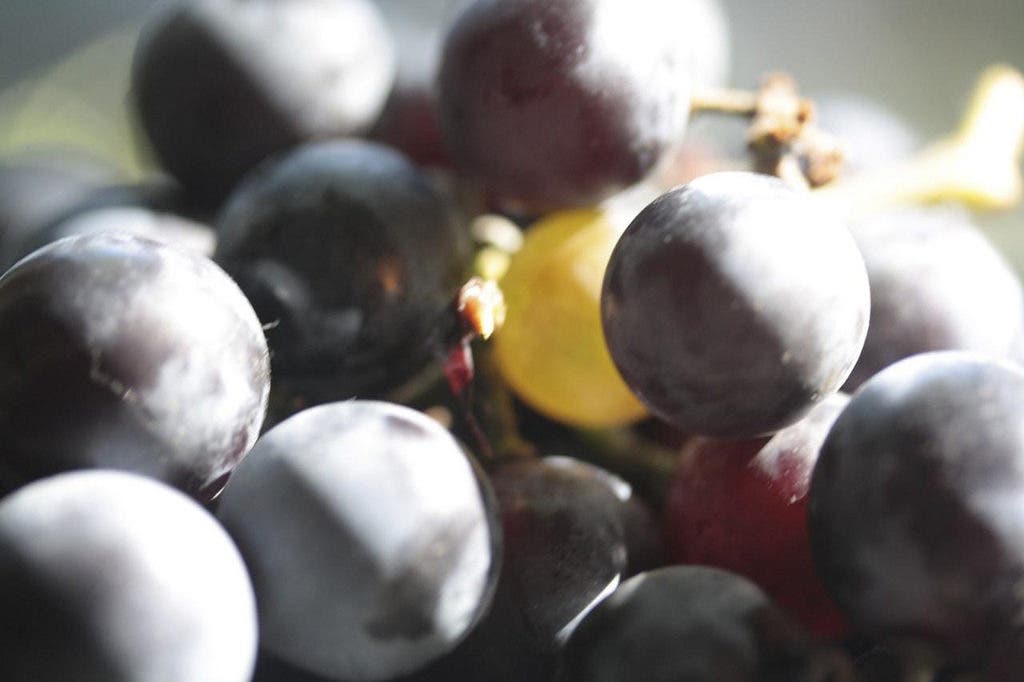


It’s such a treat to find fruit growing in the wild. Blueberries on the banks of a pond in the Berkshires. Raspberries and blackberries, glowing like jewels in the bramble. And grapes, especially grapes, with their dangling clusters of purple and green-gold fruit. It’s a primal pleasure, the fruit so colorful, the urge to pick and eat it older than our oldest ancestor.
When the Vikings sailed across the north Atlantic a thousand years ago they named the land they discovered Vineland, after the profusion of wild grapes growing there. Those vines belonged to our native species, Vitus lambrusca. You can still find them, fox grapes, entangled with other trees and plants or half-fallen fences, growing at the edge between woods and fields. We had the experience a few years ago of apple-picking in the Catskills, weaving our way through the orchard rows that laddered up the side of a mountain, dutifully filling our wagon but most excited about the hot cider donuts waiting at the check out, when I discovered a cache of ripe wild grapes on the other side of a stone wall. Such a clear memory: their mouth-puckering sweet-sour taste, the sticky juice, chewy skin and intensely tannic seeds; and the yellow jackets gorging drunkenly on rotting berries that had dropped to the ground.
The most famous cultivar is the Concord, developed in the mid-1800s by a New Englander who named it after the town in Massachusetts where he had his farm. It’s the grape whose candy-like flavor is etched into the sense memories of generations of American kids. It’s the taste of grape juice and grape jelly, grape candy and grape bubblegum. And for some, the first taste of communion, thanks to a Dr. Thomas Welch (yes, that Welch) who figured out that pasteurizing Concord grape juice would prevent it from fermenting, making it an acceptable non-alcoholic choice for his church’s sacrament.
Find out what's happening in Montclairfor free with the latest updates from Patch.
Concord grapes are grown by the ton to fill PB&Js and juice boxes, but are rarely served as table grapes. The slipskin is nice; the pulpy fruit just pops out. But those damned seeds. Still, it's worth trying them while they're still in local markets. Not unlike a pomegranate, Concord grapes take a little work but are fun to eat. And if you also happen to be in the mood for a rewarding cooking project, bake this classic Italian harvest focaccia. Made with our native grapes, it's full of intriguing spicy-sweetness.
Schiacciata con L'uva
This is a recipe adapted from David Tanis. The dough is almost no-knead, relying on an overnight rise for its deep flavor and chew. Pour 1/2 cup warm water in a mixing bowl and add a TB of active dry yeast and 3 TB flour. Stir and allow to come to a bubble, about five minutes. Next add another cup of water, 3 cups of all-purpose flour minus the 3 TB already used, 2 tsp fine sea salt, and a 1/2 cup olive oil. Stir until the mixture comes together in a rough, sticky mass, knead in the bowl for a minute or two, then turn out onto a table of work surface and knead for another minute. Oil a bowl and turn the dough into it, cover the bowl and put in the refrigerator overnight. The next day, pat the dough onto a well-oiled 10 x 15 inch baking sheet, and allow to rise again in a warm place for about an hour, covered with plastic wrap. Pre-heat oven to 400. Then prepare the topping, which basically consists of seeding a few cups of Concord grapes—there's no easy way to do this, though I found slitting the grape with a paring knife helps get things started more quickly. An essential addition is a tablespoon or two of fresh rosemary leaves, and pine nuts and/or caramelized red onions are also delicious. Just before the focaccia is ready to bake, poke the grapes into the dough, evenly cover with the rosemary and pine nuts or onions, if using, and sprinkle with a little coarse sea salt. Bake for 25 to 30 minutes, until the focaccia is brown on top and the scents of warm grape and rosemary waft through the kitchen.
Find out what's happening in Montclairfor free with the latest updates from Patch.
Serve this anytime, warm or at room temperature, with coffee in the morning, or as a snack, or, best, with a glass of real grape juice—i.e., wine—before dinner.