Arts & Entertainment
Brian Lehrer Broadcasts Live from MSU
The WNYC host kicks off 9/11 anniversary coverage from campus.
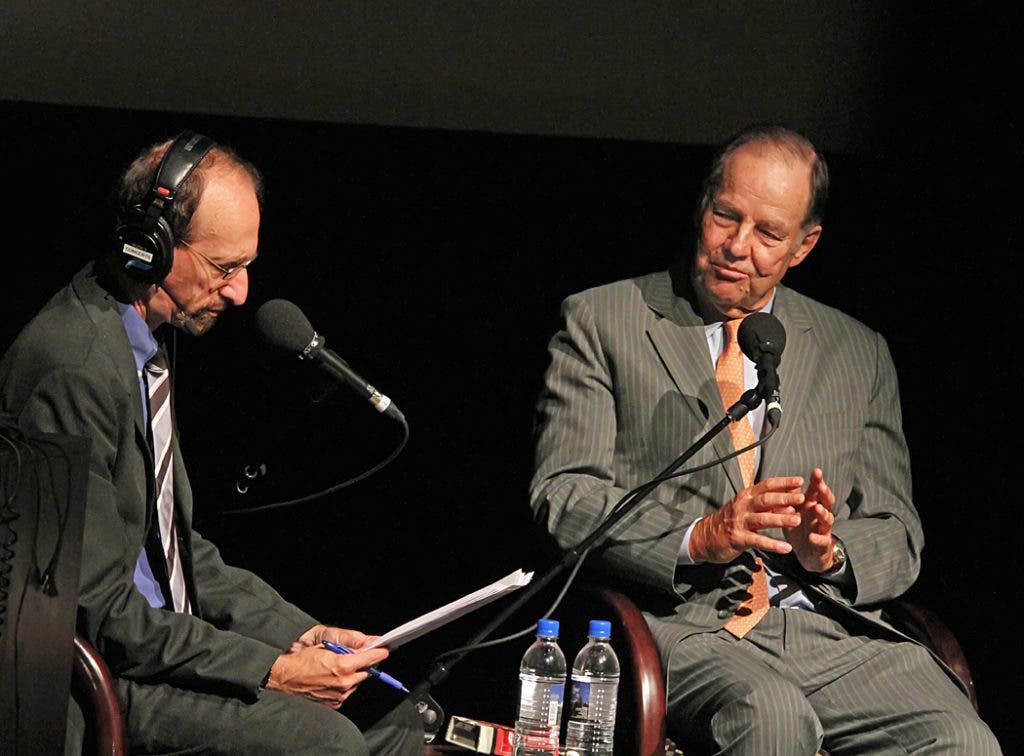

Montclair State University served as WNYC’s studios today as Brian Lehrer launched the station’s coverage of the 9/11 anniversary as part of his show’s series, 10 Conversations About the 10th Anniversary. The show broadcast live from a packed Kasser Theater with guests such as Tom Kean, former Governor and head of the 9/11 Commission and MaryEllen Salamone, co-founder of Families of September 11, there to discuss the event’s impact ten years later on the residents of New Jersey.
Kean started the morning off adamant the country is safer now than before the attack, saying, “No question we’re safer.”
But he then posed the question, “Are we as safe as we should be?” The answer was no.
Find out what's happening in Montclairfor free with the latest updates from Patch.
While improvements have been made in the country’s intelligence gathering operations, Kean noted it is difficult to affect a complete overhaul even over ten years’ time. This is what the FBI was expected to do in the wake of the 9/11 attacks, and while the Bureau has made progress, Kean said, “it’s not fixed yet.” Kean pointed to the difficulty in changing a “whole culture” as a reason for the lengthy transition.
Kean identified other challenges the country has had to face in combating terrorism in the decade following 9/11. Most notably, he pointed to the disbursement of the Al Qaeda network from one centralized location to many areas around the globe, a shift in terrorist tactics from planning one huge attack to numerous smaller ones, and a recruitment policy that has become focused on American citizens.
Find out what's happening in Montclairfor free with the latest updates from Patch.
“Those are the three big changes, and we have to get ahead of those changes,” Kean said.
The other problem Kean said was congress. “Congressional oversight is dysfunctional,” he stated, noting the Department of Homeland Security must report to 100 different congressional committees and subcommittees. The enormous amount of time spent doing so takes away from time spent protecting our country.
Kean ended the discussion by dismissing any notions that the government was involved in orchestrating events on 9/11. Instead, he focused on the quality of people charged with investigating the events and the families who lost loved ones in the attacks.
“The families of 9/11 are the most extraordinary people I’ve ever worked with. These people have taken the worst experience, and they are trying to help other people with it.”
With that, Salamone and Donna Gaffney, co-founder of 4 Action Initiative, took the stage. Salamone, who lost her husband, John, on 9/11, was on her way to drop one of her three children off at preschool when she first heard news of the attacks. From that time on she set about educating her children as well as those in positions of educating children about 9/11 and terrorism itself. She partnered with Gaffney in an effort to develop a curriculum for K-12 students dealing with this difficult subject.
“MaryEllen was the inspiration behind the project,” Gaffney said, explaining the curriculum is not “a lesson plan on 9/11,” but rather a way to discuss and teach students about terrorism.
“Fighting fear is the motivation” behind the development of the course, said Salamone who has concerns about kids who are ill-informed and feel unsafe and insecure as a result. “Fear of the unknown is more powerful than fear of the known.” She added, “Kids make up details for the information you don’t give them.”
Gaffney was intent on assuaging the fears and insecurities of kids, as well, which is why she started the 4 Action Initiative. “One way kids feel less vulnerable is to take action,” she explained.
Salamone and Gaffney are doing their part in educating the public because, as Salamone said, the biggest concern about what might get lost in the teaching of 9/11 is “the facts.”
A panel of residents from around the state then joined Lehrer on stage to discuss changes in their communities over the ten years since 9/11. Many like Chris Thorn, a Maplewood resident and budding film maker, agreed the attacks made their communities closer.
“The community has bonded from that experience,” Thorn said.
Melissa Walker, Director of Jazz House Kids in Montclair, concurred, saying the events fostered a sense of “togetherness and unity as a people.”
Bill Howard, Pastor of Bethany Baptist Church, found a different sentiment among his community members in Newark. He said, as a black preacher, he, personally, as well as many in his congregation have “never felt completely free of terrorism.” He explained he knows many who have a “sense of being exposed,” an “anxiety about their status in society,” an isolation due to intolerance and feeling of abandonment by their country after Hurricane Katrina. He also expressed a perception among his neighbors that the lengthy wars in response to 9/11 were draining resources away from vulnerable communities in this country. Howard also feared the country may have squandered the good will 9/11 evoked and with it the opportunity to have open transracial and transcultural discussions as well as the chance to create integrated communities.
Hoboken City Councilman Ravinder Bhalla, has felt a sense of “otherness” as well and has seen a backlash of hate crimes and racial profiling, but he also observed an overwhelming unity among people in his community. He said the attitude was, “We are one country.”
Mohamed El Filali, Director of the Islamic Center of Passaic County, shared that sentiment, stressing the importance of looking beyond what can divide a community or country. Filali stated, “What can bring us together is great, but what divides is very small.”