Politics & Government
It’s Time To Squash These ‘Threats To Democracy,’ NJ Advocates Say
While there are plenty of horror stories, there are also reasons to be hopeful, activists said at a "pro-democracy" summit in Essex County.


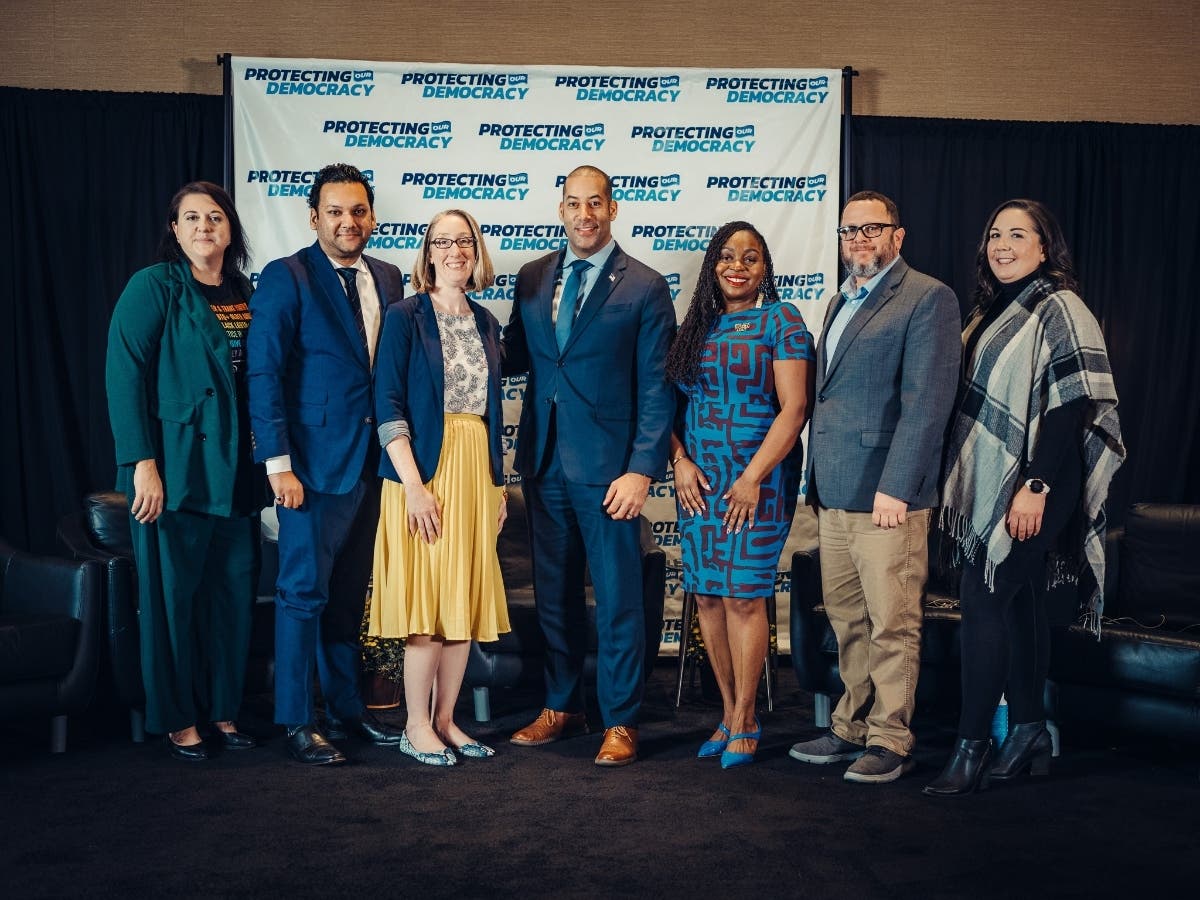
ESSEX COUNTY, NJ — It’s time to stop elevating “hate” and look towards a “better future,” advocates say.
Public education. Voting by mail. Economic Mobility. Reproductive rights. Hate speech. Book bans. These were some of the urgent issues discussed at a recent public forum at the South Orange Performing Arts Center.
The event – moderated by Montclair Mayor Sean Spiller – was spearheaded by Protecting Our Democracy, a nonprofit advocacy group based in North Jersey. The event drew a diverse crowd of more than 100 residents and community leaders.
Find out what's happening in Montclairfor free with the latest updates from Patch.
“Bringing together our state’s leaders and engaged residents to talk about protecting and ensuring democracy was an honor,” Spiller said.
“Ensuring voting rights, reproductive justice and resisting educational censorship and book bans are goals that unite everyone who wants a just and equitable New Jersey,” he added.
Find out what's happening in Montclairfor free with the latest updates from Patch.
One by one, community leaders stepped up and spoke about some of the leading “threats to democracy” that they say need to be addressed:
Amol Sinha, Executive Director of ACLU of New Jersey – “The emergence or reemergence of hate as mainstream is the biggest threat to our democracy. New Jersey is not immune from the racism, misogyny and transphobia that we’re seeing around the country.”
Kaitlyn Wojtowicz, Vice President of Public Affairs at Planned Parenthood Action Fund of New Jersey – “Even after all the leak about Dobbs, people didn’t believe Roe would fall. Then it fell. This is central to democracy. As Black and brown women have been saying for centuries, if you can’t control your body you don’t have democracy.”
Lauren Albrecht, Director of Advocacy and Organizing, Garden State Equality – “The greatest threat to the LGBTQ community is misinformation and disinformation. The correct information is available, but some people are seeking to limit our rights. We need people to lean in harder to protect our rights.”
Christian Estevez, Co-Founder/President Emeritus, Latino Action Network – “We've been seeing shrinkage of the Latino vote over the last few election cycles, because campaigns take us for granted. But we say to them your vote is your voice. If you care about economic development, reproductive freedom, and democracy you have to vote. For poor people of color these issues can become life or death.”
Crystal Charley, Senior Organizer of Salvation and Social Justice – “Democracy looks different for Black people. Conditions for Black people are always on the ballot. We get people to the polls, and believe in leading with the impacted voice.”
Jesse Burns, Executive Director of the League of Women Voters of New Jersey – “From restricting reproductive rights, to election denial to climate justice, we are seeing the same kind of system is at play. These are interconnected, and it’s choking out democracy.”
While there are plenty of horror stories, there are also reasons to be hopeful, advocates said. According to a news release from the group:
“All the speakers also found reasons for optimism, often through activism. Charley evoked the power of the Black electorate to hold elected officials accountable. Sinha celebrated how New Jersey has reduced its prison population by more than 50%, the greatest reduction in the nation. Wojtowicz mentioned the upcoming election and urged people to pay attention and stay engaged. Albrecht honored the resilience of the LGBTQ people, especially young people and their ability to find joy. Additional opportunities discussed included the expansion of mobilizing in faith spaces to create tangible change and policies such as the Reproductive Equity Act, which can be a vehicle for increasing health care access for lower income people.”
There are other reasons to cheer, advocates continued.
Estevez called out policies for helping undocumented students, and noted how hard parents are working for their children to achieve the American Dream.
“People are engaging in this fight, putting in the time and energy to make change because they see a better future,” Estevez said.
Send feedback and correction requests to eric.kiefer@patch.com. Learn more about advertising on Patch here. Find out how to post announcements or events to your local Patch site.
Get more local news delivered straight to your inbox. Sign up for free Patch newsletters and alerts.