Politics & Government
Montclair Town Council Introduces Budget, Discusses PILOTs
"Right now, we are going to have a tax increase," Montclair's town manager said, recommending that the town dip into its surplus.


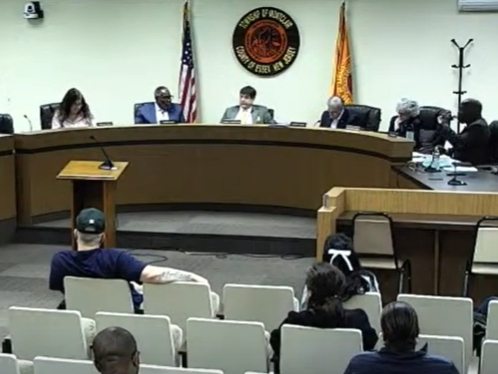
MONTCLAIR, NJ — The Montclair Town Council introduced the proposed 2024 municipal budget at a special meeting on Monday, and it could potentially come with a tax hike for local homeowners, administrators say.
The council voted 4-2 to introduce the municipal budget at their May 13 meeting, which is the first step towards pushing a finalized spending plan across the finish line (watch the video below).
Interim town manager Michael Lapolla said he is recommending that the township use $8 million of surplus.
Find out what's happening in Montclairfor free with the latest updates from Patch.
“Right now, we are going to have a tax increase,” Lapolla told the council. “I don't think it's fair to the taxpayers that they'd be asked to pay twice as much of an increase to keep the surplus that high.”
“A surplus is for exactly for that reason,” he added.
Find out what's happening in Montclairfor free with the latest updates from Patch.
“If we didn't go into that, what would the tax increase be?” councilman David Cummings asked.
“Probably about another $100 [per] household,” the township manager replied, adding that the tax levy is set to increase 2.8 percent.
“The biggest problem we have is that last year was the last year we've seen $2 million dollars from the federal government for the American Recovery Act,” Lapolla said.
“While we have increased revenues in other areas, that brings us up to fill the gap,” Lapolla said, adding that if this weren’t the case, the town would be having a “tiny” tax hike – if at all.
“But that $2 million we had to make up for,” he said. “And we have inflation.”
The resolution to introduce the budget received “yes” votes from William Hurlock, Lori Price Abrams, Robin Schlager and Roger Terry. It received “no” votes from Cummings and Bob Russo. Mayor Sean Spiller was absent from the meeting.
There will be a meeting on May 29 to give a budget presentation and answer questions from residents. A public hearing and final adoption of the budget is scheduled for the council’s June 11 meeting.
Russo questioned why the budget was being introduced the day before the town’s municipal election, which takes place on Tuesday. He also pointed out that there will soon be a massive shift on the town council, which will look completely different after the election. See Related: Montclair Town Council Will See Big Turnover In 2024
According to Lapolla, there must be 28 days between the introduction and the adoption of the budget.
“Our next meeting and final meeting of this council is June 11,” he explained. “So working back from that day, we tried to get to a day where we can at least have a quorum to get it introduced.”
“We just tried to find a day where we knew we'd have at least four or more people at the meeting,” Lapolla said. “So that's how we wound up with this day.”
CAP BANK
The council also voted to exceed the municipal budget appropriation limits and to establish a cap bank in a separate resolution. Russo provided the only “no” vote.
PILOT AGREEMENTS AND SCHOOLS
As part of the budget discussion, Cummings brought up a topic that some Montclair residents have been pondering: the possibility of sharing payment in lieu of taxes (PILOT) funds with the town’s public school district.
PILOT agreements, also known as municipal tax abatements, are deals that enables a developer to switch their standard tax payments for a property with a fixed, yearly payment to the municipality. Some municipal officials have called them useful tools to attract development to distressed or blighted areas of town. But their use has drawn criticism from opponents, some who caution that the deals can enable a big developer to skip out on paying their fair portion of property taxes.
In the case of short-term abatements, the tax loss is proportional across the municipal, county and school district. But for long-term PILOT agreements, the tax losses fall more dramatically on schools and counties, with counties getting 5 percent and local school districts not receiving any portion, according to the New Jersey Office of the Comptroller.
Some elected officials have argued that schools aren’t harmed by this arrangement because developers must still pay taxes on the value of the land – and the school district gets its full cut of that amount.
The split for tax abatements has caused debate in Montclair, with some pundits suggesting that the town should funnel more PILOT money towards the school district.
Others are more cautious about that possibility, however.
“Some people have said we should give all our pilot money to the schools,” Cummings commented to Lapolla during Monday’s meeting. “Now, when I looked at our PILOT revenues, that’s around $5 million. So if you gave all that money to the schools, that $5 million would then have to be in this budget?”
“It would be virtually impossible to raise $5 million under the cap law,” the township manager replied. “So there would have to be substantial layoffs.”
“Which means when we talk about giving up PILOT money, we need to really understand the total impact on that,” Cummings responded. “It's not as simply as give it away and raise taxes and be able to cover that.”
Russo countered that “enormous amounts of money” are being paid to the township through PILOT agreements with residential developers, and at least some of it could be “dedicated to the children living in those buildings” according to what school they attend.
See Related: Share PILOT Money With Schools, Montclair Residents Demand- See Related: Montclair School Budget Update: Can PILOTs Save The Day?
Send local news tips and correction requests to eric.kiefer@patch.com. Learn more about advertising on Patch here. Find out how to post announcements or events to your local Patch site. Don’t forget to visit the Patch Montclair Facebook page.
Get more local news delivered straight to your inbox. Sign up for free Patch newsletters and alerts.