Politics & Government
One In Four Euthanized At N.J. Animal Shelters During 2014
More than 21,000 dogs and cats impounded in a New Jersey shelter last year didn't make it out alive. But it used to be a lot worse.


For every four dogs and cats that made it into a New Jersey shelter last year, one didn’t make it out alive.
In late August, the New Jersey Department of Health released its 2014 Animal Intake and Disposition Survey, a voluntary but strongly-encouraged survey of the state’s licensed animal shelters.
The survey compiles key statistics from almost every licensed animal care facility in the state, including county-by-county totals of intake numbers, adoption totals and euthanasia rates.
Find out what's happening in Montclairfor free with the latest updates from Patch.
According to the data, 80,346 dogs and cats were impounded in New Jersey last year.
- 26 percent were euthanized
- 13 percent of the impounds were “redeemed” to their owners
- 46 percent were adopted
However, according to previous survey data, the total number of euthanized dogs and cats has fallen steadily in New Jersey every year since 2006, when a total of 41,254 (or 41 percent) of impounded cats and dogs were killed.
Find out what's happening in Montclairfor free with the latest updates from Patch.
In addition, the total number of impounded animals has decreased steadily over that time period as well, shrinking from 93,914 in 2010 to 80,346 in 2014.
Throughout the state:
- Essex County led the state in euthanized dogs for 2nd year in a row with 913, a rate more than 40 percent higher than the next-highest county (Atlantic)
- Atlantic County led the state with the most euthanized cats (1,923), followed by Ocean County (1,912), Cumberland County (1,889) and Gloucester County (1,839)
- Camden County had the highest animal intake total (9,463), followed by Essex County (7,626) and Ocean County (6,182).
See the county-by-county survey for 2014 here.
MORE THAN MEETS THE EYE
When it comes to analyzing the data, state officials caution that there may be more than meets the eye, especially concerning statistics such as euthanasia totals.
Colin Campbell, a public health veterinarian with the New Jersey Department of Health, told NorthJersey.com that it’s important to remember that some shelters have contracts with other towns or counties, and that the stats aren’t always reflective of an area’s true per capita animal intake numbers.
In addition, facilities have different policies for the intake or disposition of animals, Campbell told NorthJersey.com.
“For example, many urban facilities will offer compassionate euthanasia services while their suburban counterparts may refer euthanasia cases to local veterinarians or animal hospitals, disproportionately affecting kill rates. And some shelters will only accept animals that they consider ‘adoptable,’ increasing their adoption rates in comparison to other facilities which accept any animal that comes through their doors.”
Another important point to remember is that the annual DOH survey effort only includes licensed shelter facilities, which don’t include undocumented “rescue” organizations, wrote Aco Ascolese, an animal control officer/animal cruelty investigator at Bergen County Humane Enforcement.
“The NJ DOH has heavy restrictions, guidelines and regulations,” Ascolese wrote on a social media post. “However rescue groups in New Jersey have absolutely no requirements. The state needs to get involved and impose administrative changes immediately… While there are some great rescue organizations that truly define the word rescue, there are by far too many that are rogue.”
Photo by Eric Kiefer
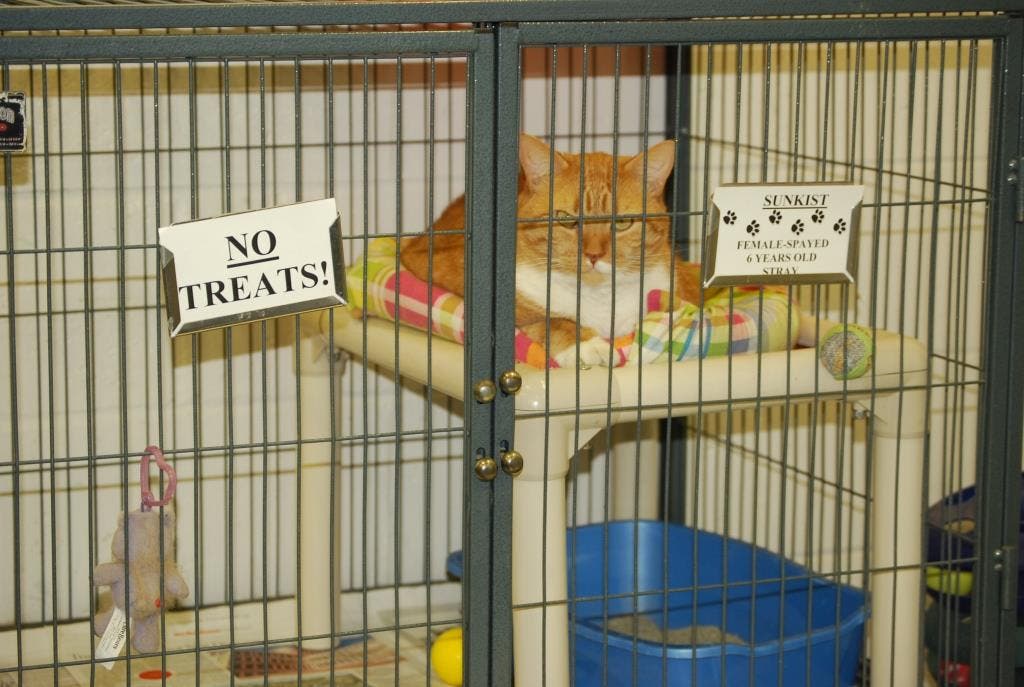
Photo caption: A cat at the Montclair Animal Shelter sits in its cage.
Get more local news delivered straight to your inbox. Sign up for free Patch newsletters and alerts.