Politics & Government
NJ Corporate Tax Breaks ‘Wasted’ $11B, Murphy Vetoes Extension
A controversial attempt to stretch out an embattled New Jersey tax break program has been thwarted… for now.


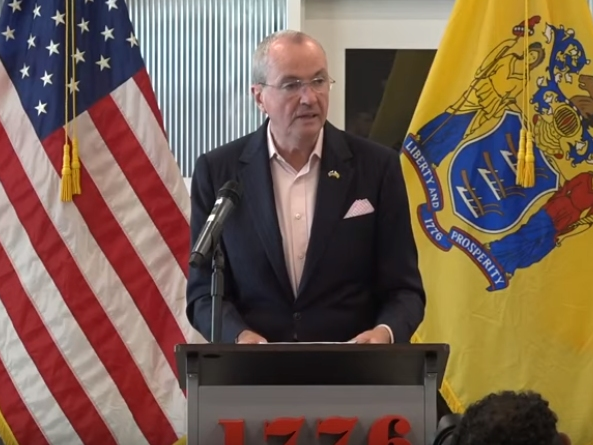
TRENTON, NJ — A controversial attempt to stretch out an embattled state tax break program has been thwarted… for now.
On Friday, Gov. Phil Murphy conditionally vetoed a bill that would have extended the Economic Opportunity Act in its entirety to Jan. 31, 2020, seven months beyond its sunset date of June 30, 2019.
Find out what's happening in Montclairfor free with the latest updates from Patch.
The state incentive program has come under fire after giving out more than $11 billion in tax breaks to large corporations over the past 14 years, much of which was approved during the Chris Christie administration.
- See related article: New Jersey Activists Blast Christie-Era Corporate Tax Breaks
Critics have blasted the tax breaks, claiming that there is virtually no way to prove that they created the types and numbers of jobs that were promised. Some state officials have agreed, and have pumped the brakes on handing out multi-million dollar awards to companies across New Jersey.
Find out what's happening in Montclairfor free with the latest updates from Patch.
- See related article: Task Force Probes New Jersey's 'Corporate Gravy Train'
- See related article: Company Got $27M Tax Break To Come To NJ, Now It's Moving
“For the past six years, New Jersey has operated under a severely flawed tax incentive program that wasted taxpayer money on handouts to connected companies instead of creating jobs and economic growth,” Murphy said.
“The program I’ve outlined in the conditional veto is one that creates good jobs and works for everyone, not just the connected few, and one that will help restore New Jersey’s prominence as the state of innovation,” the governor said.
- See related article: New Jersey Squandered $11B On Corporate Tax Breaks, Governor Says
The bill now goes back to the Legislature for approval – or rejection – of Murphy’s recommendations.
The suggestions outlined in Murphy’s conditional veto are similar to the proposal he first offered his legislative counterparts last year. There would be five tax incentive programs – capped at a combined annual value of $400 million – which would be included in the deal, his office stated:
NJ Forward – “This jobs-based program will provide credits to companies engaged in high-growth industries, U.S. businesses creating a Northeast headquarters, foreign businesses creating a U.S. headquarters, and major job retention projects.”
NJ Aspire – “This program will catalyze investments in commercial, residential, and mixed-use projects through a place-based gap financing program.”
Brownfields Redevelopment Program – “This program will complement EDA’s Brownfields Loan Program and catalyze more remediation projects and increase job creation.”
Historic Preservation Tax Credit Program – “This program, modeled after the National Historic Tax Credit program, will partially reimburse developers who revitalize income-producing historic buildings.”
Innovation Evergreen Fund – “This fund is designed to supercharge venture capital investment into Garden State startups.”
'CORPORATE WELFARE PROGRAMS ARE UNFAIR'
Critics of the state tax breaks cheered Murphy’s conditional veto on Friday.
“Too many people feel the economy is rigged against them and tax incentive programs such as the EDA are part of the cause,” charged Tony Howley, state director of Americans for Prosperity-New Jersey.
“Corporate welfare programs are unfair and rig the economy against everyday New Jerseyans,” Howley said. “The government should not be in the business of picking winners and losers – everyone deserves the chance to compete on a level playing field. Though this flawed program should be eliminated altogether, Gov. Murphy’s veto nudges New Jersey towards a path of economic fairness.”
New Jersey Working Families State Director Sue Altman also praised Murphy’s veto.
“We are grateful to Gov. Murphy for recognizing that the six-month extension of the Economic Opportunity Act is a blank check to politically connected corporations to rip off New Jersey taxpayers,” Altman said.
Altman continued:
“We are stunned that the Legislature willfully ignored the ongoing independent investigation of the program, which has already found that companies made material misstatements on their tax credit applications and other serious allegations. After Governor Murphy’s veto, the Legislature now has the opportunity to get serious. It is time for lawmakers to sit down with the governor to create a meaningful corporate incentive program that ensures corporations are held accountable while expanding opportunities for underserved communities. The Economic Opportunity Act of 2013 robbed New Jersey taxpayers of billions of dollars. Any new tax credit program must protect workers, ensure minority and local hiring and ensure vigorous and continued oversight.”
Brandon McKoy, president of New Jersey Policy Perspective, said neither the state's taxpayers or its budget can afford for the incentive programs to continue.
"The Legislature must take full advantage of this opportunity to revamp the state’s approach to economic development," McKoy said. "The reforms included in Governor Murphy’s conditional veto provide a strong foundation for moving forward. By implementing hard caps on awards, stronger oversight, and worker protections, New Jersey can ensure tax credits benefit not only the companies receiving them, but also their employees and broader state economy."
'A CHILLING EFFECT ON BUSINESSES'
Not all Garden State residents were thrilled about Murphy’s veto, however.
The New Jersey Business & Industry Association (NJBIA) blasted the decision, claiming the lack of a renewed NJEDA program – as well as widespread delays in handing out last year’s tax credits – is having a “chilling effect” on the state’s business climate.
“To achieve the goal of a responsible and comprehensive tax incentive program, our policymakers must work together to deliver a program that makes New Jersey regionally competitive,” the NJBIA stated. “Trying to accomplish this through a conditional veto process does not lend itself to this outcome.”
The pro-business group said that state lawmakers need to come together immediately and sort out their differences.
“New Jersey remains without a much-needed mechanism to level the playing field against our regional competitors - all of whom have a much more favorable tax structure and business climate, the NJBIA stated.
“Any notion that New Jersey hasn't already been damaged by the passing of 54 days without a tax incentive program is just wrong,” the group continued. “Further, the delay in the awarding of 2018 tax credits has unquestionably had a chilling effect on businesses that are considering coming to or staying in New Jersey.”
Paul Gevertzman, a partner with New York City-based accounting firm Anchin, Block & Anchin, said the tax incentive standoff between Murphy and the Legislature has been building for a while.
“There has been a lot of talk about perceived abuse and favoritism,” Gevertzman told Patch.
He said that his firm – which helps their clients to secure tax incentives – recently helped a food-related business to move from Brooklyn to New Jersey, bringing 100 jobs with it.
“They definitely would not have moved if not for the promised incentives – or at least not to New Jersey,” Gevertzman said. “The owners actually they spent more money than they really needed to secure the benefits under their agreement.”
Some of Murphy’s critics have also pointed out that the former Goldman Sachs executive has fought for some large-scale corporate tax breaks of his own.
During his tenure as governor, Murphy has advocated in favor of Teva Pharmaceuticals USA, which the NJEDA gave a $40 million, performance-based tax break to move its U.S. headquarters from Pennsylvania to New Jersey, despite multiple lawsuits accusing it of contributing to the national opioid crisis.
- See related article: NJ Gives $40M Tax Break To Pharma Co. Accused Of Pushing Opioids
Murphy also supported the idea of giving Amazon $5 billion in state tax breaks to locate its headquarters in Newark, a bid that the city ultimately lost.
- See related article: Amazon Officially Passes Up Newark, NJ For New Headquarters
Some lawmakers, such as Sen. Joe Pennacchio, a Republican who represents New Jersey's 26th District, have blasted Murphy for resurrecting tax breaks for film companies under the “Garden State Film and Digital Media Jobs Act.”
“How can you pledge to fight wasteful tax incentives while simultaneously giving away hundreds of millions of dollars to Hollywood for programs that have never proven to work?" Pennacchio questioned.
- See related article: GOP Senator In NJ Blasts Murphy's Tax Break For Film Industry
- See related article: State Tax Breaks Helped Bring 'Joker' Movie To Newark
Learn more about posting announcements or events to your local Patch site. Send feedback and correction requests to eric.kiefer@patch.com
Get more local news delivered straight to your inbox. Sign up for free Patch newsletters and alerts.