Traffic & Transit
These Weird-Looking Tubes Catch NJ Parking Violators–And They’re Popping Up Everywhere
The sudden proliferation of automatic traffic monitoring devices like the SafetyStick has been sparking debate in New Jersey.


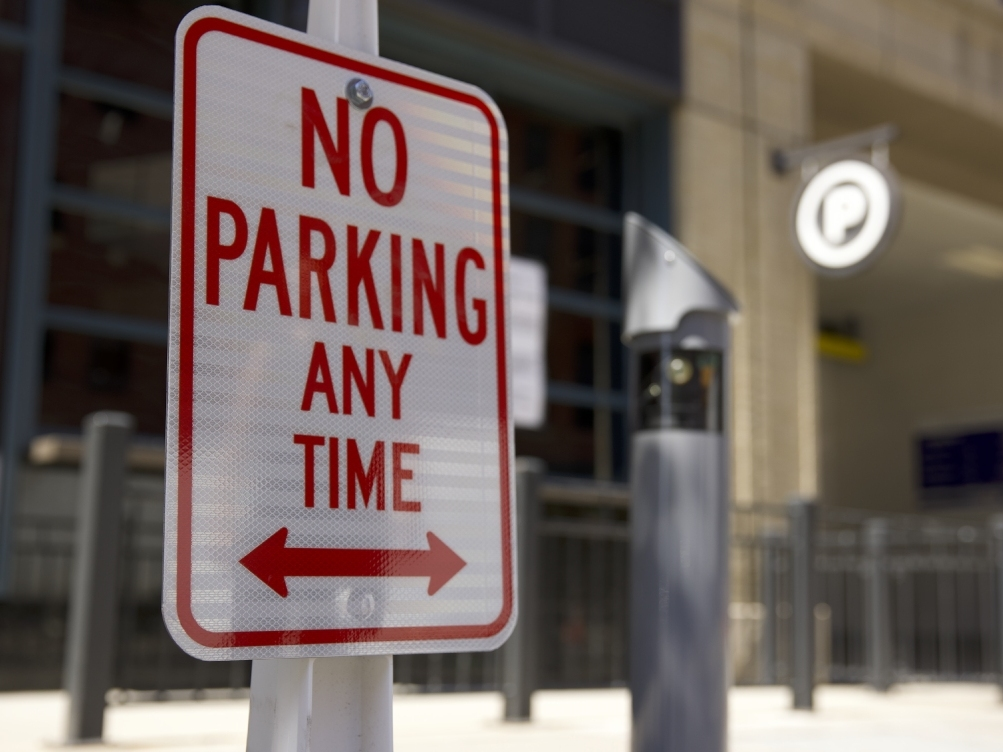

Some high-tech sentinels have entered the battle to police New Jersey’s ubiquitous parking wars – and they don’t take lunch breaks.
Drivers across New Jersey have recently been encountering an unfamiliar sight when they park their cars: three-foot-high tubes known as “SafetySticks.”
The devices can be found embedded in the concrete near the curb, often alongside fire hydrants and road signs. The solar-powered technology comes equipped with cameras, which take photos of vehicles that park illegally in the area. These images are then shared with local police and traffic enforcement personnel – who can choose to issue the driver a ticket.
Find out what's happening in Montclairfor free with the latest updates from Patch.
A growing list of New Jersey municipalities have been willing to give the new technology a test drive, including Allendale, Belleville, Boonton, Cranford, Dover, Garfield, Guttenberg, Hasbrouck Heights, Jersey City, Linden, Little Falls, North Arlington, Rutherford, and Wood-Ridge. Other towns such as Montclair are expected to roll out their own pilot programs in the near future.
The periscope-like devices are manufactured by Texas-based Municipal Parking Systems (MPS), which claims they can reduce illegal parking by up to 95 percent within a year.
Find out what's happening in Montclairfor free with the latest updates from Patch.
The company recently pointed to Linden as a local success story in New Jersey, reporting that the number of illegally parked vehicles fell from 64 percent to 44 percent in areas where SafetySticks were installed over a three-month period.
MPS doesn’t charge towns for installation and maintenance costs, instead typically taking from 40 percent to 50 percent of the revenue collected from each paid parking violation.
Hasbrouck Heights installed them along Boulevard, where illegal parking has been increasing along the busy traffic corridor.
“The way it works is simple,” the township explained. “If any vehicle parks or idles in a zone where the SafetyStick is located, for more than 30 seconds, a picture will be taken of the license plate, captured in a database that only our police department has access to, and a ticket will be released by the HHPD the following morning.”
The situation is similar in Garfield, where the timers are set for a two-minute lapse. When a vehicle parks, the camera takes a photo – and then another two minutes later. If the car is still in the same spot, it will register a potential violation.
“Parking safety is one of those vital quality-of-life issues that need to constantly be addressed,” North Arlington Police Chief Michael Horton said last year ahead of their local SafetyStick rollout.
“Yellow street paint and bright orange traffic cones just aren’t significant enough deterrents for some motorists to park where they shouldn’t,” Horton said.
WHERE CAN YOU FIND THEM?
Most New Jersey towns have been placing the devices at high-traffic local hotspots and along business corridors.
Belleville installed SafetySticks at several busy intersections last year, citing a need to “stop illegal parking and improve safety.”
Cranford put them up in its downtown business district along a crash-prone corridor where visibility is often impeded by illegally parked cars, officials said.
Dover installed them in its downtown area, where parking is free – but often in high demand.
The Little Falls Police Department has installed them in some of the town’s “most problematic parking areas” near no-parking areas, fire hydrants and crosswalks.
Little Ferry has been putting SafetySticks in areas where illegal parking is known to create hazards, including crosswalks, intersections with narrow turns, and cross streets where emergency vehicles have difficulty turning.
Morristown is installing 11 of the devices on South Street between Pine Street and Community Place. Coverage areas include near crosswalks and fire hydrants.
North Arlington has chosen to place the devices on street corners and in front of commercial properties, as well as along Ridge Road.
Rutherford has installed them on two busy local roads, Park Avenue and Union Avenue, with plans to deploy more at Station Square and Orient Way.
Article continues below
PRIVACY CONCERNS
The growing use of automated traffic monitoring devices like the SafetyStick has been sparking debate in New Jersey.
MPS says the company doesn’t store photos of vehicles that are parked legally, identify the registered owner, or share information without a city’s consent – or a court order. According to its website, the devices only capture images of license plates and the violation itself, not personal images or audio.
“All data is securely stored, used solely for enforcement, and deleted per city data retention policies,” a frequently asked question sheet from the company says.
Privacy concerns linger for some Garden State residents, however.
In Boonton, the township launched a SafetyStick pilot program on Main Street in an attempt to improve visibility at crosswalks and intersections. Although most people seem to be on board, there are also concerns about the Fourth Amendment, with one local business owner telling PIX 11 News, “I think it invades our privacy, that’s the only thing.”
“These started popping up Dover,” a Reddit user recently asked, sharing a photo of a SafetyStick near a crosswalk. “Anyone know what they are?”
“It’s big brother waiting to catch you in a violation,” another user replied.
While devices like SafetySticks have been strictly used to monitor for parking violators, other automated traffic camera systems such as Flock – which scans the license plates of passing cars – have been used by police for solving crimes, recovering stolen vehicles and finding missing or endangered people.
Some civil rights groups have argued that automatic license plate readers (ALPRs) are a threat to privacy, warning that cameras at intersections, neighborhood entrances and parking lots can track people who are not suspected of crimes and reveal routine trips to workplaces, medical clinics, religious centers or political events.
Flock provides one of the most widely used ALPR systems, but it isn’t the only company that has been profiting off technology sales to police departments, advocates point out: others include Axon, Vigilant Solutions (a subsidiary of Motorola Solutions), Genetec, PlateSmart, Innova Systems, Rekor, ELSAG, Perceptics, and Jenoptik.
Send local news tips and correction requests to eric.kiefer@patch.com. Learn more about advertising on Patch here. Find out how to post announcements or events to your local Patch site.
Get more local news delivered straight to your inbox. Sign up for free Patch newsletters and alerts.