Community Corner
Burlington County Seeks Volunteers To Destroy Spotted Lanternfly
Burlington County is recruiting volunteers to help banish the spotted lanternfly from the county.


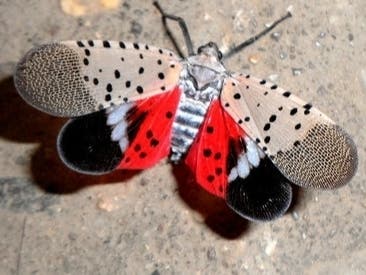
BURLINGTON COUNTY, NJ — Burlington County is recruiting volunteers to help banish the spotted lanternfly from the county.
The lanternfly, an invasive, non-native insect from Asia with an appetite for fruit trees, ornamental trees, woody trees, vegetables, herbs, grapes and vines, first appeared in Burlington County in 2019. Since then, the county has been designated as a quarantine county with Camden, Gloucester, Hunterdon, Mercer, Salem, Somerset and Warren.
Residents in those counties don’t need to report sigthings of the lanternfly, which had significant numbers in Amico Island Park in Delran, Pennington Park in Delanco and Boundary Creek in Moorestown last year, to the state.
Find out what's happening in Moorestownfor free with the latest updates from Patch.
However, they are encouraged to inspect their vehicles, trailers and other outdoor items when driving to a location outside the quarantine zone. Residents are also encouraged to be on the lookout for the bugs during all their life cycles and attempt to kill them if able.
The Burlington County Parks System and Rutgers Cooperative Extension are now recruiting volunteers for a “seek-and-destroy” mission to banish the lanternfly from the county, and nearly two dozen residents have already volunteered, officials said.
Find out what's happening in Moorestownfor free with the latest updates from Patch.
The mission includes removing egg masses from trees in county parks and neighborhoods throughout the county as part of the ongoing battle against these plant-destroying pests.
Residents can sign up to volunteer and receive a “Beat the Bug” plastic card to use to remove egg masses, as well as a time sheet to record the locations where the egg masses were located and destroyed.
To sign up, visit https://secure.rec1.com/NJ/burlington-county-nj-/catalog?filter=c2VhcmNoPTE0MDE1NjE=
“Burlington County is renown across the state and beyond for its scenic parks, forests and farms. We all need to work together to protect these precious resources from the spotted lanternfly menace,” said Commissioner Linda Hynes, liaison to the Department of Resource Conservation and the Burlington County Parks System.
Plants that have been infected by the spotted lanternfly are recognizable because the bugs excrete a sticky mess on leaves, branches and bark that tend to make the plants appear to ooze or weep. Some may even develop a fermented odor.
Masses tend to look like a smear of mud or pressed and dried bubblegum and they can be found on tree trunks and branches, plants or even furniture, siding, decks, sheds, and windowsills.
To destroy an egg mass, residents squash and then scrape them with a plastic card or knife, so the eggs fall into a plastic zip bag containing alcohol or hand sanitizer. The Burlington County Parks System and Cooperative Extension have posted a video demonstration on how to do so, which can be seen below.
After scraping the eggs into the zipper bag, care should be taken to make sure the eggs have contact with the alcohol and hand sanitizer, as it ensures the nymphs inside are killed and cannot hatch. Just scraping the eggs to the ground does not ensure they are destroyed, officials said.
“It may sound icky to some, but it’s not that difficult and is vitally important for the protection of the county’s trees and crops,” Hynes said. “While there are ways to control spotted lanternfly all year round, the winter months are a critical time because the bugs’ egg masses haven’t yet hatched. Eliminating them now offers the best chance to control the population and the plant damage they cause, so we’re asking residents to spend some time outside and help search for and destroy these invaders.”
“The spotted latternfly is an excellent hitchhiker that has succeeded in spreading around Burlington County and much of New Jersey already,” said William Bamka, the Burlington County Agricultural and Resource Management Agent with the Rutgers Cooperative Extension. “They pose a significant threat to New Jersey trees and crops, so we’re encouraging everyone to lend a hand in the effort to stop their growth.”
Get more local news delivered straight to your inbox. Sign up for free Patch newsletters and alerts.