Crime & Safety
South Jersey Pharmacists Illegally Gave Oxycodone, Painkillers To Addicts: Authorities
Michael Ludwikowski, 44, of Medford, and David Goldfield, 58, of Medford Lakes, were charged in a 16-count indictment on Monday.


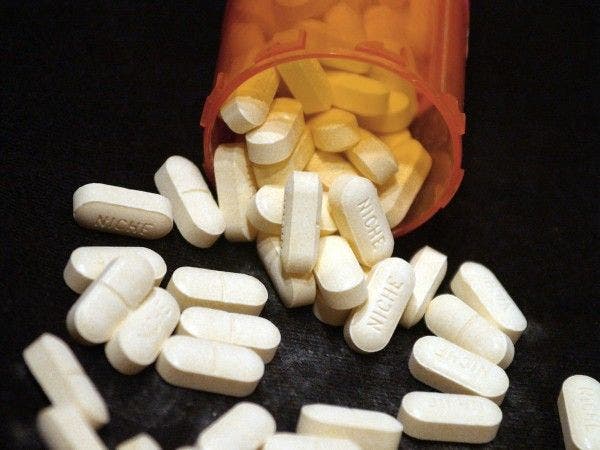
Two Burlington County pharmacists have been arrested and charged in connection with a long-running scheme to illegally distribute large quantities of oxycodone and other drugs, U.S. Attorney Paul J. Fishman announced on Monday.
Michael Ludwikowski, 44, of Medford, and David Goldfield, 58, of Medford Lakes, were charged in a 16-count indictment with conspiracy to illegally distribute and dispense oxycodone and other Schedule II controlled substances, maintaining a drug-involved premises, and multiple substantive counts of illegal distribution. Ludwikowski was also charged with using his cellphone in furtherance of the conspiracy.
Ludwikowski is the owner of both Olde Medford Pharmacy and Medford Family Pharmacy, and Goldfield works for him, according to documents filed in the case and statements made in court.
Find out what's happening in Moorestownfor free with the latest updates from Patch.
From March 2008 through August 2013, they knowingly distributed and dispensed oxycodone and other controlled substances to people, including addicts, who presented phony prescriptions, authorities allege.
They say Ludwikowski ordered tens of thousands of dosage units of oxycodone, among other products, from a large national distributor, which establishes thresholds for the quantity of controlled substances that it supplied to certain pharmacies.
Find out what's happening in Moorestownfor free with the latest updates from Patch.
These thresholds can only be exceeded if a pharmacy is able to sufficiently prove it needs an increase.
Ludwikowski fraudulently requested and received increases to the thresholds of oxycodone supplied to his pharmacies, even though he knew they were not going to be used for legitimate medical reasons, authorities said.
In some instances, authorities say the customers presented fraudulent prescriptions that had been blatantly “washed,” or “bleached,” through a chemical process that removed the original writing for a non-narcotic substance. The customers would then write-in their own desired prescriptions.
Ludwikowski and Goldfield even ignored concerns raised by an employee who pointed out an obviously altered prescription, according to authorities.
Customers who used the fraudulent prescriptions generally paid in cash and provided gifts to Ludwikowski and Goldfield. In some instances, these customers filled fraudulent prescriptions for oxycodone multiple times a week, authorities said.
Ludwikowski and an unnamed pharmacist who worked for him are also accused of reaching an agreement with an unidentified doctor to send that doctor’s patients to Ludwikowski’s pharmacies. In a text message from the pharmacist to Ludwikowski on Jan. 11, 2013, authorities say the pharmacist wrote: “I talked to [Doctor 1] and he is going to direct all of his patients to us he is the pain doc in Cherry Hill.”
After that, Ludwikowski received a voicemail from an unnamed patient who was “looking for a monthly supplier,” authorities said. Ludwikowski then forwarded his number to the pharmacist, and the patient was able to fill prescriptions for oxycodone and other controlled substances at Olde Medford Pharmacy or Medford Family Pharmacy.
In another incident, a patient from Pennsylvania told Ludwikowski that he was “in a bit of a pickle” because he had been unable to fill a prescription written by the aforementioned doctor in Pennsylvania, but had heard that Ludwikowski would be able to help.
Soon after, that patient was able to acquire oxycodone and other controlled substance prescriptions from Ludwikowski’s pharmacies, according to authorities.
The conspiracy charge and each substantive count of illegal distribution of oxycodone and other Schedule II controlled substances carry a maximum potential penalty of 20 years in 3 prison and a $1 million fine, or twice the gross gain or loss from the offense.
The count of using a telephone in furtherance of the drug trafficking crimes carries a maximum penalty of four years in prison and a $250,000 fine, or twice the gross gain or loss from the offense.
The counts of maintaining a drug-involved premises each carry a maximum penalty of 20 years in prison and a $500,000 fine, or twice the gross gain or loss from the offense.
Patch file photo
Get more local news delivered straight to your inbox. Sign up for free Patch newsletters and alerts.