Business & Tech
Still a Cool Town, but Market Remains Lukewarm
New Jersey home sales are heating up slightly, but Moorestown not there yet.
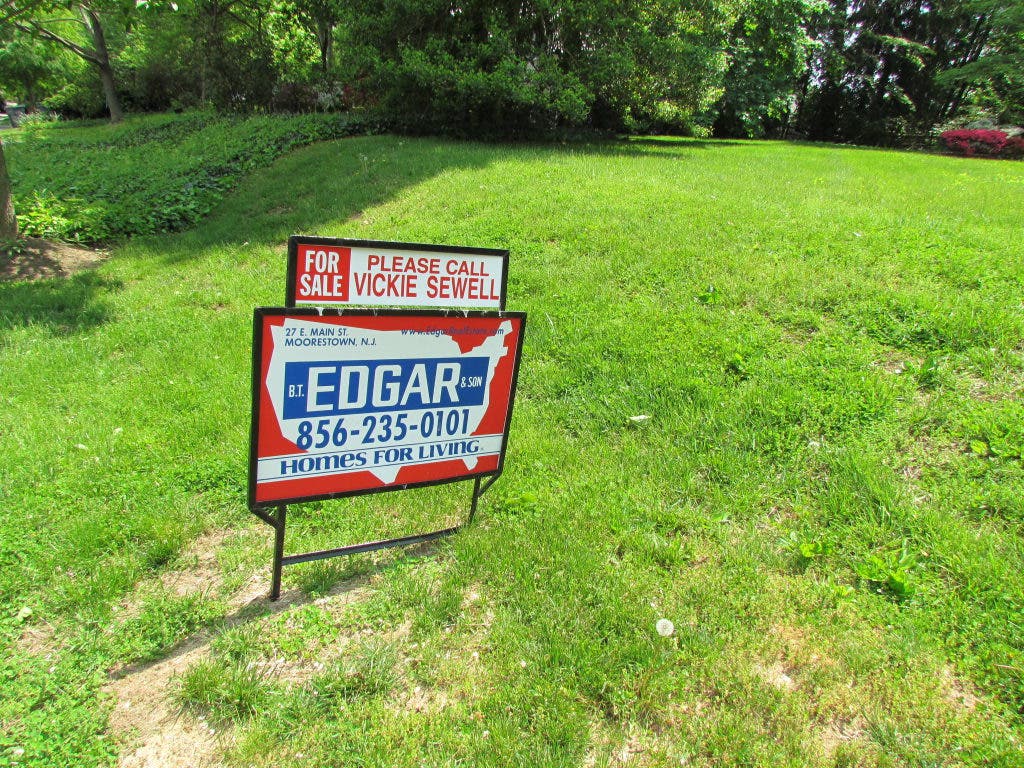
Some economists have been saying it will be years before the housing market recovers. If you are in the market to buy a home, it’s no secret: Economics is on your side. Abundant inventory and low interest rates have been feeding the
buyer’s market.
But, Jarrod Grasso, chief executive officer of the New Jersey Association of Realtors in Edison, says homes sales in the Garden State are at healthier levels than other parts of the United States since the post-home buyer tax credit period of 2010, which shows solid gains without a government incentive.
From the fourth quarter of 2010 to the first quarter of 2011, there was an 11 percent increase in home sales in New Jersey, says Grasso.
Find out what's happening in Moorestownfor free with the latest updates from Patch.
“In comparison, the market index for homes sales was down 2.8 percent from the first quarter of 2010 to the first quarter of 2011,” said Grasso, with only two areas showing increases in median home prices. “This is only 2 percent below the national figure.”
For the same period, Pennsylvania was down over 4 percent.
Find out what's happening in Moorestownfor free with the latest updates from Patch.
Prior to the real estate meltdown, Moorestown was named as the best town to live in by Money magazine. Property values were escalating mainly because of its superior schools, first-rate recreational programs and proximity to a major city.
Although not as cataclysmic as areas nationally, Moorestown felt the bubble burst as the subprime market toppled. For the last four years, the home sales in Moorestown have remained relatively flat, with homes selling at or below market, says Dave Lewis, owner of B. T. Edgar and Sons Realtors on Main Street.
“In the spring of 2010, we did get a spring market with a lot of interested buyers,” says Lewis, “And, activity in our office is currently up but, we might be headed for a more active fall than spring.”
"Although we are seeing a lot of open houses this year," says Kathy Williams, regional vice-president of , also on Main Street, "the numbers [sales] don't substantiate it."
During the first quarter of 2011, 29 homes were sold at an average price of $570,582. For the same period in 2010, 33 homes were sold at an average price of $507,168.
As the expiration of the federal tax credit was set to expire, sales through April of 2010 were better, adds Williams. "Through this April, 40 homes were sold in Moorestown, as compared to 60 homes sold in 2010," says Williams.
But, for the same period of 2005 during the peak of the market, 189 homes were sold at an average price of $534,126.
Across the country, as well as in New Jersey, high unemployment and strict lending standards have been preventing some people from buying a home.
“People are still concerned about their jobs,” said Grasso. “But, recent reports show New Jersey has had about 17,900 in job gains from April 2010 to this past April. That’s a good indicator that people may want to spend money again.”
Strengthening this buyers’ market are attractive interest rates that have been hovering between 4 and 5 percent, for those who do qualify for mortgages.
“The cost to purchase a home is more attainable now more than ever because of interest rates,” says Lewis. “But, a buyer must have impeccable credit and show liquid assets.”
During the recent real estate boom into 2006, house inventories in Moorestown lingered at around 80 homes, with houses sitting on the market an average of 100 days.
As of last week, Realtor.com had 287 homes listed for sale in Moorestown, with homes now sitting on the market sometimes over five months.
With a glut of homes on the market in Moorestown, Lewis tells his clients to be realistic. Sentiment should not weigh in to the equation when determining the right price to position a home for sale.
“Part of the problem in this market is that there are so many homes for sale and some sellers begin by asking too much,” said Lewis. “I tell my sellers, ‘Don’t get greedy,’ or your house will sit.” But, if the seller prices a home as close to the market as possible, "they will be more successful."
“And, we have many more homes listed over a million dollars these days,” adds Williams. “Part of what has happened is more million dollar homes have been added to an already high inventory.”
Neighboring areas to New Jersey, such as Manhattan, are beginning to see their housing inventories decrease. Grasso thinks this is good news for sellers in New Jersey.
“When inventory decreases and prices go up,” said Grasso, “it pushes people over our borders. That might be starting in New Jersey.”
Lewis agrees. “As things heat up in Manhattan, the bankers and brokers who can’t afford Manhattan move into North Jersey. Then, it is a trickle-down effect, with people moving south into other areas of New Jersey.”
But, Williams isn’t so sure. Williams sees homes sales in Southern New Jersey being more tied to the economics of Philadelphia.
“The city markets have not done as poorly as suburban markets anyway,” says Williams. “Southern New Jersey is more affected by what goes on in Philadelphia than Manhattan.”
Both Lewis and Williams agree that housing prices have leveled off in Moorestown, with not as many prices declining lately.
“I believe some people are going to look back on this period and regret not buying,” says Williams. "However, we are still in recovery; but, hopefully, the market will rebound in the near future as the economy recovers.”