Health & Fitness
Fall Blooming Perennials
Fall does not have to mean the end of the flower garden. There are perennials that will keep the look of summer with us through October.

Autumn is here and garden centers are well-stocked with mums. Every year at this time, the traditional ten-inch pots of yellow, rust or burgundy blooms adorn front porches everywhere, often accompanied by pumpkins and the occasional hay bale or corn stalk.
So many gardeners plant these supposedly perennial members of the Chrysanthemum genus in the ground, only to be disappointed when they do not return in the spring. And if they do, they grow tall and leggy, split apart and fall over just as they begin to bloom again the following fall.
To get these mums to grow and perform well, they need to be planted while they are still alive and before the ground is frozen, which may be right after purchasing them. Then don’t forget to water them – at least for the first few weeks. To keep them from growing tall and leggy, cut them back by about half in early to mid June. They will bloom slightly later, but will perform better and reward you with bright fall color.
Find out what's happening in Morris Township-Morris Plainsfor free with the latest updates from Patch.
Mums are not the only plants that bloom in the fall. Here are some other perennials that will bloom reliably each fall with very little maintenance:
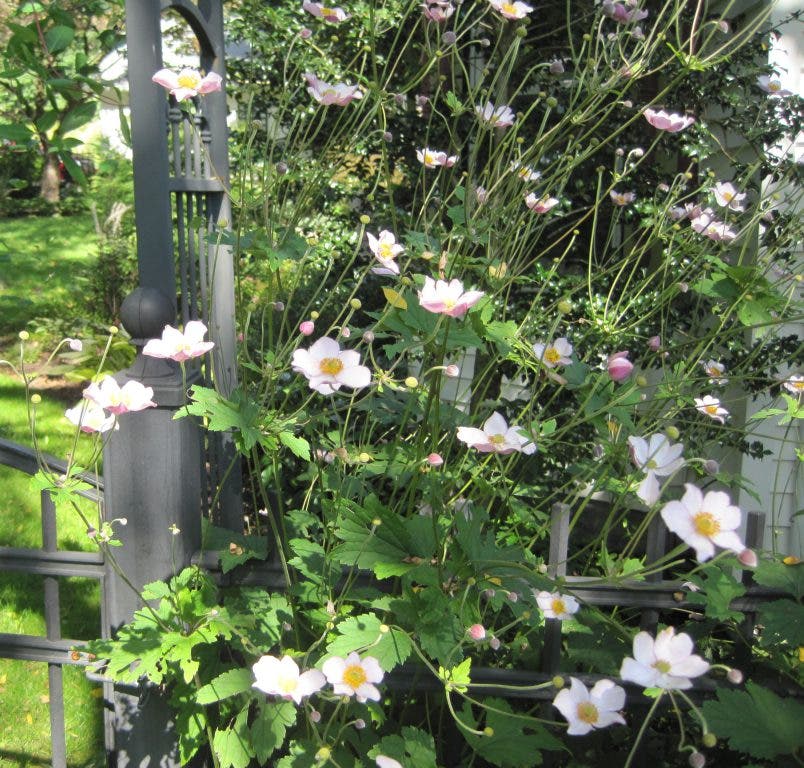
Fall-blooming Anemone (Anemone hybrida, Anemone hupehensis), or Windflower, is different than the low-growing spring-blooming species. This Anemone reaches heights from 18 inches to nearly 4 feet tall and comes in shades of pink, or white. Little to no maintenance is required, and Anemones are shade tolerant and deer-resistant.
Find out what's happening in Morris Township-Morris Plainsfor free with the latest updates from Patch.
Sedum (Sedum spectabilis), otherwise known as ‘Stone Crop’ or ‘Live Forever’, is one of the most commonly known fall perennials. Its ‘broccoli-like’ flower heads start out green during August, then gradually turn a soft mauve before deepening to a rich burgundy. The flowers will last into the winter, providing structure and interest in the garden as well as food for birds. Several varieties of Sedum, varying in color as well as height, include ‘Autumn Joy’, ‘Brilliant’, ‘Neon’, and ‘Autumn Fire’. Sedum is very drought-tolerant, but not deer-resistant. It can be cut back in June to reduce its height, to avoid it splitting apart at bloom time.
Asters (Aster sp) come in several varieties that vary in height and color. Most Asters grow between 15 and 24 inches tall, but a few varieties, such as A. dumosus (Wood Aster) are compact, 12-16 inches, good for the front of the border. Asters come in many shades of pink to purple to blue, and will bloom through September and October. Deer sometimes browse them, but a spray of deer-repellant should help.
Montauk Daisy (Nipponanthemum nipponicum) looks like your typical daisy, except more shrub-like, and it blooms in September and October, long after the well known ‘Shasta’ Daisy has finished. Another former member of the Chrysanthemum genus is the Sheffield Daisy, most commonly known as Chrysanthemum ‘Sheffield Pink’, but sometimes listed as Dendranthema. By either name, this is another fall beauty. Its blooms are a nice soft shade of pink that work well in the softer light of autumn.
There are many other fall bloomers, but these are my favorite for their ease of maintenance, and reliability. Combined with ornamental grasses, these beauties will continue to please garden-lovers through the early fall season.