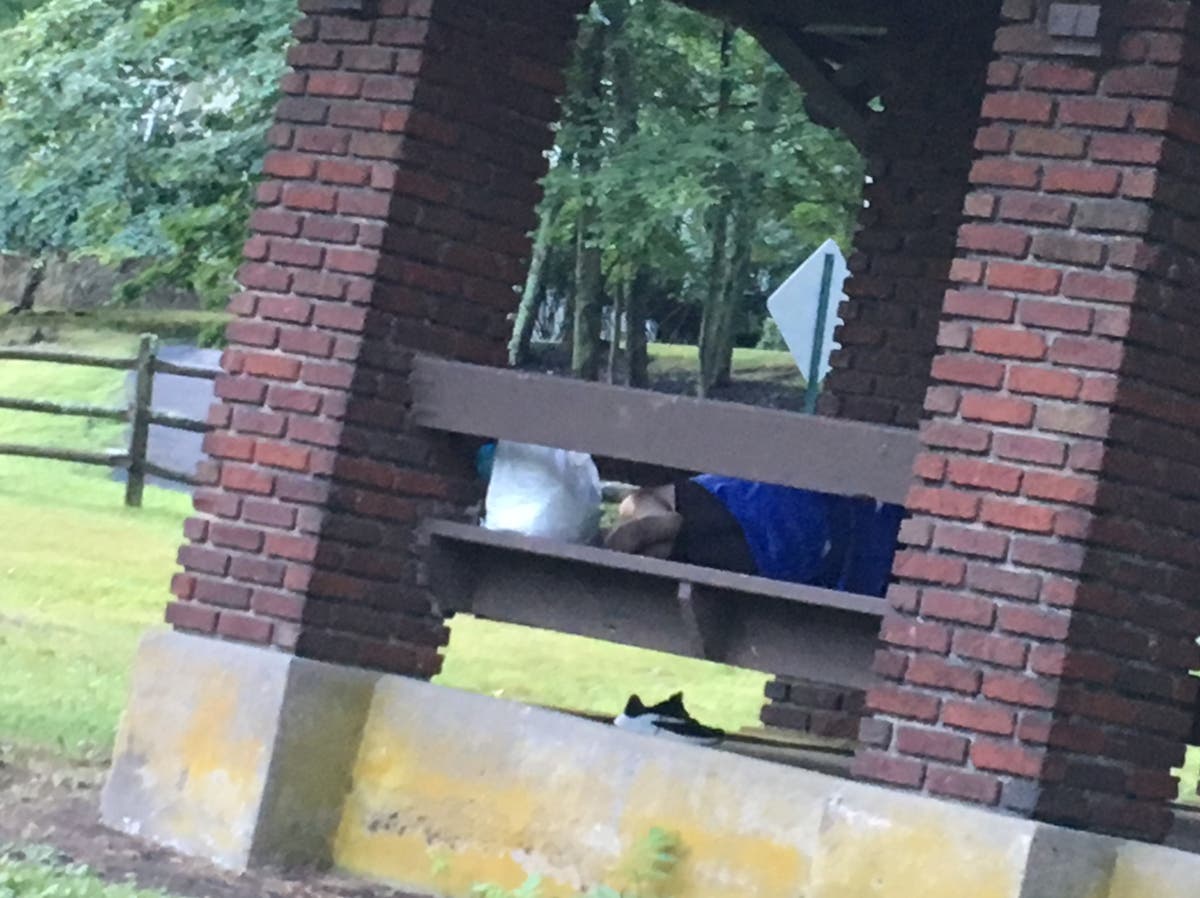

In June, there was another walk through of Burnham Park with the following people:
- The BPA
- Town’s administrator, environmental commission
- Peter Nitzsche, Rutgers Extension Horticulturist
- Dr. Chris Obropta-Water Resources
- Pat Rector, Rutgers Cooperative Extension
- Sergio Capuzzo the Facilitator for Whippany River Watershed Action Committee
- Brian Marshall WRWAC’s Master Gardener
- The Morristown’s Environmental Commission head
- Jillian Barrick, Town Administrator
- Anthony DeVizio, Town Engineer
- Rich Fernicola, DPW supervisor
Conclusion, they agreed the park needs to be Cleaned Up. Imagine that! Here is the plan:
Updated Goal
Find out what's happening in Morristownfor free with the latest updates from Patch.
Since the original riparian buffer was installed nearly 20 years ago, most maintenance efforts have focused on keeping a continuous vegetative barrier in place. But, during that time, the native plantings have become overgrown and covered with invasive weeds, shrubs, and vines. Neighbors have complained about the unsightly overgrowth of vegetation, the obstructed vistas of the lake, and the interference to wider shoreline access.
The gaps in the riparian buffer still need to be filled, but correcting the overgrown vegetation has become a priority, so that the park can once again be attractive to neighbors and visitors.
Find out what's happening in Morristownfor free with the latest updates from Patch.
Overall Strategy
When originally planted, Burnham Park was considered a model for parkland water quality protection. It took several years for the original installation, then many more years for it to for it to reach its current overgrown condition. While much can be accomplished quickly to improve appearance, full restoration of function and attractiveness will take time, and must be conducted in stages.
A useful way to view any vegetation restoration project is as an aggressive maintenance program with the goal of getting ahead of the problem areas -- in this case, to remove invasive species and weeds, reverse the overgrowth, rejuvenate native shrubs, and encourage expansion of perennials, grasses, sedges, and rushes. Once the plants have been brought under better control, an ongoing regular, periodic maintenance program needs to continue. Concurrent training and education during work sessions will enable maximum employment of volunteers for both the initial work and ongoing maintenance.
The primary phases/tasks to be undertaken are:
1. Remove invasive shrubs, vines, trees and weeds
2. Prune, thin, shape, rejuvenate native shrubs and trees
3. Replant gaps in the riparian buffer
4. Restructure lake access for fishing
5. Train crews in maintenance procedures and develop weed identification resources
6. Ongoing assessment and maintenance
Regulatory Backdrop
The area within 50 ft of the shoreline of the lakes is considered to be a riparian zone and is regulated by NJ Flood Hazard Area Control Act Rules (N.J.A.C. 7:13, last amended April 16, 2018). Most vegetation and construction-related activities are regulated under these rules, and many activities require application and approval before being issued a permit. Clearing, removal or cutting of native vegetation within the riparian buffer would not be allowed without obtaining a permit. However, normal property maintenance is allowed under permit-by-rule (7:13-7.1), which includes pruning, selective tree cutting, and planting of native species.
The relevant permits-by-rule and permits-by-certification are vague related to controlling and removing invasive species, and yet NJDEP allows use of these permits only if precisely applicable to the specific regulated activities. Before going in the field to remove invasive vegetation, it would be prudent to discuss the project with NJDEP to confirm that no additional permitting will be required. NJDEP funded the original project and is expected to support the proper removal of invasive species without imposing regulatory hurdles, as long as they are confident work is being conducted with qualified supervision.
Work Approach
A good way to perform field work is to schedule multiple crews, so that they can be supervised and trained in the most efficient way. A DPW crew could handle some of the heavier work (e.g., chainsaw work, bucket truck work, hauling debris). Then another one or two crews could be formed from Master Gardeners plus Environmental Commission and Burnham Park Association members, and any other volunteers available.
Chris Obropta and I would suggest oversight and training could be provided by a combination of qualified individuals from both Rutgers Cooperative Extension and Garden Magic LLC.
There will be a need for some amount of supervision, training and oversight throughout the restoration effort, because of the large area, differing plant care requirements, and potentially varying crew members. Once restoration is complete, DPW and volunteer crews should be sufficiently trained to handle much of the ongoing routine maintenance, with a modest amount of oversight. Chris has suggested putting together an online guide (weed app) to help future volunteers differentiate between the invasive species to remove and the native plants to preserve.
Invasive Species Removal
Removal of invasive vines, shrubs, and tree saplings will make the largest visual impact in the quickest amount of time and needs to be performed before much of the pruning of native shrubs and trees can begin. At the same time, removal of invasive species needs to be performed with care to preserve the native vegetation, prevent soil from eroding into the lake, and to meet regulatory constraints. The lakeshore is large and very overgrown, so it will take multiple (maybe many) days to accomplish. Priority areas for improvement should be identified to help map out work areas.
Chris and Pat are organizing an invasive plant removal outing on June 28th with some Rutgers staff and students. This will serve as an example removal section to start testing and showing results. I plan to join them so that we can gauge how quickly we can expect to make progress, and to help plan for future resource needs. It would be useful for DPW and volunteer crews to pitch in to begin training on what needs to be done and how to do it correctly.
Existing Plant Community Rejuvenation
Many of the planted shrubs and trees have also become overgrown and need pruning to keep them healthy, vigorous, attractive, and appropriate for the shoreline and park. Pruning to reshape, resize, or rejuvenate needs to be done properly and usually extends over several growing seasons to prevent damage. Different species of plants require different pruning and care techniques and some pruning is best performed during specific times of the year.
Supplemental Plantings
Right now, there are places around the lake needing additional plants to protect the lake from stormwater runoff and geese. Likewise, some of the original plants have been displaced by invasive species and weeds. When the invasive plants are removed, both good practice and regulatory requirements dictate that the gaps be filled with like-type, native plants.
Riparian buffer design and plant selection practices have evolved since Burnham Park was originally planted. Today, we use specific types, sizes, and characteristics of plants tailored to the exact application and location -- these newer practices should be employed here. By doing so, we can expand natural habitats, increase vistas of the lake, and provide better delineation and structure to the diagonal pathways for fishing access.
Vistas and Fishing
One principle of resource economics is that many conservation and park projects do not justify (pay for) themselves unless they are designed to attract multiple types of users (e.g., for different recreational purposes). In other words, Burnham Park will become a better (more valuable) park if the vistas are more attractive and fishing access can be enhanced.