Health & Fitness
NJ's Vaping Sicknesses Nearly Double In Growing 25-State Outbreak
A statewide health alert was issued: One NJ user reportedly talked about vomiting blood. Others said they've become perpetually sick.


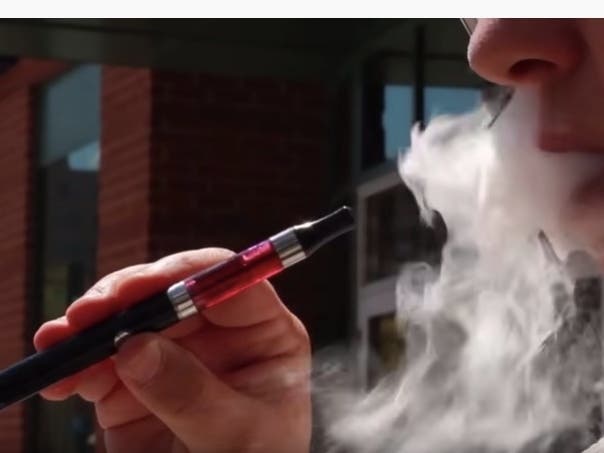


NEW JERSEY – One New Jersey user reportedly talked about vomiting up blood. Others said they've become hopelessly addicted and perpetually sick.
This is the crisis New Jersey health officials are facing as vaping illnesses have nearly doubled in three weeks since a statewide health alert was issued. And at least four lawsuits have been filed in the state against e-cigarette makers, all claiming that the product has hooked a new generation of young people to a potentially dangerous substance.
The state Department of Health said the New Jersey cases have risen dramatically just as the Centers for Disease Control and Prevention is investigating a 25-state "outbreak" of severe pulmonary disease associated with e-cigarette products.
Find out what's happening in Morristownfor free with the latest updates from Patch.
"This investigation is ongoing and has not identified a cause, but all reported cases have a history of using e-cigarette products," the CDC said.
Dawn Thomas, a New Jersey Department of Health spokeswoman, said her office has discovered at least 15 cases of illnesses possibly connected to vaping. The age range involves people who are 17 to 45 years old, living in the central and northern regions of the state.
Find out what's happening in Morristownfor free with the latest updates from Patch.
Thomas said the NJDOH is working with local health departments, healthcare providers and other entities to collect reports and provide support for additional investigation. The department will provide updates on its webpage on vaping: vapefactsnj.com.
Nationally, 215 possible cases of severe pulmonary disease associated with the use of electronic cigarette, or e-cigarette products have been reported by 25 states, and additional pulmonary illnesses are under investigation, according to the CDC.
Just three weeks ago, the New Jersey Department of Health sent a statewide health alert to health care providers and local health departments following recent reports of severe lung disease in nine people who have used vaping products.
Domenic Sanginiti, an attorney representing two of the young people in New Jersey lawsuits, has targeted JUUL-brand e-cigarettes, noting they are shaped like USB drives, have fruit-flavored pods and have a very high level of nicotine – all of which young people find attractive.
Sanginiti said JUUL’s intentionally markets toward teenagers in a "predatory " manner, showing advertisements that mimic the Newport "Alive with Pleasure" cigarette advertisements from decades ago.
"You're gong to see some increased blood pressure and other health problems," Sanginiti told Patch. "You're going to see more of these medical cases."
One of Sanginiti's lawsuits involves a "P.O.," who is now 20 years old and first tried JUUL when it was offered to him at high school.
He was 17 and he soon started buying it from the local convenience store, according to the lawsuit. He was attracted to the mango flavor and became severely addicted.
He eventually reached the point of vaping up to two JUUL pods a day and switched to "cool" mint. P.O. now sruggles to function without nicotine, experiences strong mood swings, anxiety and bouts of depression, the lawsuit says.
He eventually started to smoke traditional cigarettes at 18, according to the lawsuit.
Another one of the cases Sanginiti has supported involves a Middlesex County teen who was 16 when friends introduced him to vaping at his high school. He eventually vaped two pods a day and slept with his JUUL in his hand.
He would also JUUL during class – a practice known as "JUUL in school" – and would do it pretty much anywhere. He's also had mood swings and he's irritable, according to a lawsuit filed earlier this month.
NJ Advance Media also reported two other cases, one involving a 16-year-old New Jersey boy who started using JUUL vaping products around his 14th birthday. He's also hopelessly addicted.
In another case, a Rowan University freshman from Medford who started using JUUL e-cigarettes when he was 16 eventually lost 12 pounds and was hospitalized for three days last month after he vomited blood, according to NJ Advance Media.
In December, three New Jersey students were hospitalized when they fell ill after inhaling substances from their vape pens, according to officials.
Tina Ritchie, dean of students at North Warren Regional School, sent a letter to parents saying the school had several students fall ill after inhaling substances from vape pens. Read more: 3 NJ School Students Hospitalized After Vaping, Officials Say
JUUL officials said in a statement that they are "committed to improving the lives of the world's one billion adult smokers by eliminating cigarettes, the leading cause of preventable death in the world. JUUL Labs' products are designed to help adult smokers switch."
The CDC has issued an advisory on e-cigarettes, saying:
- The use of e-cigarettes is unsafe for kids, teens, and young adults.
- Most e-cigarettes contain nicotine. Nicotine is highly addictive and can harm adolescent brain development, which continues into the early to mid-20s.
- E-cigarettes can contain other harmful substances besides nicotine.
- Young people who use e-cigarettes may be more likely to smoke cigarettes in the future.
- The use of e-cigarettes is unsafe for kids, teens, and young adults.
What are e-cigarettes?
- E-cigarettes are electronic devices that heat a liquid and produce an aerosol, or mix of small particles in the air.
- E-cigarettes come in many shapes and sizes. Most have a battery, a heating element, and a place to hold a liquid.
- Some e-cigarettes look like regular cigarettes, cigars, or pipes. Some look like USB flash drives, pens, and other everyday items. Larger devices such as tank systems, or "mods," do not look like other tobacco products.
- E-cigarettes are known by many different names. They are sometimes called "e-cigs," "e-hookahs," "mods," "vape pens," "vapes," "tank systems," and "electronic nicotine delivery systems (ENDS)."
- Using an e-cigarette is sometimes called "vaping" or "JUULing."
- Some e-cigarettes look like regular cigarettes, cigars, or pipes. Some look like USB flash drives, pens, and other everyday items.
How do e-cigarettes work?
- E-cigarettes produce an aerosol by heating a liquid that usually contains nicotine, flavorings, and other chemicals that help to make the aerosol.
- The liquid used in e-cigarettes often contains nicotine and flavorings. This liquid is sometimes called "e-juice," "e-liquid," "vape juice," or "vape liquid."
- Users inhale e-cigarette aerosol into their lungs. Bystanders can also breathe in this aerosol when the user exhales it into the air.
- E-cigarette devices can be used to deliver marijuana and other drugs.
What Is JUUL?
- JUUL is a brand of e-cigarette that is shaped like a USB flash drive. Like other e-cigarettes, JUUL is a battery-powered device that heats a nicotine-containing liquid to produce an aerosol that is inhaled.
- News outlets and social media sites report widespread use of JUUL by students in schools, including classrooms and bathrooms.
What are the other risks of e-cigarettes for kids, teens and young adults?
- Scientists are still learning about the long-term health effects of e-cigarettes.
- Some of the ingredients in e-cigarette aerosol could also be harmful to the lungs in the long-term. For example, some e-cigarette flavorings may be safe to eat but not to inhale because the gut can process more substances than the lungs.
- Defective e-cigarette batteries have caused some fires and explosions, a few of which have resulted in serious injuries.
- Children and adults have been poisoned by swallowing, breathing, or absorbing e-cigarette liquid through their skin or eyes.
Get more local news delivered straight to your inbox. Sign up for free Patch newsletters and alerts.