
This is a paid post contributed by a Patch Community Partner. The views expressed in this post are the author's own, and the information presented has not been verified by Patch.
Think about it.
Although we look back to the beginnings of Christianity to understand it, Christianity is really a starting point, a spiritual launchpad on which we can build lives of greater joy, greater productivity, and greater love.
The week leading up to Easter Sunday changed the world! And it could change your 21st Century life as well.
Find out more about The Week That Changed The World.
In the meantime …
A Special Bonus
“Inclusion” and “The Power of Love” are two of the pillars of our church’s faith.
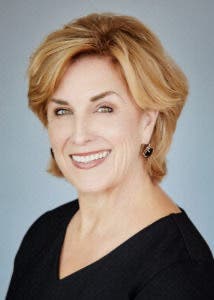
As a special bonus, the following is Part 3 of a 4-part series, by Madelon Maupin (MTS), World-Renowned Bible expert, Master of Theological Studies, and the speaker for The Week That Changed The World.
The Promise of Inclusion and the Power of Love – Part 3
By Madelon Maupin, MTS,
Speaker for The Week That Changed The World
In the Bible chapter, Acts, we read of another boundary shattered: the low social status and alienation of a eunuch.
As one Bible dictionary explains: “In ancient societies that placed a high premium on male virility, the effeminate eunuch embodied shame, impotence, and social deviance” (The New Interpreter’s Dictionary of the Bible).
Acts 8 relates Philip the Evangelist’s meeting with an Ethiopian eunuch who served his queen as chief financial officer. It’s important to note that even royal court status didn’t overcome the religious ostracism that excluded eunuchs from worship in the Jerusalem Temple.
Philip was directed by an angel (the Greek, aggelos, means messenger) to approach this spiritual seeker, who sat reading the book of Isaiah in his chariot. Then, “the eunuch asked Philip, ‘Tell me, was the prophet talking about himself or someone else?’
So beginning with this same Scripture, Philip told him the Good News about Jesus” (Acts 8:34, 35, New Living Translation). Philip explains this good news realized in Christ Jesus and his resurrection, that even death cannot stop God’s love for His creation.
In a profound moment, the eunuch asked if he could become part of the community of Christ followers by being baptized. We can almost hear his hope that finally the punishing social customs causing exclusion and shame would be replaced with acceptance and love. And so they were as Philip baptizes the man based on his belief in Jesus Christ as the Son of God.
The man’s encounter with Philip is another example of the Holy Spirit speaking to both, ushering them toward each other.
The beauty of Acts is how intentionally Luke captures this pattern of ever-outreaching love. He constructs the book as outwardly moving concentric circles of inclusion, both geographically and theologically, overriding the false boundaries that would separate us. Starting in Jerusalem, Jesus’ followers would first reach out to fellow Jews.
Next, the stories of Peter and Philip include another concentric circle of taking Christ Jesus’ message of God’s love to the before-hated Samaritans.
And finally, with the conversion of Saul to Paul, the remaining chapters of Acts track the greatest concentric circle of all: the mission to the Gentiles, who began to embrace the teachings of Christ Jesus throughout the Roman Empire.
Watch for Part 4 of this series in which the author relates a personal experience of how God’s love is not just comforting but transformative, as well as a powerful lesson in the power of forgiveness.
In the meantime, if you would like more information about The Week That Changed The World, or the speaker, Madelon Maupin, click here.
For more about the sponsor, First Church of Christ Scientist, Morristown, NJ, click here.
Note: This article is based on a talk the author gave to the World Parliament of Religions. Madelon Maupin is from Scottsdale, Arizona, and will be speaking in our area in March.
This post is an advertorial piece contributed by a Patch Community Partner, a local brand partner. To learn more, click here.