Community Corner
Why Alcohol Withdrawal Is Only the First Step: What 90-Day Treatment Addresses Next
90-day treatment builds on withdrawal stabilization by addressing drinking patterns, mental health, coping skills and relapse prevention.


This is a paid post contributed by a Patch Community Partner. The views expressed in this post are the author's own, and the information presented has not been verified by Patch
For someone who has been drinking heavily for a prolonged period, stopping alcohol can create a medical situation that requires more than determination. Alcohol withdrawal can range from anxiety, tremors and insomnia to serious complications, making medical supervision important when significant withdrawal is possible. Medications, including benzodiazepines, are sometimes used by qualified medical professionals during alcohol withdrawal when clinically indicated. They aren't a self-treatment option and require appropriate clinical oversight. Once withdrawal is stabilized, another phase begins. Longer-term treatment can address drinking patterns, mental health concerns, coping skills, relapse risks and daily routines. This is where structured treatment can provide valuable time for meaningful change.
Why Alcohol Withdrawal Requires Medical Supervision
Alcohol withdrawal is different from simply feeling uncomfortable after deciding to stop drinking. For people who have developed significant physical dependence, withdrawal can affect the nervous system and may become medically serious. Symptoms can change over time, making professional monitoring important when withdrawal risk is significant. NIAAA notes that alcohol withdrawal can be life-threatening and that some people require medical care and monitoring to manage potentially dangerous symptoms.
Why Medication May Be Used
Medical supervision allows qualified professionals to monitor symptoms and respond when treatment is clinically indicated. Medications, including benzodiazepines, are sometimes used by qualified medical professionals during alcohol withdrawal when clinically indicated. The appropriate approach depends on withdrawal history, current symptoms, medical conditions, other medications, and overall risk.
That doesn't mean benzodiazepines are appropriate for everyone or that they should be obtained and taken without medical guidance. Alcohol withdrawal treatment requires clinical judgment and appropriate medical oversight.
For families in Morristown, the practical takeaway is straightforward: when significant alcohol withdrawal is possible, medical supervision should come before decisions about longer-term treatment.
What Happens During Medically Supervised Detox
During medically supervised detox, the immediate priority is stabilization. Medical professionals can monitor symptoms, assess changes in condition and determine whether medication is clinically appropriate.
What Medical Monitoring Can Involve
The process may include:
- Monitoring vital signs
- Evaluating withdrawal symptoms
- Assessing changes in the person's condition
- Administering medication when clinically indicated
- Adjusting care according to the person's response
The exact approach varies according to the person's condition. The purpose is to help the body move safely through withdrawal while reducing the likelihood of serious complications.
Detox and Continued Treatment Are Different Stages
Detox addresses the immediate physical effects of stopping alcohol, but it doesn't by itself resolve the behavioral, psychological or social factors associated with an alcohol use disorder. NIAAA describes detox as a critical first step, while noting that detox alone isn't alcohol treatment and that continuing care is often needed for longer-term recovery.
Rolling Hills Recovery Center doesn't provide inpatient medical detox onsite. When detox is clinically indicated, the admissions team can coordinate placement with an appropriate medical provider before continued treatment begins.
That distinction matters because someone can complete detox and still need support with the pressures, routines and coping patterns associated with drinking. Stabilization creates an opportunity to begin treatment. It doesn't eliminate the need for continued care.
What Detox Does Not Address
Once withdrawal symptoms subside, the underlying questions remain.
Understanding Drinking Patterns
A person may need to understand what situations trigger drinking, how alcohol became part of daily routines and which emotions or circumstances make drinking more difficult to control. Stress, relationship problems, unresolved trauma, depression, anxiety and other concerns can also affect recovery.
These issues may require time to identify and address. A longer treatment period allows clinicians to look beyond the immediate withdrawal episode and consider how substance use fits into the person's broader circumstances.
Addressing Co-Occurring Concerns
Co-occurring mental health concerns deserve particular attention. Treating alcohol use without considering significant mental health symptoms can leave part of the person's needs unaddressed.
An integrated approach can instead consider substance use and mental health together when both are present. This can help treatment address concerns that may otherwise complicate recovery.
Building Skills for Daily Life
Coping skills also take time to develop. Someone who has relied on alcohol to manage stress may need practical alternatives for handling:
- Difficult conversations
- Work pressure
- Loneliness
- Cravings
- Changes in routine
- Emotional stress
Relapse prevention involves identifying these situations before they become emergencies and developing realistic responses.
This is one reason treatment shouldn't be viewed as a single event that ends when withdrawal ends. Detox can create physical stability. Continued treatment can build the skills and understanding needed to maintain that stability.
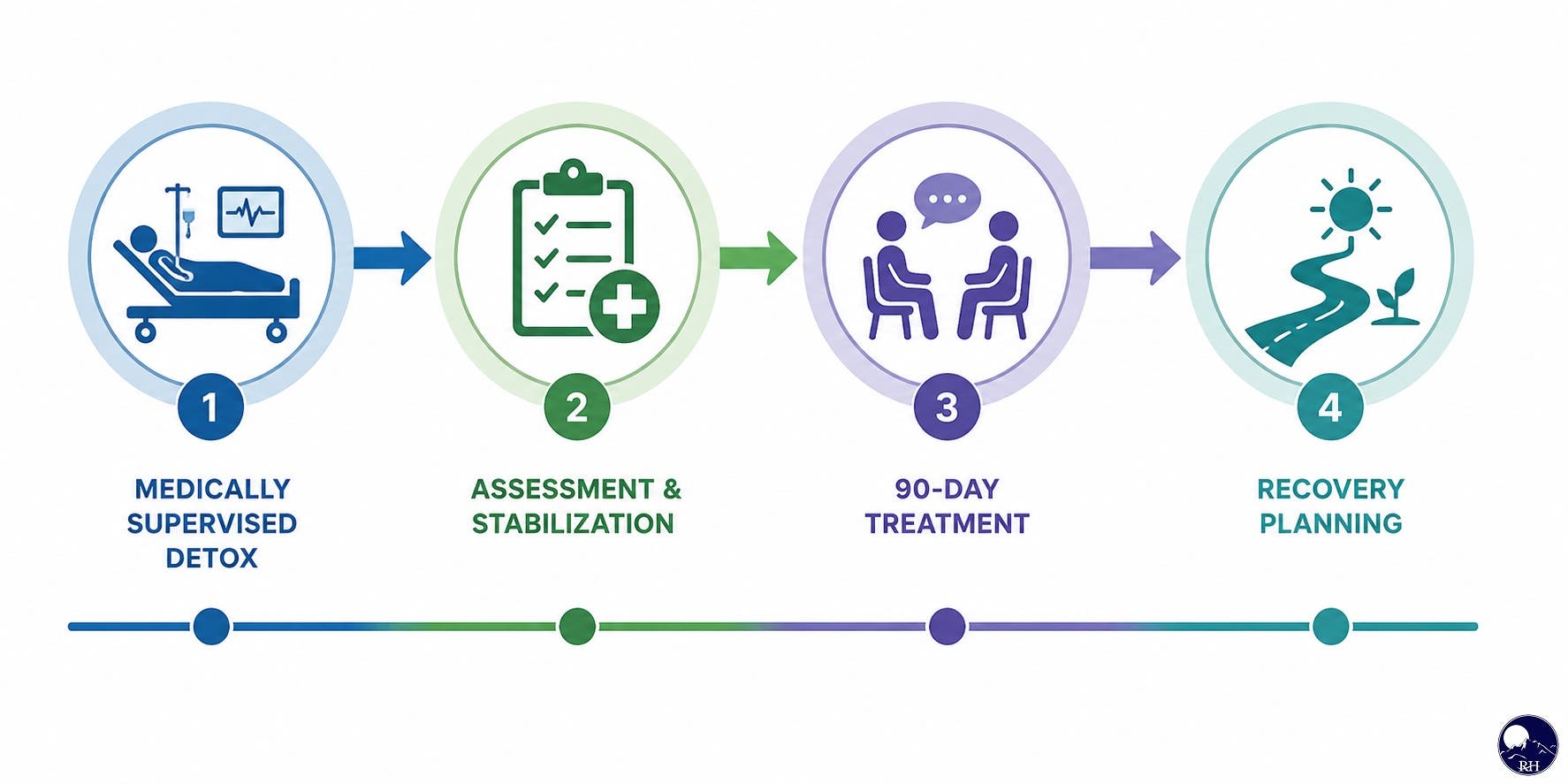
Why 90-Day Treatment Provides a Stronger Foundation
A longer treatment period can give clinicians and clients more time to move beyond the immediate withdrawal episode and work on the broader issues surrounding addiction.
The National Institute on Drug Abuse has reported that participation lasting fewer than 90 days is often of limited effectiveness for residential or outpatient treatment. This doesn't mean every person requires the same program or exactly 90 days of care. Treatment length and level of care must reflect individual needs, progress, and clinical recommendations.
What Additional Time Makes Possible
With more time for structured treatment:
- Assessment can become more comprehensive.
- Therapy can address patterns rather than isolated incidents.
- Coping skills can be practiced repeatedly instead of discussed once.
- Progress can be reviewed as treatment develops.
- Treatment plans can be adjusted when new information emerges.
- Recovery planning can begin before the transition out of structured care.
For someone who requires detox before entering ongoing treatment, Rolling Hills Recovery Center can coordinate appropriate detox placement before treatment begins. Families researching a 90-day rehab program near Morristown can also review how longer-term structured care may provide time for assessment, therapy, coping-skills development, progress reviews and recovery planning. Its programs include structured levels of care such as partial hospitalization, intensive outpatient and outpatient treatment, with treatment planning based on individual circumstances.
What 90-Day Treatment Includes
A longer treatment period can create a structured sequence rather than a series of disconnected appointments.
Comprehensive Assessment
A comprehensive assessment helps establish a clearer picture of substance use, medical history, mental health, previous treatment experiences, relationships, daily responsibilities and recovery needs. This information can guide decisions about the appropriate level of care.
Individual and Group Therapy
Individual and group therapy provide different settings for examining drinking patterns, developing insight and practicing healthier responses.
Individual sessions can focus on personal circumstances and treatment goals. Group settings can provide opportunities to work on communication, accountability and interpersonal skills.
Dual-Diagnosis Treatment
Dual-diagnosis treatment can address co-occurring mental health conditions when they are present. This can be particularly important when anxiety, depression, trauma or other mental health concerns influence alcohol use or recovery.
Coping Skills and Relapse Prevention
Coping skills and relapse prevention focus on what happens when treatment becomes less structured. Clients can work on:
- Recognizing triggers
- Managing cravings
- Responding to stress
- Developing healthier routines
- Preparing for challenging situations
The goal is to make these skills practical enough to use outside of treatment.
Progress Reviews
Progress reviews provide opportunities to evaluate what is working and what needs to change. Treatment doesn't have to remain static for three months. Clinical observations and client progress can inform adjustments along the way.
Recovery Planning
Recovery planning prepares for the transition beyond structured treatment. This can include identifying ongoing care, support systems, healthy routines and strategies for handling situations that could challenge recovery.
The goal isn't simply to add more days to treatment. The goal is to use treatment time purposefully, allowing stabilization to develop into skills, insight and a practical plan for life after treatment.
Treatment Is Closer Than Families Think
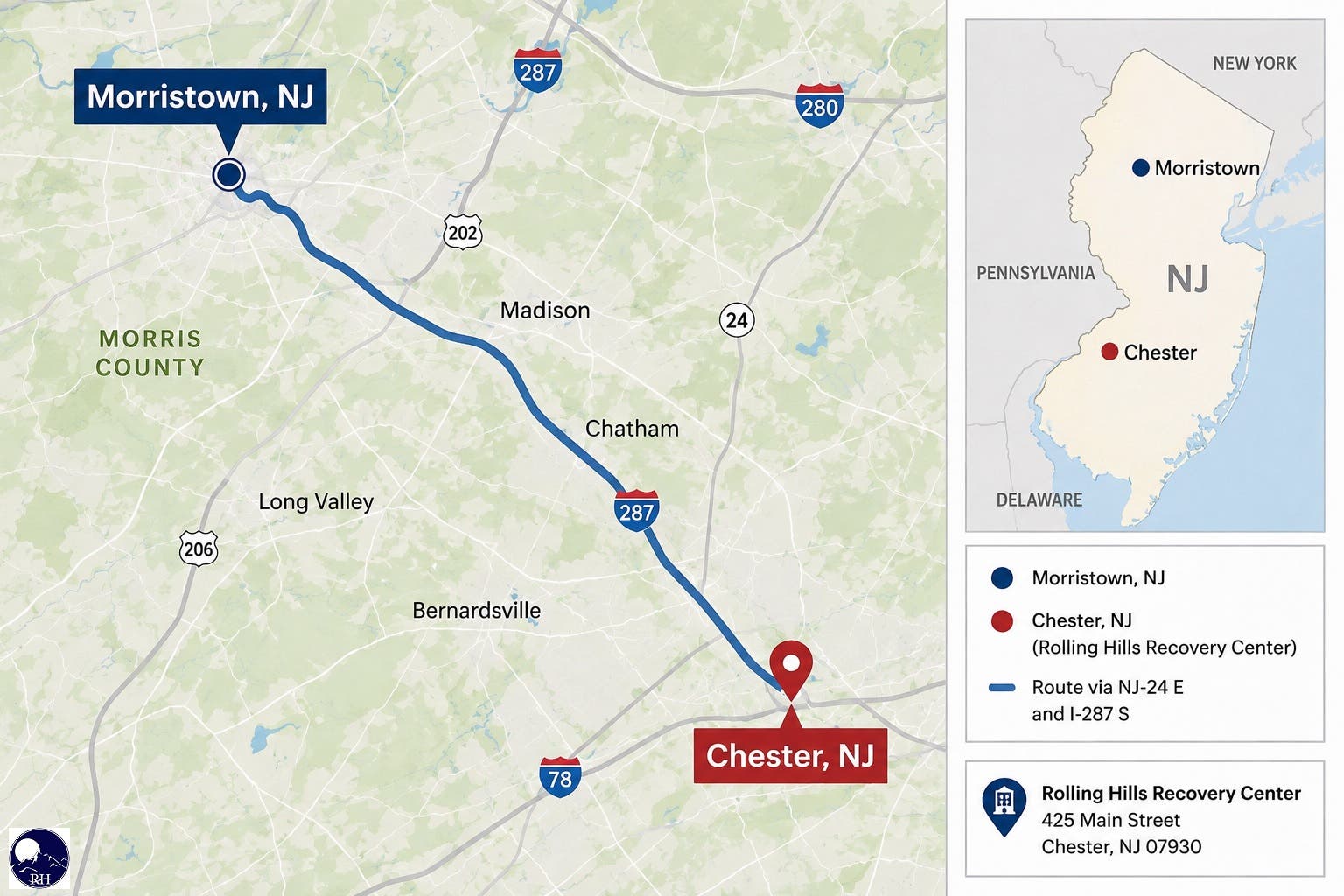
For families searching for alcohol rehab near Morristown, location can influence whether ongoing treatment is realistic. Rolling Hills Recovery Center is located at 425 Main Street in Chester, NJ. Families can find directions from Morristown to Rolling Hills Recovery Center.
Why Proximity Can Matter
Chester is close to Morristown, making structured treatment accessible without requiring families to look far outside the area. For loved ones supporting someone through recovery, proximity can make participation in family support, transportation and continued involvement more manageable.
A nearby treatment option can also make the transition from initial stabilization into ongoing care easier to understand. Instead of viewing detox as the endpoint, families can consider how withdrawal management fits into a broader treatment plan.
From Withdrawal Management to Recovery Planning
The important distinction is between getting through withdrawal and building a life that doesn't depend on alcohol. Medical detox can address the immediate physical risks. Continued addiction treatment can provide additional time to:
- Assess the whole person
- Address co-occurring concerns
- Develop coping skills
- Review treatment progress
- Adjust care when appropriate
- Prepare for recovery beyond treatment
For families in and around Morristown, that continuum can begin with understanding what alcohol withdrawal requires and continue with choosing a level of care designed for the work that comes after stabilization.
This post is an advertorial piece contributed by a Patch Community Partner, a local brand partner. To learn more, click here.


