Health & Fitness
Your Personal Trainer Is A Fraud
The fitness industry was a radically different place 20 years ago - It was honest, and our clients were safe.


The Fitness Industry doesn’t want you to know what I’m about to tell you.
Calling it a “dirty little secret” would attempt to minimize the immorality of it and imply a limited scope of its effect.
What you’re about to learn is going to compel you to question one of your closest relationships. And, perhaps it'll compel you to question the legitimacy of an entire class of professionals.
Find out what's happening in Morristownfor free with the latest updates from Patch.
The fact is – there’s an uncomfortably good chance that your personal trainer is a fraud.
A liar.
Find out what's happening in Morristownfor free with the latest updates from Patch.
A charlatan.
And it's not just your personal trainer - it could be your nutritionist, Yoga instructor, online coach, "Stretch" coach,... everyone.
It wasn’t always like this. As a matter of fact, you were a lot safer twenty years ago than you are right now.
Back then, one thing was certain -
It was honest, and our clients were safe
Before The Collapse
It shouldn’t come as any surprise that fitness was borne of vanity. Even to this very day, nearly everyone would like some part of their body to appear for fit. This motivation, alone, is why the industry even exists.
Inasmuch, it’s been a confounding mix of methods and philosophies for much of its history.
Joe Weider, Jack LaLanne, Bonnie Prudden, Charles Atlas, and a handful of others were pioneers in the early days.
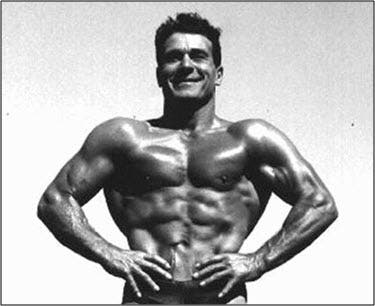
Each of them is venerable in their own right; they all deserve credit for their roles in making fitness ubiquitous in modern culture.
As for standardizing “Fitness” - there was very little going on for a quite a long time. Medical researchers weren’t particularly interested in investing resources in what they saw as a novel recreation. Being unable to reconcile this vanity, what would eventually supernova into the behemoth that fitness is today was left to develop largely on its own.
There was a universe between these two constructs - fitness and medicine - and cooperation between them would take decades to mature into the framework of what it is now.
The associations that did exist used their resources for preventing and curing disease. Physicians, doctors, and physical therapists organized their research to form the backbone of what would become modern sports medicine.
Sometime in the late 1970s, the gap between them had narrowed as it became obvious that Medicine needed Fitness as much as Fitness needed Medicine. Bodybuilding - both as a profession and a recreation - had directed a great deal of the public’s interest toward personal fitness. Aerobics and fad diets began to take over our lives.
Anyone around to remember the fitness boom in the 1980s will tell you what an interesting time that was - mullets, headbands, neon calf-warmers, Jazzercise, Buns of Steel – and the list goes on. We developed a fascination for fitness as gyms began popping up all over the country.
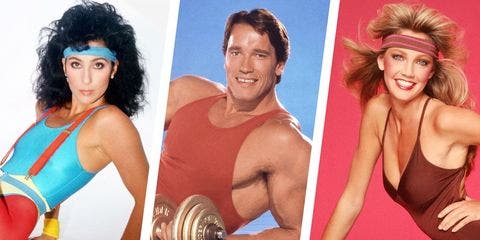
As was the case for the last 50 years, the “pros” were the gym enthusiasts that appeared to know the most. Naturally, some were fortunate to make a living from it. Since being a personal trainer or other type of fitness professional was a simply a matter of self-proclamation, there wasn't a single disincentive for you to choose a career in fitness.
It seems as though the more things change, the more they stay the same.
Our Seat At The Table
The health sciences began their modern revolution and continued commanding a greater influence over our daily choices.
Borne from this was a momentous opportunity for a new type of organization to develop. These organizations took on the responsibility of standardizing different models of study for a maturing industry.
Organizations like: ACE (est. 1985), NASM (est. 1987), WITS (est. 1993), et al., used current science to determine appropriate client evaluations, and program models. Informed by modern medicine, their curriculums study several areas, including their respective scientific philosophies.
They offered the public protection from a misinformed, and potentially dangerous practice.
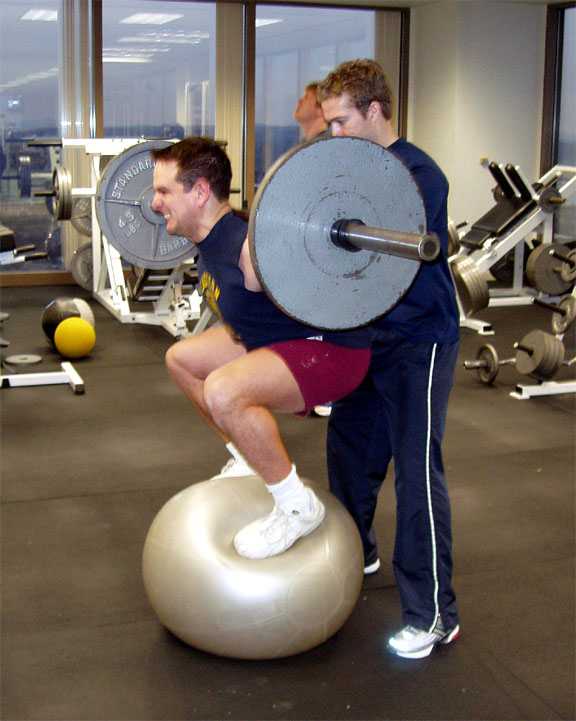
Immediately, their popularity exploded. The fitness industry earned its legitimacy as fitness education became standardized.
Fitness enthusiasts from around the country were finally able to pursue their passions as tens of thousands of newly licensed professionals entered the workforce. This eventually pushed most of the unqualified pros to choose between earning their piece of paper, or getting a different job.
This continued through the 1990s and into new millennia as certified trainers distinguished themselves from their uneducated and uncertified counterparts.
Certifications began earning national accreditation based on the standards set by the National Commission for Certifying Agencies (NCCA).
An unbelievable amount of work went into making sure that exercise and fitness had a scientific approach, and that approach was safe. The time had come when we could guarantee the minimum competency of those we entrusted with our physical wellbeing.
You would think that after a century of fighting for this seat at the table that our worst days are behind us.
I wish I could tell you that they are.

The Inmates Running The Prison
It’s getting harder and harder for the industry to keep its promises because cheating has no consequence. Accountability is entirely optional.
The Dept. of Labor registered over 350,000 certified personal trainers in the US in 2018.
IDEA estimates that 45% of personal trainers who claim to be certified don’t meet the industry’s minimum standard.
Based on those numbers, there are over 300,000 personal trainers that recklessly participate in this masquerade by feigning competence and risking the safety of their clients.
300,000
Some estimates put that number up to 70%. And honestly, based on my own experiences 70% seems like a far more reasonable number.
Either way, it's a sh*tload.
What’s happening?
What’s happening is nothing less than a public health crisis. Personal trainers and other fitness pros are reneging on their promises by allowing their licenses to expire.
It’s easily excused because it’s easily concealable.
It’s hidden in plain sight.

Just as with nursing and medicine, chiropractors and therapists – it’s required that personal trainers maintain their professional licenses. Though unlike them, there aren’t any consequences if they don’t.
No one cares to ask because it’s a reasonable supposition. We assume that because they should be legitimate, that they are.
This is very much not the case.
And shamefully, the biggest brands in fitness are just as guilty. Deceitfully, the fitness chains and franchises we rely on to bring fitness to the masses knowingly hire unqualified staff. Not only is it less expensive, but they often have a lot of experience given the fact that the longer their tenure, the more likely it is that they’re unlicensed.
It's deceptive, it's dangerous, and it's morally corrupt.
It's an epidemic.
As with every other profession, today’s knowledge is only as good as today’s education.
Integrations between fitness and wellness have grown in lockstep with the rapid advancements in medical technology. It’s no less important for your fitness professional to be licensed than it is for your doctor or dentist.
Unqualified fitness professionals can, and do, inflict considerable harm. This can be happen in many ways:
- an old injury that comes back from the annals of our youth,
- a catastrophic interaction between a recommended supplement and pharmaceutical drug,
- or, an exercise-induced heart attack, or stroke.
No other member of our personal wellness team is as unaccountable, and relationship therefore as fickle, as the relationship you have with a fitness professional.
Fitness malpractice can be just as dangerous as medical malpractice.
Exercising due diligence could very well be a matter of chronic pain or progress, surgery or success, even life or death. Ensuring your protected from the masquerade silently hijacking the fitness industry takes less than one minute:
Ask your fitness professional from whom did they earn their certification.
Go to the organization's website and "verify credentials", or send them an inquiry though their "contact us" link.
They will be happy to help. These organizations don't want to be misrepresented just as much as you don't want to be taken advantage of.
It's up to you - the client, the consumer - to look out for yourself, just as you did when you made the decision to hire a fitpro.
You took the first step in securing your health and fitness.
You'll need to take just one more in ensuring your own safety.
Speaking of which, is your trainer insured?
Thank you for your attention.
Be Well,
Matthew Scarfo
NASM CPT-OPT, CES, PES, Pn1, et al.