Community Corner
An American Dream, Deferred? Home Ownership Out of Reach for Newarkers
As Newarkers Grapple with Inflation, & Rising Rents, Large Corporate Investors are Gobbling Up Real Estate in the Poorest Neighborhoods

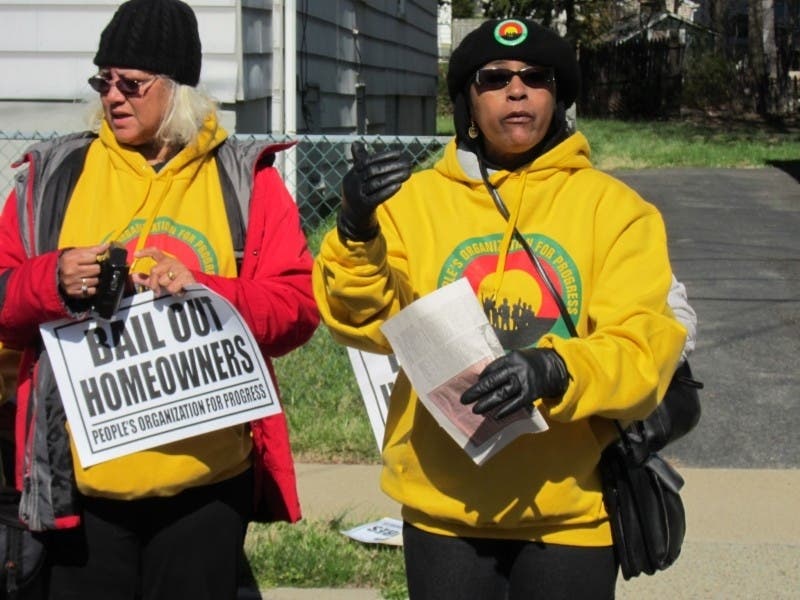
Homeownership has long been accepted as a core component of the American dream, as it confers various economic benefits on homeowners, including the ability to accumulate wealth by accessing credit, building equity, and reducing housing costs. Despite a majority of Americans aspiring to homeownership, they face several common hurdles, such as difficulties in putting together a sufficient down payment, crippling levels of student loan debt and the ability to access credit. In addition to these typical financial hurdles, current boom conditions in the real estate market are placing additional hurdles.
Moreover, structural racism in the U.S. housing system has contributed to stark and persistent racial disparities in wealth and financial well-being, especially when it pertains to the disparities between Black and white homeownership. Nowhere are these issues more apparent than in the city of Newark, New Jersey where Black households (47 percent) and Latino households (39 percent) make up the majority of the city’s population. Black and Latino's households typically own homes at much lower rates than their white counterparts, which is partly due to instances of entrenched historical and structural racism.
Newark has recently experienced a strong appreciation in home prices in the years since the “Great Recession”. After the housing bust of 2008-2009, median sales prices for homes in Newark skyrocketed. Since dipping to as low as $127,000 in 2012, the median home price increased 90 percent to $240,000 in 2019. Subsequently, owning property remains out of reach for many Newark families because most of the homes in the city are now out of their price range. To make matters worse, private equity-backed companies are gobbling up vast swaths of residential property across the city.
Find out what's happening in Newarkfor free with the latest updates from Patch.
A recent report by Rutgers Center on Law, Inequality, & Metropolitan Equity (CLiME), called ‘Who Owns Newark’ showed that the national trend in corporate investors buying 1-4 family homes in predominantly Black neighborhoods is more excessive in Newark than in other comparable cities. The study indicates that since 2020, almost half of all the residential property purchases in the city were purchased by Corporate landlords. The trend began after the foreclosure crisis when predominantly black and Latino neighborhoods became the targets of corporate investors looking for passive returns from rent payments.
The results of high levels of corporate ownership and lower rates of homeownership by families in affected neighborhoods have heralded higher rental prices, heightened evictions, a declining middle class, decreased neighborhood cohesion, higher crime rates, and weakened community cohesion.
Find out what's happening in Newarkfor free with the latest updates from Patch.
These mostly anonymous outside companies are now setting housing markets within Newark neighborhoods toward terms that primarily benefit their investors. While the report did not detect any illegal activity, the complexity of transactions where properties were acquired shows that ownership names and identities were concealed which suggest that many of the institutional buyers do not want their activities publicly known to the public at large.
This quiet plot to take over Newark’s real estate market by groups of investors who are mainly anonymous hinders the city’s goals of greater homeownership, more affordable rental opportunities, as well as the American dream of neighborhoods stabilized by the collective power of communal partnerships. Neighborhoods that were once known for middle-class wealth creation will soon become islands of renters and threatens to turn Newark into a corporate-owned town. Newark’s experience indicates what can happen when local and state leaders continually ignore equity.
Something has to be done to help average Newark families to have a chance to own their own homes. Owning a home is not only every family's dream, but it also is the best route to accumulate wealth for retirement. If the current trend continues, we will become a nation of renters with no equity in the end and will rely on the government for our livelihood and well-being. This is a huge transfer of wealth and will prevent families from creating a stable future. Our elected leaders have a duty to serve our communities and families.
I urge Newarkers to come together and organize against these unfair practices of institutional investors accumulating single-family homes or rental investments. The time has come for each of us to understand that we will never solve the challenges of our time unless we solve them together because these issues are much greater than any of our personal, political or organizational differences. We are all in this together. We may live or work in different wards and communities but we must all fight for a common cause.
The average family in Newark deserves the opportunity to pursue their own American Dream of owning a home. But as the great poet Langston Hughes wrote so many years ago in a poem entitled: “What happens to a dream deferred?” “Does it dry up like a raisin in the sun? Or fester like a sore…... Maybe it just sags like a heavy load. Or does it explode?”
Unfortunately for most families in Newark, The American Dream has been deferred indefinitely.


