Neighbor News
Malcolm X, Black people, Black Nationalism, and Newark, NJ
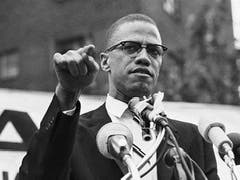
"I am a Muslim, but I am also a Black nationalist freedom fighter." -Malcolm X (Omawele El Hajj Malik El Shabazz)



Hotep (Peace)!!!
Take notes!!!!!
Tony James, a good friend of mine, responded to a post I recently put up on social media. My post was about the struggles of teaching Black History in a racist educational system. He said to me, “Hotep My Brother and Friend, you are definitely a true light in the darkness of a White supremacist Educational System & had we received it when we were coming up, our communities would had been more like “Black Wall Street” than the “City that Killed Brother Malcolm X”. Please, continue to be the “lamp unto their feet and the light unto their path”. #Ase.” I said back to my brother, “Hotep!!! Asante sana (Kiswahili for thank you very much) / aldupe (Yoruba for giving thanks)!!!! I am inspired by your words ndugu (Kiswahili for brother)!!!! The great Dr. Marimba Ani, author of YURUGU-An Afrikan Centered Critique of European Thought and Behavior, teaches us that the pathway to reclaiming our Blackness is to use Afrikan terms and phrases in our every day conversations. I use these Afrikan terms and phrases all the time. It helps me to stay connected to our Afrikan cultural traditions. The struggle continues man!!!!! Don’t get it twisted ndugu.” For a moment, I thought about the statement “the city that killed brother Malcolm.” I said to myself, this Netflix documentary called, Who Killed Malcolm X, is challenging the true of history of Black nationalist struggle in the city of Newark, NJ. Yes, the Nation of Islam had a large following in Newark due to Malcolm X’s popularity with Black people. The Nation of Islam grew tremendously under Malcolm’s leadership as the National Spokesman for the Honorable Elijah Muhammad. Yes, the Black Muslims from Muhammad Mosque #25 contributed greatly to the early development of a Black nationalist movement in Newark. The Nation of Islam propagated Islam, built many Black owned businesses, and promoted Black unity. But the Nation of Islam came under fire from the United States government. Although the Nation of Islam was an Islamic organization, and it operated as such since July 4, 1930, it posed a threat to White supremacy, and the system of racism because of the Nation’s Black nationalist program for the empowerment of Black people. When Malcolm and the Most Honorable Elijah Muhammad disagreed over whether, or not, the Nation of Islam should involve itself in a direct action strategy against police brutality and America’s sanctioned racial segregation of Black people, the US government’s policing agencies step up its Cointelpro (counter intelligence program) tactics to discredit and destroy Malcolm, the Most Honorable Elijah Muhammad, and the Nation of Islam. The US government could not get to the Most Honorable Elijah Muhammad, but they were able to get to Malcolm X. On February 21, 1965, a group of rogue members of the Nation of Islam assassinated brother Malcolm X (Omawele El Hajj Malik El Shabazz) at the Audubon Ballroom in Harlem, New York City. Yes, Black Muslim hands pulled the trigger, but the US government, and her policing agencies (i.e. New York Police Department, the FBI, the CIA, etc) created the atmosphere that lead to the execution of Malcolm X. Many people that watched the Netflix documentary, Who Killed Malcolm X, have left many of them outraged about his assassination, particularly Black people in Newark. Many people in Newark’s Black community believe that the killers involved in Malcolm’s assassination have contributed to Newark’s “negative” image. But I say to people, who think like that in the Newark area, brother Malcolm did not die in vain. His Black nationalist teachings gave fuel to a fire in Black people in Newark that will change the racial and political landscape forever in the city and in America.
Find out what's happening in Newarkfor free with the latest updates from Patch.
The Nation of Islam was a powerful movement in Newark and in America. The Nation of Islam changed a lot of lives in the Black community. It brought many Black people to Al-Islam. The Nation of Islam developed within many Black people a new sense of Black pride, the need for Black unity, and it paved the way for our people to be Afrikan centered in their Black consciousness. Newark has a large Muslim community due to the work of Nation of Islam; but it was Black nationalism under the leadership of Imamu Amiri Baraka that wrestled Black Newark away from white domination in the city.
In the history of Black nationalist struggle in America, there were two Black Power conferences held in Newark, NJ to organize Black people for Black Power and Black liberation!!!!
Find out what's happening in Newarkfor free with the latest updates from Patch.
Many Black people came to Newark to flee the terrorism from America’s Klu Klux Klan (KKK), state sanctioned racial violence, and White racial segregation in the southern regions in the United States. Unfortunately, the north had their versions of racial segregation as well in America. Redlining Black people to only poor sections of norther cities. However, the north, to some degree, gave Black people freedom than the south.
These conferences were greatly influence by Malcolm X’s Black nationalist philosophy. In fact, after the assassination of Malcolm X, his Black nationalist philosophy did not disappear. Following Malcolm X’s example, many young activists themselves began to become Black nationalists in America in the mid 1960s. They began to create and lead organizations that fought for Black power and Black liberation. Black nationalism means to support unity and political self-determination for black people, especially in the form of a separate black nation.
Let’s take a look at a few of the Black nationalist leaders and organizations.
Out of the Civil Rights Movement, came activist Kwame Ture’, aka Stokely Carmichael. Frustrated with White supremacy, and the system of racism, completely fighting to maintain racial domination of Black people in America, Toure’ called for Black people to unite around Blackness. During the March Against Fear in 1966, Ture’ called for Black people to rally and organize around a Black nationalist idea called Black Power. The March Against Fear was a major 1966 demonstration in the Civil Rights Movement in the South. Civil rights activist James Meredith launched the event on June 5, 1966, intending to make a solitary walk from Memphis, Tennessee, to Jackson, Mississippi, a distance of 220 miles. His objective of the March was to counter the continuing racism in the Mississippi Delta after passage of federal civil rights legislation in the previous two years and to encourage Black people in the state to register to vote. On the second day of his walk, June 6, 1966, Meredith was shot and wounded by James Aubrey Norvell-a white sniper.
In Detroit, Black nationalist Imari Obadele and Chokwe Lumumba created the Republic of New Afrika in America. The Republic of New Afrika (RNA was founded in 1968 as a Black nationalist organization. Black nationalists members of the RNA advocated for the creation of an independent Black country situated in the Southeastern United States in the heart of an area of black-majority population. The RNA movement demanded from the United States the payment by the federal government of several billion dollars in reparations to descendants of former enslaved Afrikan for the damages inflicted on Black people by chattel enslavement, Jim Crow laws, and modern-day forms of racism. Lastly, the RNA fought for a referendum of all Black people to determine our on desires for citizenship; RNA movement leaders said that they were not offered a choice in this matter after slavery ended in 1865 following the US Civil War. Some of the most famous members of the RNA were Robert F. Williams, Queen Mother Moore, and Dr. Betty Shabazz-the widow of Malcolm X. In 2013, Chokwe Lumumba became the Mayor of Jackson Mississippi. He died while in offce. He succeeded by son Chokwe Lumumba, Jr in 2017.
A young talented writer and playwright named LeRoi Jones from Newark, NJ and a young gifted community activist scholar in Los Angeles, California named Ron Everett were inspired by brother Malcolm X as well in the 1960s.
LeRoi Jones, who would later dropped his slave name for his new Afrikan name, Imamu Amiri Baraka, became the founder of the Black Arts Movement. Black Artists, poets, writers, dancers, musicians, and singers unified their creative artistic gifts around the best of Afrikan culture to be used as a tool for Black liberation.
Ron Everett, he later changed his slave name to adopt the Afrikan name Maulana Karenga, will become the co-founder of a community-based Black nationalist organization called Us on September 7, 1965 in Los Angeles, California. The Us Organization used the best of Afrikan culture as the basis for Black people’s struggle against social degradation, economic exploitation, White supremacy, and racism. The Us origination will also create a Black nationalist cultural philosophy called Kawaida and a Pan Afrikan centered holiday called Kwanzaa. Kawaida (Kiswahili word meaning "tradition" or "reason," pronounced ka-wa-EE-da), Karenga defines Kwaida as, "a communitarian African (Afrikan) philosophy created in the context of the African (Afrikan) American liberation struggle and developed as an ongoing synthesis of the best of African (Afrikan) thought and practice in constant exchange with the world." The holiday of Kwanzaa is celebrated from December 26 to January 1.
Another group of Black people influenced by Malcolm’s Black nationalist philosophy were Bobby Seale and Huey P. Newton. Both Seale and Newton will eventually establish the Original Black Panther Party as a vehicle for Black people to struggle against police brutality and economic oppression from monopoly capitalism on October 15, 1966 in Oakland, California. The Original Black Panther Party believed that Black revolutionary nationalism was needed in the Black liberation struggle to end the racist and class exploitation of Black people.
Eventually, Tore’, Obadele, Lumumba, Baraka, Williams, Seale, Newton, and Karenga will become some of the most respected Black nationalist activists in America, in Afrika, and in the world Afrikan community. Their activism began defining, directing and contributing greatly to a national movement for Black liberation. This new movement came to be known as the Black Power Movement of the 1960s and early 1970s.
As result of all this revolutionary Black nationalist activism; some Black power leaders and movements, such as Amiri Baraka, Dr. Malunan Karenga, and the Us Organization directed their Black nationalist goals towards electoral politics.
Amiri Baraka was not only a talented writer and poet, he was a brilliant political theoretician and organizer. In 1972, he help to co-convene the National Black Political Conference in Gary, Indiana. Tens of thousands of Black people came to the conference of Across America to begin a movement to seize Black political power to help rebuild the Black nation. The rallying cry was “Its Nation Time”. Black nationalists left Gary, Indiana with a road map for a Black agenda for Black power in predominate Black cities. The rate of Black elected officials dramatically increase in America due to the activism of Black nationalists from the Black National Political Convention.
In Newark, Amiri Baraka led Black people in the fight for Black political power. Under Amiri Baraka leadership, Black people united with Latinos in the city to take city hall. Black nationalists won a victory against White supremacy and racism by filling Newark city hall with a Black mayoral candidate named Kenneth Gibson. Black people and Latinos, inspire and organized by Black nationalists, elected Gibson as the city’s first Black Mayor, with several Council seats going to Black people. One of these Councilpersons would become Mayor of the city in the 1980s. His name is Mayor Sharpe James.
In between racist White people battling Black nationalists fight for political power in Newark, the Original Black Panther Party in the city began organizing Black people for revolutionary change to challenge the entire establishment in Newark.
From 1966 to 1975, Black nationalists were changing the Black political, economic, and cultural landscape of Black people in America. Black nationalists inspired many other oppressed groups in America to fight for power, such as women, Latinos, and even the Gay community. (The Gay community’s Rainbow Gay pride flag was inspired by Black nationalism). The popularity of Black nationalists inspired masses of Black people to struggle for Black studies, Afrikan centricity, Black liberation theology, Black independent schools, Black unity, Black pride, wear Afros and Afrikan dashiki, Afrikan names, connection to mother Afrika, and Black owned Afrikan centered cultural centers and businesses.
Unfortunately, White supremacy and the system of racism became threatened by Black nationalists and the Black Power movement in America. Again, the US government used their Cointelpro tactics to launch a secret war against Black people to discredit and destroy Black nationalism and the Black Power Movement in America. Many Black nationalists leaders were jailed, imprisoned, framed, shot, and killed in the United States. A climate of disunity were directed towards Black nationalist organizations. Many Black nationalists organizations were pitted against one another by the US government, so that the Black power movement would be weakened, and eventually, destroy itself. Ultimately, Cointelpro won its battle against Black nationalists. Black nationalist and the Black Power movement in America became an insignificant voice for oppressed Black people.
After the destruction of Black nationalism and the Black power movement in America, Black people have been working to rebuild the Black power movement throughout the 1980s to the present. It has been a long struggle. In many quarters of the Black community, Black nationalism and Black power have been put on the back burner.
However, in Newark, several decades later, the struggle for Black power is marching onward in the person of Mayor Ras J. Baraka- the son of Imamu Amiri and Amina Baraka and the founder of Black Nia F.O.R.C.E. Mayor Baraka’s leadership has reduced violent crime, addressed lead pipe environmental issues, created educational opportunities, promotes Black artistry and Afrikan centered cultural traditions, and improved the quality of life for many people, particularly Black people. Many people, particularly Black people, are benefiting from the Black nationalism produced in Newark from Malcolm X and Amiri Baraka to this day. Many Black people in Newark now have Black voices in local government and better employment opportunities in the city.
Larry Adhimu Chunga Hamm is a veteran community activist, community organizer, community leader, and a student of Amiri Baraka. Adhimu Chunga is the Afrikan name given to brother Larry in early 1970s from Newark, NJ's great and legendary Black power leader Imamu Amiri Baraka. Larry Hamm has been a relentless advocate for Afrikan-American people and the cause of human rights for more than 50 years. Although he is based in Newark, NJ, his experienced leadership has stretched across the United States of America. Larry Hamm has fought to protect the interests of oppressed people in New Jersey. He founded the human rights social justice organization called Peoples Organization for Progressive (P.O.P) in the 1980s. He is currently running against Cory Booker for a US Senate seat in New Jersey in 2020. Baba Zayid Muhammad, long time respected Newark activist, also known as the people’s historian, has kept the memory of the city’s Black nationalist history alive by teaching next generation of our young people the importance of Malcolm X, Amiri Baraka, and the Black power movement to Black people at community forums years. The Nation of Islam under the leadership of the Honorable Minister Louis Farrakhan has even rebuilt the Nation of Islam’s Muhammad Mosque #25. It is currently led by a young charismatic Minister named Abdul Haqq Muhammad. They have regain respect in the streets for work their with Black people. But before Minister Abdul Haqq Muhammad took over the reigns of leadership in the new Muhammad Mosque #25, legendary Minister Abdul Khadir Muhammad worked for many years to resurrect the name of the Most Honorable Elijah Muhammad in the hearts and minds of Black people in the city. After the death of the Honorable Elijah Muhammad, the original Nation of Islam was led into Sunni Al-Islam by his seventh son named Warith Deen Mohammed in 1975. In 1978, Honorable Minister Louis Farrakhan reestablished the Nation of Islam for a new generation of Black people in cities across America and around the world. But most importantly, they have reestablish the Black nationalist program of the Most Honorable Elijah Muhammad to help empower Black people in Newark and in the world. The tree of Black nationalism bore fruit in Newark by given birth to the Newark Chapter of the New Black Panther Party and the Black community’s stop the violence movement called the Newark Anti-Violence Coalition (NAVC). But because we are not reading and studying Black History, we don’t know our own history in America and in Newark. We as Black people must be careful of non-Black people controlling and telling our narrative.
The Netflix documentary called-Who killed Malcolm X-is incomplete people. The documentary did not go deep into why Malcolm was so threatening to the White power structure. What made him a target to be killed by the US government was his embracing of the philosophy of Black nationalism. Malcolm X was a Muslim, he understood that religions were too divisive to organize Black people around for Black liberation. Malcolm X said, in his 1964 speech titled, The Ballot or the Bullet, that “I am a Muslim, but my political, social, and economic philosophy is Black nationalism. In fact, I am a Black nationalist freedom fighter.” Many Black people heard Malcolm X’s message as a call to arms for the Black community to follow Black nationalism. The philosophy of Black nationalism became the movement in the streets of Black America, particularly in Newark, NJ. One of the achievements Black nationalism established was Black political power in predominantly Black cities. In these cities, Black people control city hall, the Board of Education, the fire department, and the police department. However, Black nationalists have not reach the goal of making Black people free of White supremacy and the system of racism. Black nationalists are still in the struggle to make Black people independent to fully achieve Black Power.
-Bashir Muhammad Akinyele is a History Teacher, Black Studies Teacher, Community Activist, Chairperson of Weequahic High School's Black History Month Committee in Newark, NJ, commentary writer, and Co-Producer and Co-Host of the All Politics Are Local, the number #1 political Hip Hip radio show in America.
Note: Spelling Afrika with a k is not a typo. Using the k in Afrika is the Kiswahili way of writing Africa. Kiswahili is a Pan -Afrikan language. It is spoken in many countries in Afrika. Kiswahili is the language used in Kwanzaa. The holiday of Kwanzaa is celebrated from December 26 to January
1.
#Hotep
#afrocentricity
#nationofislam
#kemet
#blackthelogy
#kwanzaa
#blackstudies