Schools
BRICK Avon, Hawthorne Ave. Schools to Undergo Major Changes
Seven Newark schools receive Schools Improvement Grant
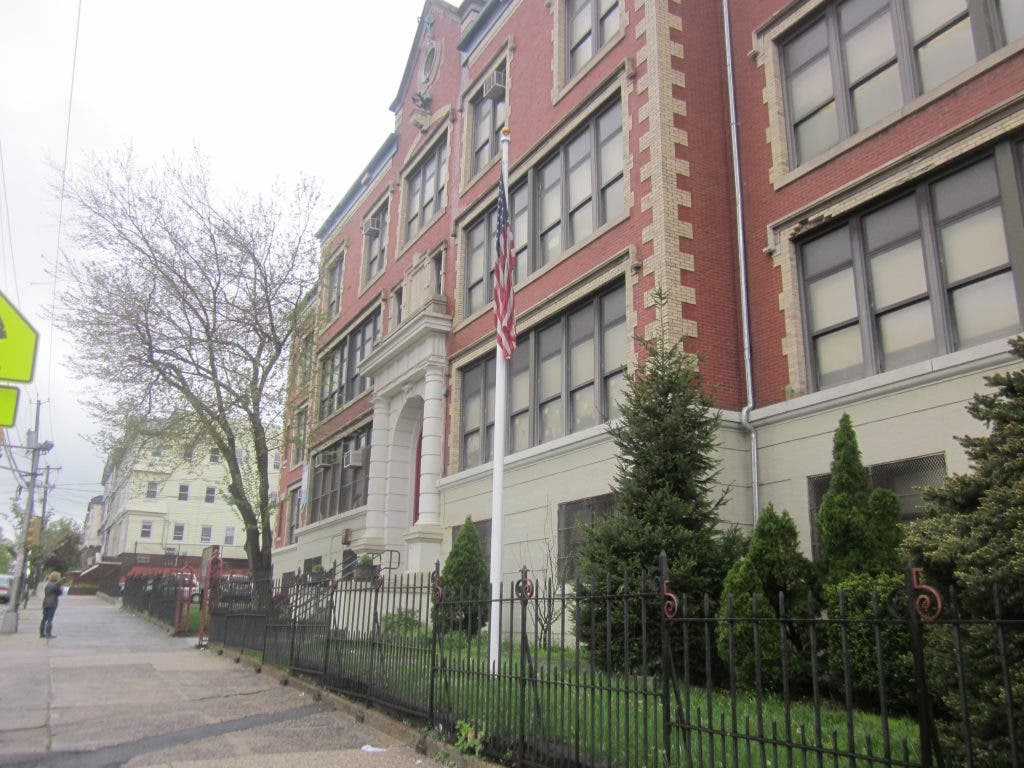
and elementary schools will be undergoing major changes this fall — including the replacement of half their teachers and administrators — as part of their selection for federal grants aimed at the state's most troubled schools.
Barringer High School also will be getting additional funding under the federally-funded School Improvement Grant (SIG) program, but won’t be undergoing changes as drastic as those planned for the other two schools.
The three schools are among nine in New Jersey that will share $55 million over the next three years. The New Jersey Department of Education will determine exactly how much each school will receive in the next several weeks.
Find out what's happening in Newarkfor free with the latest updates from Patch.
Last year, in the first wave of funding under the SIG program, five Newark schools made the list. At some of those schools, students showed marked improvement in their test scores, while at others there was little change.
For example, at Central High, which received a $5,068,000 grant, the percentage of students passing the High School Proficiency Assessment (HSPA) in Language Arts jumped from 36.6 in 2010 to 69 in 2011, according to the state education department. In math, the passing rate at Central improved from 19.9 in 2010 to 45.8.
Find out what's happening in Newarkfor free with the latest updates from Patch.
But at Shabazz High, which got a $5,190,000 grant, the percentage of students passing HSPA in language arts trickled upwards from 44.1 in 2010 to 46.2 in 2011, while the passing rate in math actually declined from 21.3 in 2010 to 19 in 2011.
The Newark Public Schools communications office did not return messages seeking its input for this story.
The Christie administration sees the SIG program as a major initiative in its attempts to transform schools were students repeatedly have struggled to succeed.
"Intervening in our lowest performing schools is one of the most important things we can do to ensure that all students in New Jersey graduate from high school college- and career-ready," said Acting New Jersey Education Commissioner Christopher Cerf in a press release. "We must be willing to take drastic steps to help our most vulnerable students, and these new funds and changes at the school level will give these students a real chance to succeed."
Avon and Hawthorne Avenue will be getting funding under the so-called "turnaround model" in the SIG program, which requires the replacement of half the staff and the appointment of a new principal, unless the current one was given the job in the past two year as part of a reform effort.
Barringer will be getting funding under the "transformation model," which calls for a change in principal, but not half the staff.
Both models of the SIG program include extended learning time for students, the use of student test data to shape instruction plans, increased opportunities for staff to take classes for professional development and more flexible work conditions to recruit and retain high-quality teachers.
Students at the three Newark schools being added to the program have been struggling in standardized tests.
At Avon, the 2010 New Jersey Assessment of Skills and Knowledge (NJ ASK) tests showed just 27.5 of the eighth graders scored at proficiency levels in language arts, 37 percent in reading and 11.3 percent in math.
At Hawthorne Avenue, the 2010 NJ ASK results showed 36 percent of eighth graders were proficient in language arts, 37 percent in reading and 16 percent in math.
At Barringer, the 2010 HSPA scores showed 38.7 percent of students passed the language arts test, while 25.5 passed the math section.
The SIG program not only pumps money into the individual schools that are struggling. It also requires the adoption of reforms that would affect all schools within the district. Among those are the creation of a dropout prevention program and a more controversial plan to use students' performance in standardized tests as part of the criteria for evaluating teachers.
"We encouraged districts to think boldly about the type of radical change needed to improve their lowest performing schools, and we are glad to see that they responded," said Cerf. "However, the performance of an individual school is inherently connected to what is happening across the district, and we believe these district-wide changes will be vital to sustained improvement in these schools."
In addition to Central and Shabazz, the other schools that received funding under SIG last year were Dayton Street elementary, West Kinney Alternative vocational and Renaissance Academy. Four of the five will continue in the program 2011-12. Renaissance Academy dropped the program because it did not implement all the requirements last year, officials said.