Politics & Government
‘Die-In’ At NJ Statehouse Protests $45M Diversion Of Opioid Funds To Hospitals
"Nothing about this is okay," a distraught advocate warned ahead of this week's vote on the state budget.


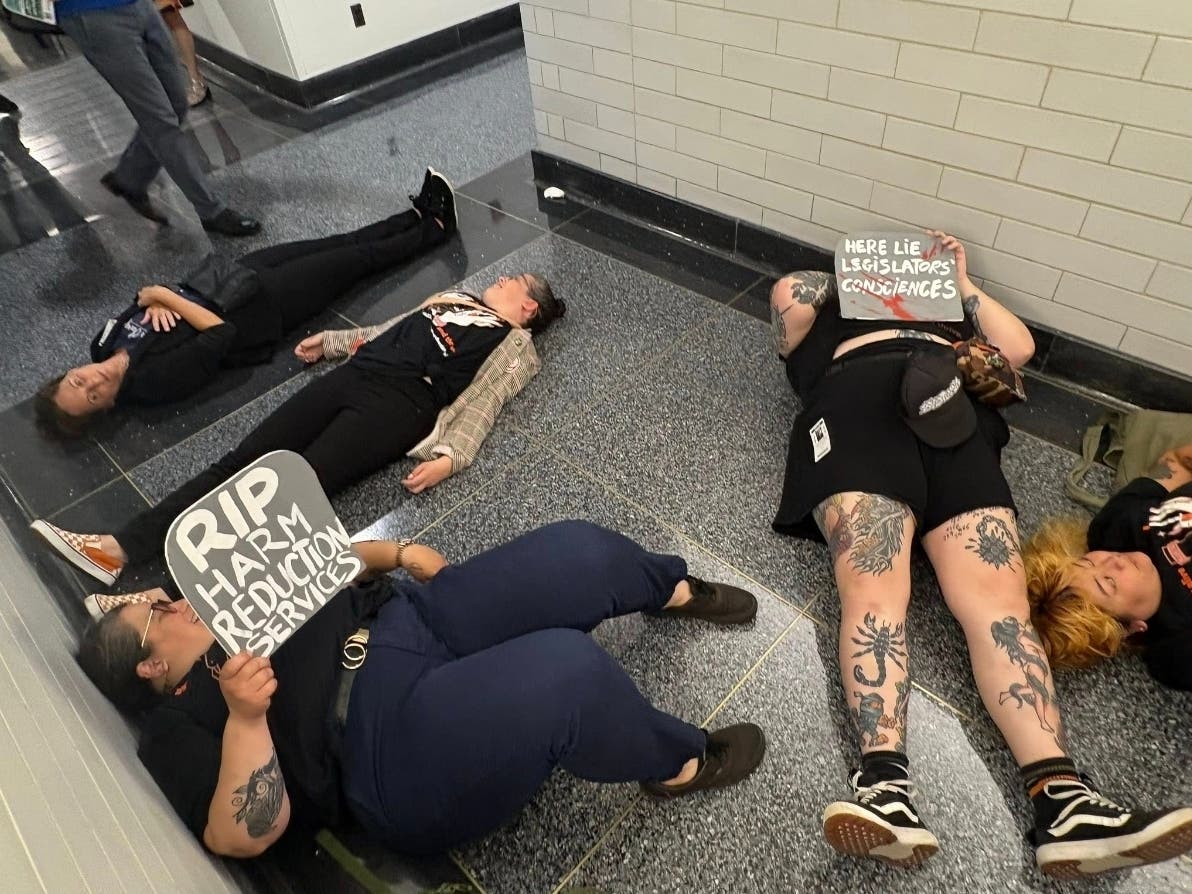


Dozens of harm reduction specialists, drug counselors, public health advocates and HIV care providers staged a “die-in” inside of the New Jersey Statehouse on Monday. The activists said they are outraged over a decision to divert millions of dollars in opioid settlement funds to four of the state’s largest hospital systems as part of this year’s budget.
Gov. Phil Murphy greenlighted the latest state budget on Monday night. The fiscal year 2026 spending plan cleared votes in the New Jersey Senate and Assembly by wide margins.
- Read More: Murphy Signs Record-Busting Budget With New Taxes – And Tax Relief
- Read More: See How Each NJ Lawmaker Voted On State Budget
Earlier this week, advocates began raising red flags about a clause in the spending plan that will send $45 million from the state’s Opioid Recovery and Remediation Fund to four major hospital systems: Hackensack University Medical Center ($10 million), RWJBarnabas Health ($15 million), Cooper University Hospital ($15 million), and Atlantic Health ($5 million).
Find out what's happening in Newarkfor free with the latest updates from Patch.
New Jersey will be receiving hundreds of millions of dollars over the next decade from major lawsuits involving the opioid industry. Funds made available through these agreements are scheduled to be paid through 2038, and are designed to fund state and local programs focused on “treatment, prevention and other strategies to combat the opioid epidemic.”
According to the state website, almost all of the funds are intended to be divided evenly – with 50 percent going to the state and 50 percent going to eligible counties and municipalities.
Find out what's happening in Newarkfor free with the latest updates from Patch.
Sending tens of millions of dollars to privately owned hospital systems with “no strings attached” isn’t part of that plan, advocates argue.
On Monday, dozens of protesters laid on a hallway floor of the Statehouse, holding tombstones bearing the names of evidence-based services and programs that they say are now at risk of being cut. The list includes harm reduction centers, free naloxone distribution, peer recovery support, HIV/AIDS treatment and supportive housing.
Lawmakers, staff and lobbyists walked over the drug counselors and overdose response providers as they chanted “Give the money back!” and “People died, you lied!”
The protest culminated when the public health advocates interrupted the budget vote by dropping a banner from the mezzanine balcony reading “PEOPLE DIED, YOU LIED: Don’t Let Hospitals Steal the Opioid Settlement Fund.”
“The people here protesting are the reason why fewer New Jersey residents are dying from overdoses, and lawmakers are walking all over us – literally and figuratively,” said Jenna Mellor, executive director of the New Jersey Harm Reduction Coalition.
Mellor – who took part in Monday’s protest – bashed lawmakers for carving out an earmark for “big hospital systems.”
The last-minute diversion of opioid funds came with no public notice, no requirements for how hospitals must use the funds and no accountability measures, Mellor said.
“Most of the lawmakers we spoke with today had no idea this was even in the budget bill, and no one could tell us what the hospitals plan on doing with this money,” Mellor alleged. “It’s hard to find the words to describe how shameful this is.”
Bre Azañedo of the BLM Paterson Harm Reduction Center said that people will die because of the decision made in Trenton.
“The services we provide work because we don’t charge for them or ask for insurance like a hospital does,” Azañedo said. “We give out free Narcan, reverse overdoses and provide counseling and support – no questions asked. Now, these front-line organizations may have to cut staff and services while hospital executives and their lobbyists get rich.”
“If they talked to anyone out there actually doing the work, they would know that this is a giant step backwards,” agreed Rey Chavis, executive director of the Newark Community Street Team, which operates a community overdose response team and harm reduction center in New Jersey’s largest city.
“This money comes from the companies that killed our neighbors and family members, and now they’re taking it away from the people saving our neighbors and family members,” criticized Tonia Ahern, community coordinator for the National Center for Advocacy and Recovery.
“Nothing about this is okay,” Ahern emphasized.
New Jersey Attorney General Matthew Platkin also questioned the diversion of funds, explaining his position in a statement on Monday morning:
“Last night, I learned — to my great disappointment — that the budget the Legislature is considering would deplete our hard-won opioid settlement dollars by sending $45 million to hospital systems for uses that have not been identified. My office fought for years against companies who profited off the deaths and addiction of thousands upon thousands of New Jerseyans. When we announced these settlements, I stood with Governor Murphy and promised these settlement dollars would go towards evidence-based solutions to help those struggling with opioid addiction — not to pad the State’s coffers. We were fully mindful of not repeating the mistakes made with the state’s tobacco settlement funds, which should have been used exclusively to address damage caused by cigarettes. And just two weeks ago, the New Jersey Opioid Recovery and Remediation Fund Advisory Council, which was created by law two years ago and on which my office sits, released a strategic plan for the uses of these funds, which this appropriation ignores.”
“I take no position on whether the hospitals should receive funds, but these settlement funds are not general revenues for the state,” Platkin continued. “Spending this money in this way is a slap in the face to every family who lost a loved one in this devastating crisis, which continues to claim the lives of thousands of New Jerseyans each year.”
“I urge the Legislature and Gov. Murphy to reject this proposal and direct these funds to go to their intended purpose: to help the people of New Jersey who are struggling with addiction,” Platkin said.
“Rest assured, if they do not, my office will be carefully scrutinizing these hospital systems to make sure every single dollar is spent within the terms of the settlements we fought for years to obtain,” the attorney general added.
Some health care industry representatives have stood up for the work that hospitals have been doing to fight the opioid crisis in New Jersey, however.
Cathy Bennett of the New Jersey Hospital Association told NJ Spotlight News that the state’s medical centers are national leaders in “evidence-based” treatment, prevention and recovery. They also offer medications for opioid-use disorder, mobile clinics and Narcan distribution, among other resources.
“As essential partners in a coordinated public health response, substance use disorder experts in New Jersey hospitals are working with community-based organizations to provide lifesaving assistance on a daily basis to tens of thousands of patients struggling with opioid addiction,” Bennett said.
Send local news tips and correction requests to eric.kiefer@patch.com. Learn more about advertising on Patch here. Find out how to post announcements or events to your local Patch site.
Get more local news delivered straight to your inbox. Sign up for free Patch newsletters and alerts.