Business & Tech
Greater Newark Business Leaders Look Ahead To 2027: Medicaid, AI And The Economy
A business forum recently took a look ahead at what the new year might hold for the Newark region.


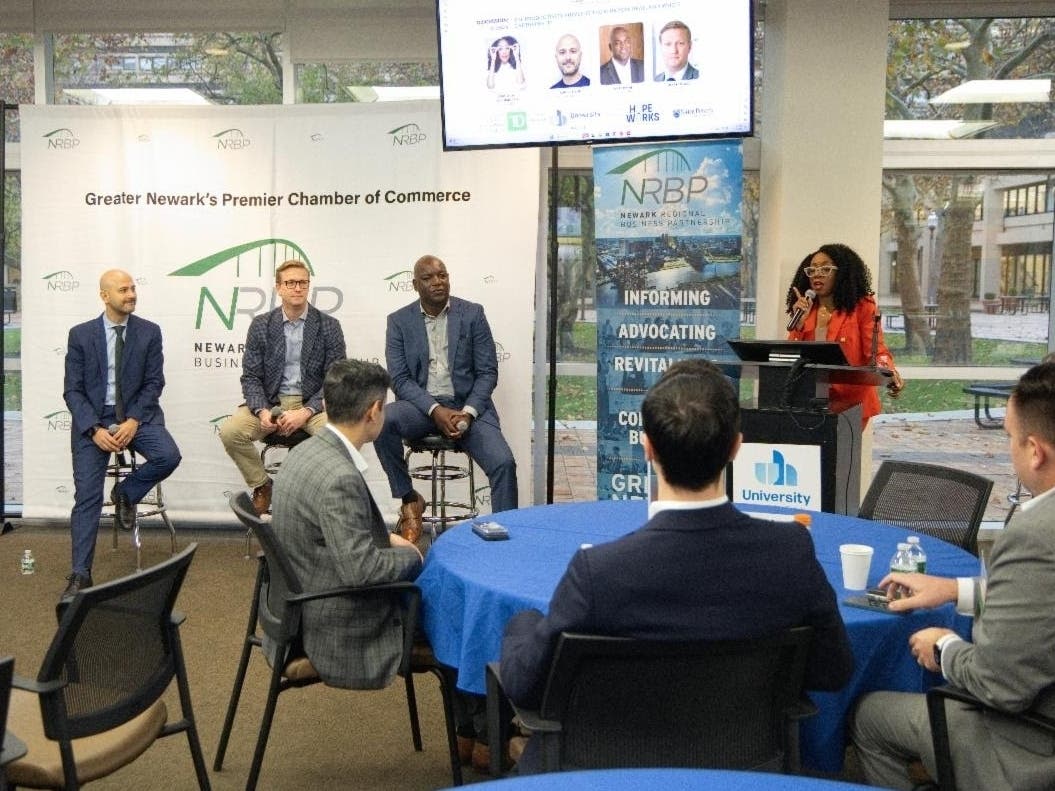
NEWARK, NJ — A business forum recently took a look ahead at what 2027 might hold for the Newark region, including federal Medicaid policy changes and the potential economic impact of artificial intelligence.
The Newark Regional Business Partnership (NRBP) held its annual Regional Economic Outlook forum at University Hospital and Rutgers School of Dental Medicine earlier this month.
“Greater Newark sits right at the intersection of the biggest economic shifts happening in the country, from major changes in health care coverage to rapid technological transformation,” CEO and president Ferlanda Fox Nixon said.
Find out what's happening in Newarkfor free with the latest updates from Patch.
Here’s what the Nov. 12 forum tackled, according to the NRBP:
The Economic Outlook: Steady National Growth, with New Jersey Lagging
Find out what's happening in Newarkfor free with the latest updates from Patch.
Andrew Foran, an economist at TD Bank, reported that TD has raised its outlook for U.S. growth since June, supported by consumer spending and continued AI investment. TD projects U.S. real GDP growth of 2.1% in 2027, compared with 1.7% in New Jersey, where healthcare and education have driven most job gains. TD also anticipates inflation easing into 2027, potentially creating room for Federal Reserve rate cuts in the second half of the year, although energy prices and geopolitical developments remain important variables.
Medicaid Coverage at a Crossroads: The Ripple Effect on Regional Employers
Moderated by Andrea Martinez-Mejia, executive director of the Greater Newark Health Care Coalition, this session brought together New Jersey Department of Human Services Commissioner Dr. Stephen Cha; University Hospital President and CEO Carole Johnson; RWJBarnabas Health EVP and Chief Corporate Affairs Officer George Helmy; Horizon Blue Cross Blue Shield of New Jersey Director of Medicaid Product Administration Milly Menos; and HealthCare Institute of New Jersey President and CEO Chrissy Buteas.
Under the federal Medicaid changes in H.R. 1, approximately 540,000 NJ FamilyCare members who gained coverage through the Affordable Care Act expansion will be required to document an average of 80 hours per month of work, school, or volunteering, with eligibility renewals moving from annually to every six months. New Jersey Department of Human Services projections estimate that 165,000 to 330,000 residents could lose coverage by the end of the decade, including many who remain eligible but could be dropped because of missed renewal notices or incomplete documentation of their hours.
Panelists emphasized the broader economic consequences, including up to $3.7 billion in annual federal healthcare funding losses for New Jersey, higher uncompensated care costs, increased absenteeism, and rising commercial insurance premiums. They also highlighted resources for employers and workers, including New Jersey's new volunteer-hours law (A3883), intended to help residents identify and document qualifying volunteer activities.
The Productivity Puzzle: Is the AI Payoff Real for Greater Newark?
In the closing session, moderator Dee C. Marshall, CEO of Ai Training Plus, led a discussion with Simone Lenzu, a financial research economist at the Federal Reserve Bank of New York; Mark Negus, executive director, Data Center Investments and Portfolio Management, PGIM; and Gary Mann, president and CEO of Jasfel Analytics.
Panelists explored whether AI investment is generating broad-based productivity gains or widening the gap between large enterprises and smaller firms. They noted that improvements in individual tasks can take time to show up across the broader economy. For new employees and recent graduates, panelists agreed that AI literacy and the ability to work effectively with AI tools may be more valuable than knowing how to code. Speakers also highlighted growing demand for human oversight and quality assurance roles, along with skilled trades such as electricians and HVAC specialists needed to build and maintain AI infrastructure.
Send local news tips and correction requests to eric.kiefer@patch.com. Learn more about advertising on Patch here. Find out how to post announcements or events to your local Patch site.