Community Corner
The Importance of the Hoteps
An Afrikan centered consciousness is the basis for Black liberation.






Hotep (Medu Neter for Peace)!!!
Take Notes!!!
(I will us Afrikan and Black interchangeable to refer to people of Afrikan descent)
Find out what's happening in Newarkfor free with the latest updates from Patch.
I am starting my commentary off with the word Hotep. Saying Hotep is an Afrikan centered greeting that offers peace to someone or to the masses of people. It is an ancient Kemetic (Egyptian) word for peace. The word Hotep is the oldest written word for peace in human history. It predates the Hebrew word shalom for peace and the Arabic word Salaam for peace. Thousands of years ago Afrikan people in Kemet used Hotep to offer people peace in the secular world. But they also offered Hotep to people entering the spiritual realm. Thus making the word Hotep a secular and spiritual word for peace. Hotep was found in the world’s first writing system called the Medu Neter. Kemetic people called their system of writing Medu Neter, but the invading Europeans and Arabs changed the Afrikan name of the Medu Neter to hieroglyphics. All of this great and awesome world history are the missing pages of Afrikan history and culture. Consequently, white supremacy and the system of racism are threatened by Afrikan historical facts and traditions that contribute to the empowering and the liberation of Black people. Therefore, these racially oppressive systems have worked to discredit Afrikan history, culture, languages, philosophy, ethics, and spirituality using anyone and anything, especially our own Black people. This is why some misinformed Black people equate the word Hotep with anti-whiteness, sexism, and homophobia. But the struggle to free Black people, particularly the Black mind from white domination continues onward. Fortunately, we have come to know the greatness of Afrika from Afrikan centricity and Kawaida; and the perseverance of committed Afrikan centered scholars and teachers that bring Afrikan historical facts to Black people and the world.
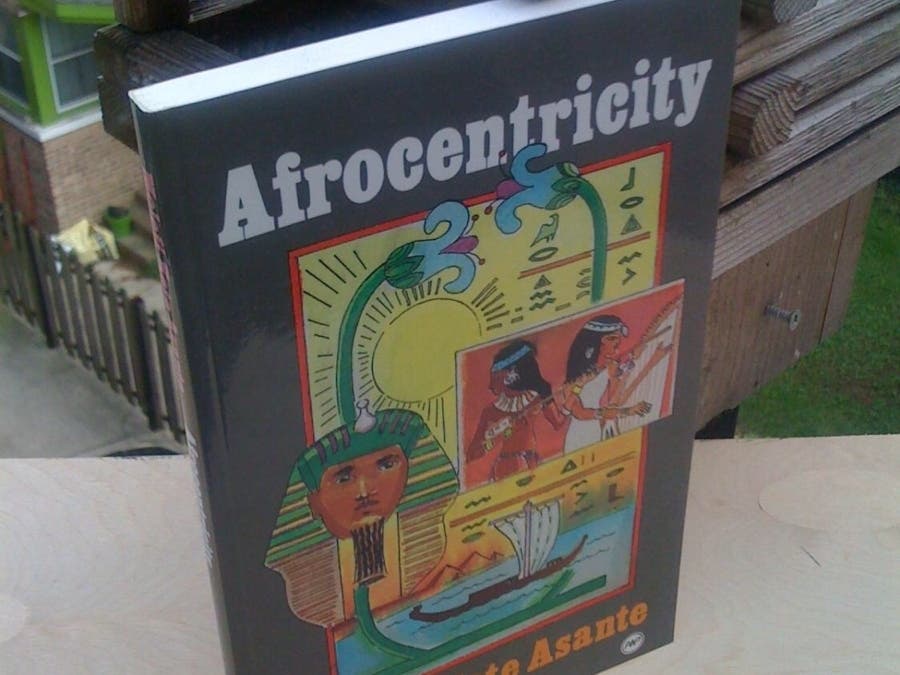
When it comes to Black people in the Afrikan world community, Afrikan centricity is the tool to liberate Black people, and humanity, from racists and white supremacist’s notions on Afrikan history, Afrikan religions, and Afrikan culture. In the 1980’s, at Temple University in Philadelphia, Pennsylvania, Professor Dr. Molefi Kete Asante coined the term Afrocentricity to force the world to recognize the history and culture of Afrikan people as subjects, a nd not objects. His book is called Afrocentricity. Dr. Asante, Professor of Afrikan American Studies at Temple University and the creator of the concept of Afrikan centricity defines Afrocentricity as " the centerpiece of human regeneration. To the degree that it is incorporated into the lives of millions of Africans on the continent and in the Diaspora, it will become revolutionary. It is purposeful, giving a true sense of destiny based upon the facts of history and experience. The psychology of the African without Afrocentricity has become a matter of great concern. Instead of looking out from one's own center, the non-Afrocentric person operates in a manner that is negatively predicable. The person's images, symbols, lifestyles, and manners, are contradictory and thereby destructive to personal and collective growth and development.”
Before Dr. Asante, there was Dr. Maulana Karenga’s Kawaida philosophy. Dr. Karenga is a Professor of Black Studies at California State University at Long Beach. He is the co-founder of the Us Organization, a revolutionary Black cultural nationalist movement established on September 7, 1965 in Los Angeles, California. He is the creator of Kawaida (Kiswahili word meaning "tradition" and "reason," pronounced ka-wa-EE-da). He defines Kawaida as, "a communitarian African philosophy created in the context of the African American liberation struggle and developed as an ongoing synthesis of the best of African thought and practice in constant exchange with the world." Kawaida is the foundation for Kwanzaa - An Pan Afrikan centered holiday celebrated from December 26 to January 1.
Find out what's happening in Newarkfor free with the latest updates from Patch.
But before both Afrocentricity and Kawaida, the struggle to re-center Black people on Afrikan centered consciousness, it came through the critical study of world, American, Caribbean, Asian, Arab, Christian, Jewish, Muslim, and Hindu histories by pioneering Black scholars, such as like Dr. W.E.B DuBois, Arthur Schomburg, and Dr. Carter G Woodson.
During the late nineteenth and early twentieth centuries, Black scholars and Black historians argued that Afrikan history, Afrikan religions, and Afrikan culture were hidden behind the pages of other people’s histories in the world.
Afrocentricists worked tirelessly re-documenting
Black people’s history and culture:
When the Afrocentric movement became popular in
the late 1980s and early 1990s in the Twentieth Century, it inspired masses of
people of Afrikan descent to embrace their own Afrikan history, Afrikan religions,
and Afrikan culture. Guided by many Afrocentric scholars of the day, such as
Dr. John Henrick Clarke, Dr. Ivan Van Sertima, Dr. Asa Hilliard, Dr, Cheikh Anta Diop, Dr.
Na’am Akbar, Haki Mahabuti, Dr. Yosef Ben-Jochannan, Dr. Charshee McIntyre, and many others
(there many more to name, but I will only name a few. Do your own research to find out about these prolific Black scholars), it gave a new generation of Black people the knowledge of the Afrikan origins of all things in the world, including religions. But most importantly, after hundreds of years of racism and white supremacy on the Afrikan world, and in the mainstream white world, Afrocentricity re- centered Black people in their Blackness.
Afrocentricity challenges the names of Europeans placed over Afrikan civilizations:
Afrocentricity uncovers the Europeans names
cloaking Afrikan civilizations. For example, the name Egypt is a European name. According to scholars on Afrikan history and culture, the original people of
ancient Egypt called their civilization Kemet. The word Kemet means the Black Land. Unfortunately, the name Egypt has been stuck in history since the
Europeans and Arabs invaded that Black civilization starting with Alexander the
Great of Greece in 332 BCE (Before the Christian Era).
There is no such thing called the West Indies in
the Caribbean:
To this day, the people in Caribbean are called West Indians because Christopher Columbus, an Italian sailing under the European Spanish flag, believed he was India on the continent of Asian. Christopher Columbus is credited with discovering America in 1492 AD (anno domine mean the year of our lord). However, we learn in Afrocentricity that Christopher Columbus did not discover America. We learn through Afrocentricity, the original people of the Caribbean were Arawak Native Americans. They had a history, civilization, spiritual tradition, and a culture long before the coming of European invaders. But when the Europeans conquered the Caribbean, they wiped out the Native American civilizations there to take their land. After the conquest of the Caribbean, Europeans established the system of chattle (property)slavery. White people began importing masses of forced enslaved Afrikans by the millions to the Caribbean. This is why we have many Black people in the Caribbean to this day. Some of the intermixing of whites, Blacks, and Native Americans created a new people called Latinos in parts of the Caribbean and in South America.
Black presence in the Americas before and after the coming of Europeans:
Before the coming of Europeans invaders, enslavers, colonizers, and conquers; we have learned in Afrocentricity that Afrikan people sailed from Afrika to the Americas. However, when Europeans came to the Americas for land and profits, they wiped out many Native American civilizations and the history of Black people’s early presence in the Americas.
Thus, taking their land to convert the vast territories of property into slave
plantations. Consequently, for hundreds of years, Europeans forced enslaved Afrikans to work on these Caribbean plantations. However, to keep Black people in slavery, white people kept Black people from knowing their true Afrikan history and Afrikan culture by legally and violently dis-centering Black people from their knowledge of self. In many parts of the Americas, the intermixing of whites, Blacks, and Native Americans created new peoples called Afrikan
Americans, Caribbean Americans, and Latino Americans.
Afrika the mother of all humanity:
First and foremost, all humanity started in
Afrika. This continent is the real garden of Eden. Artifacts and fossils
were found in places like Tanzania and Ethiopia dating back millions years ago in 1950s and 1960s. In fact, the earliest human fossils were the fossils of
Black women found in 1974 by Dr. Donald C. Johanson. But during prehistory, when Afrikans during the old Stone Age were looking for food sources, they begin to emigrate out of Afrika to land masses all over the world (e.g. Asia, the Middle East, Europe, Australia, North
America, South America, etc.). And depending on the location, Black people that went to these places in the world, the conditions and the environment change the physical make up of Black people. For example, if Black people went to places we now called Europe, to
adopt to the harsh cold environment, their physical features were change from
Black to White. (Hundreds of thousands of years ago Europe was under an Ice age. Most early Afrikans had to retreat to caves to protect themselves for the snow and ice). But when Afrikans learned how to domesticate plants and animals under the New Stone Age, they began to stay in the land that they emigrated to in the world. One of those lands was Kemet (Egpt) in Afrika. They created something we now called civilization. This civilization existed for over 3000 years. Say scholars say that Kemet is 10,000 years old. It is one of the oldest civilizations in the world. Kemet was created by Black people. Afrka's Kemet influenced many other civilizations and religions,
such as Judaism, Christianity, Al-Islam, China, Latin America, the Middle East,
India, and Europe. Its legacy can be seen in today’s world of science,
mathematics, education, philosophy, government, language, theology, spirituality, western
cultures, medicines, and science. All of this was done before the coming of invading Greeks, Romans, Arabs, and western Europeans. People like Herodotus, Plato,
Aristotle, Hippocrates, and Pythagoras came from all over the ancient world to
study at the feet of Black people in Kemet to learn her secrets.
Hotep, the oldest word for peace in human
history. It is not a racist, sexist, or homophobic code word in Afrocentricity :
Another Afrikan creation is the word Hotep.
According to Egyptologists and historians, the ancient Kemetic (Egyptian) word for peace was called Hotep. It existed thousands of years before the Arabic
word called salaam for peace and the Jewish word Shalom for peace. If one would
travel to the ancient Kemet, Hotep is written all over Kemet. Hotep is in the
Medu Neter (Hieroglyphics).
The Medu Neter:
When Afrocentricity say Medu Neter, they are
referring to the Hieroglyphics. When the Greeks, Romans, and Arabs invaded
Kemet, they renamed the Medu Neter the Hieroglyphics. The Medu Neter is the
original name for the sacred text and written history of Kemet.
The Ankh: Another Plagiarized Afrikan symbol by
the World’s Religions:
The Ankh is an ancient Kemetic (Egyptian) Medu
Neter (hieroglyphic) symbol that was most commonly used in writing and in art
to represent the word for “life” and, by extension, as a symbol of life itself.
Literally, the Ankh reflects the womb in women. The ankh, is also known as the crux ansata. When Christianity came on the scene over 2000 years ago, they
turned this symbol into the cross. The Christian cross is now symbol for eternal life.
Afrikan people Bring Forth the idea of an
Afterlife to the World’s Religions:
In Ancient Kemet (Egypt), it was believed that upon death, one’s fate in the afterlife was determined by the weighing of one’s heart on the scale of Ma’at. The scale of Ma’at means truth, justice, righteous balance, and propriety. If you heart and earthly deeds reflected the laws of Ma’at, then your soul experienced an afterlife. But if your heart and deeds did not reflect Ma’at, then your soul could not received an afterlife. Kemetic people documented their spirituality in the Medu Neter. This belief in the afterlife existed thousands of years before Judaism,
Christianity, and Al-Islam came to embrace this concept.
History Facts of the Contributions Afrikan
Spirituality Gave to the World’s Religions:
The roots of all western religions, Judaism,
Christianity, and Al-Islam, have their origins in Afrikan spirituality,
especially ancient Kemet (Egypt). In fact, the concept of monotheism (the belief in one god) develops in Afrika. However, monotheism was coined in Kemet. The Kemetic people called the one god Amen-ra. Monotheism in Afrikan was established thousands of years before Abrahamic religions. This is why after every prayer, every religion pays tribute to Amen-Ra, the oldest name for the one God Creator of the Universe in
human history, by saying Amen!!!
The Ten Commandments from the Torah and the
Bible has its root origins in the 42 Laws of Maat, the spiritual ethical and moral system of Kemet. In Afrikan culture, Kemetic people created the 42 negative
confessions for the high moral code for human conduct. There are many of them, but 10 of them were taken by Christianity and Judaism.
For example, here are the Ten Commandments:
(Exodus 20:2-17 NKJV)
1) “I am the Lord your God, who brought you out of
the land of Egypt, out of the house of bondage. You shall have no other gods
before Me.
2) “You shall not make for yourself a carved image,
or any likeness of anything that is in heaven above, or that is in the earth
beneath, or that is in the water under the earth; you shall not bow down to
them nor serve them. For I, the Lord your God, am a jealous God, visiting the
iniquity of the fathers on the children to the third and fourth generations of
those who hate Me, but showing mercy to thousands, to those who love Me and
keep My Commandments.
3) “You shall not take the name of the Lord your
God in vain, for the Lord will not hold him guiltless who takes His name in
vain.
4) “Remember the Sabbath day, to keep it holy. Six
days you shall labor and do all your work, but the seventh day is the Sabbath
of the Lord your God. In it you shall do no work: you, nor your son, nor your
daughter, nor your male servant, nor your female servant, nor your cattle, nor
your stranger who is within your gates. For in six days the Lord made the
heavens and the earth, the sea, and all that is in them, and rested the seventh
day. Therefore the Lord blessed the Sabbath day and hallowed it.
5) “Honor your father and your mother, that your
days may be long upon the land which the Lord your God is giving you.
6) “You shall not murder.
7
“You shall not commit adultery.
8) “You shall not steal.
9) “You shall not bear false witness against your
neighbor.
10) “You shall not covet your neighbor’s house; you
shall not covet your neighbor’s wife, nor his male servant, nor his female
servant, nor his ox, nor his donkey, nor anything that is your neighbor’s.”
And now the 42 Laws of Maat:
I have not committed sin.
I have not committed robbery with violence.
I have not stolen.
I have not slain men or women.
I have not stolen food.
I have not swindled offerings.
I have not stolen from God/Goddess.
I have not told lies.
I have not carried away food.
I have not cursed.
I have not closed my ears to truth.
I have not committed adultery.
I have not made anyone cry.
I have not felt sorrow without reason.
I have not assaulted anyone.
I am not deceitful.
I have not stolen anyone’s land.
I have not been an eavesdropper.
I have not falsely accused anyone.
I have not been angry without reason.
I have not seduced anyone’s wife.
I have not polluted myself.
I have not terrorized anyone.
I have not disobeyed the Law.
I have not been exclusively angry.
I have not cursed God/Goddess.
I have not behaved with violence.
I have not caused disruption of peace.
I have not acted hastily or without thought.
I have not overstepped my boundaries of concern.
I have not exaggerated my words when speaking.
I have not worked evil.
I have not used evil thoughts, words or deeds.
I have not polluted the water.
I have not spoken angrily or arrogantly.
I have not cursed anyone in thought, word or
deeds.
I have not placed myself on a pedestal.
I have not stolen what belongs to God/Goddess.
I have not stolen from or disrespected the
deceased.
I have not taken food from a child.
I have not acted with insolence.
I have not destroyed property belonging to
God/Goddess.
The book that has recorded the text of Maat, the first ideas of an afterlife, the belief that every human being has a soul called the Ka; is found in the Book of the Dead. The great Egyptologist Dr.Yosef Ben-Jochannan said that the Book of the Dead is mistakenly called the Book Coming Forth By Day. The Afrikan name for the Book Coming Forth By Day is called Pert(pronounced by saying parrot) Em Heru. The Book of the Dead existed thousands of years before the existence of the Torah, the Bible, and the Holy Qu’ran.
The Earliest Christians were Black:
When did Christianity did come on the scene in human history, the first Christians were Black. These Afrikan Christians started building the world’s first Christian churches in Afrika in a place called Ethiopia. These Afrikan Christians were called Coptics. They built their churches on the sides of mountain in Ethiopia. The Ethiopian churches are over 1,500 years old. They still exist to this day. Racism does not want us to know these facts, but the knowledge of these things exist.
Afrikan converts to Al-Islam Build A Great University in West Afrika
In West Afrika, after the destruction of Kemet
from invading Europeans and Arabs, arose great Afrikan empires such as Ghana,
Mali, and Songhay. They are the descents of Kemetic people. As Al-Islam began spreading to
lands across Afrika and the world, these great West Afrikan empires became major houses for Islamic leaders and scholars. West Afrikans established some of world's greatest Muslim empires under Al-Islam. One of the world’s famous Afrikan
Islamic Universities was the University of Sankore at Timbuktu. Arabs, Europeans,
Asians, and the world’s peoples, would travel to West Afrika to study Al-Islam, government, science, philosophy, literature, mathematics, medicine, history,
and theology.
The Great Pyramids of Giza: a sign of genius:
Another example of Afrikan genius are the Great Pyramids of Giza. These monuments are part of the seven wonders of the world. They were built thousands of years before the story of Exodus of Jews. In fact, according to historians and Egyptologists, the Pyramids were built by volunteers in Kemet not by Jewish slaves.
Afrocentricity and Kawaida Are absolutely necessary for Black
Liberation:
Afrocentricity and Kawaida are absolutely necessary for the liberation
of Black people worldwide!!! These powerful Afrikan centered philosophies will help continue to challenge racists and white supremacist’s notions of Afrikan people in history, culture, music,
arts, music, philosophy, government, political science, religion, science,
mathematics, spirituality, education, and literature. Unfortunately, the world
wide racist power structure is working hard to discredit and attack Afrocentricity by equating anti-white, homophobia, and sexism to Afrocentricity . Like with any ideology, political, or religious movements in the world; if one does not walk in balance, then you will have extremists. You will have people espousing racists, sexists, and homophobic rhetoric and
behaviors. However, most Afrocentricists are balanced with their
Afrocentricity. Studying history, knowing Afrikan history, and practicing
Afrikan centered cultural traditions forces true Afrikan centricists to love and respect humanity.
"Follow in the footsteps of your ancestors, for the mind is trained through knowledge. Behold, their words endure in books. Open and read them and follow their wise counsel. For one who is taught becomes skilled."
-Selections From The Husia: Sacred Wisdom of Ancient Egypt (Selected and Retranslated by Dr. Maulana Karenga page 50)
In order for Black people to wrestle away from the vestiges of centuries of white supremacy and systematic racism, that have created Black oppression and Black self-hatred in America and in the world, a list of books must be developed based upon a thorough knowledge of ourselves to help us established a proper political and cultural analysis of Afrika, Black people, Black men, Black women, and Black liberation struggles. If you cannot purchase these book in a Black owned bookstore, you can order them on this online website called, (abebooks.com). This Is my recommended book list on Afrikan (Black) history and culture as pathway to Afrikan centered consciousness and for the world to piece together the missing pages of history in the new millennium. I pray to the Creator and our Ancestors, this book list will lead to study groups in homes, in the many communities throughout America, and in the world to challenge humanity to learn the facts about Black people, our history, and our culture:
1) Afrocentricity by Dr. Molefe Kete Asante
2) Notes for An African World: Africans at the Crossroads by Dr. John Henrick Clarke
3) Who Betrayed the African World Revolution and Other Speeches by Dr. John Henrick Clarke
4) Christopher Columbus and the Afrikan Holocaust: Slavery and the Rise of European Capitalism by Dr. John Henrick Clarke
5) Blackman of the Nile and His Family by Dr. Yosef Ben-Jochannan
6) Africa: the Mother of Western Civilizations by Dr. Yosef Ben Jochannan
7) The African Origins of Western Religions by Dr. Yosef Ben Jochannan
8)Introduction to Black Studies by Dr. Maulana Karenga
9) The Husia: Sacred Wisdom of Ancient Egypt by Dr. Maulana Karenga
10) Kawiada by Dr. Maulana Kerenga
11) Civilizations or Barbarism by Dr. Cheikh Anta Diop
12) The African Origins of Civilization by Cheikh Anta Diop
13) The Destruction of Black Civilizations by Dr. Chancellor Williams
14) Before the Mayflower by Dr. Lerone Bennet, Jr.
15) African Glory by Dr. J. C. deGraft Johson
16) Chains and Images of Psychological Slavery by Dr. Naim Akbar
17) Visions for Black men by Dr. Na’im Akbar
18) The Falsification and Fabrication of Ancient Egypt 3400 BCE TO 500 BCE: A Survey of the Literature by Professor Stanford Lewis
19) Christian Theology and Dr. Martin Luther King, Jr by Professor Stanford Lewis
20) Black Athena by Dr Martin Bernal
21) Slavery in the Arab World by Murray Gordon
22) The Condition, Elevation, Emigration, and Destiny of the Colored People of the United States by Martin Delany
23) The Narrative of the Life of Fredrick Douglass by Fredrick Douglass
24) The Autobiography of Malcolm X by Alex Hailey As Told By Malcolm X
25) Seize the Time by Bobby Seal
26) The Cointelpro Papers by Ward Churchill and Jim Vander Wall
27) Racial Matters
by Kenneth O’Reilly
28) introduction to African Civilizations by Dr. John G. Jackson
29) Christianity Before Christ by Dr. John G. Jackson
30) From Civil Right to Black Liberation: Malcolm X and the Organization of Afro-America Unity by Dr. William Sales
31) The Kerner Commision by President Lyndon B. Johnson
32) Stolen Legacy by Dr. Gorge G. M. James
33) The Miseducation of the Negro by Dr. Carter G. Woodson
34) Pedagogy of the Oppressed by Paulo Freire
35) How Europe Underdeveloped Africa by Walter Rodney
36) Black Reconstruction by W. E. B. DuBois
37) The Isis Papers by Dr Frances Cress Welsing
38) Yurugu: An Afrikan Centered Critique of European Behavior and Culture by Dr Marimba Ani
39) They Came Before Columbus by Dr. Ivan Van Sertima
40) Medu Neter by Ra Un Nefer Amen
41) Black Men: Obsolete, Single, Dangerous? : Afrikan American Families in Transition : Essays in Discovery, Solution, and Hope by Haki Mahabuti
42) 1,001 African Names by Julia Stewart
43) What’s In Name? Unaitwaje: A Swahili Book of Names by Sharifa M. Zawawi
44) Names from Africa by Ogonna Chuks-Orgi
45) Stiil Black, Still Strong by Dhoruba Bin Wahad, Mumia Abu-Jamal, and Assata Shakur
46) Message to the Blackman by the Honorable Elijah Muhammad
47) Ancient Egypt: The Light of the World by Gerald Massey
48) SBA: The Reawakening of the African Mind by Dr. Asa Hilliard
49) The Maroon Within Us: Selected Essays on African American Community Socialization by Dr. Asa Hilliard
50) Europeans Scholars on the African Origins of the Africans of Antiquity Edited and Complied by Dr. Mwalimu Mwadilifu
51) New Dimensions in African History: The London Lectures of Dr. Yosef Ben-Jochannan and Dr. John Henrick Clarke
52) Capitalism and Slavery by Eric Williams
53) Blueprint for Black Power: A Moral, Political, and Economic Imperative for the Twenty-first Century by Dr. Amos Wilson
This book list is not a complete list. There are so many other texts to purchase, read, and study. However, this is just a book list to get us started. I am 52 years old. The books that I listed cultivated my blackness over 31 years ago. You don’t need to read all 52 books at one time. I encourage you to focus on one book, then move on to next book. Becoming woke takes one step at a time. We cannot develop our blackness to rescue, reclaim, and restore our humanity to ourselves and the world surfing the internet all day looking at YouTube videos. Sorry that ain’t going to cut it folks. It is going to take a serious effort to read and study our history and culture to truly understand Black humanity. Reading books will give us the weapons needed to fight against white supremacy, systematic racism, the emasculation of Black women and Black man, and Black self-hatred.
There is a lot more to Afrikan history, Afrikan culture, and Afrikan religions that were not mentioned in this commentary. But that’s alright. I need you, on your own, to do your own research. You have a cell phone, and the internet, to find the true facts on Afrikan people. For you new millennials, please start purchasing copies of legitimate Afrikan centered books and uploading creditable Black documentaries to your phones and your home computers. The Afrikan world community needs a new generation of well-informed and well researched historians, leaders, clergypersons, elected officials, lawyers, scientists, teachers, and etc.
Afrocentricity is the basis for Afrikan centered Consciousness and Black Liberation Movements in History:
When Black people discover Afrocentricity and Kawiada, they create Black Liberation Movements in the world. On the continent of Afrika, Afrikan centered
conscious movements led to the liberation of Afrika under colonial rule.
This was started by Kwame Nkrumah in 1957. Although many Black people argue
that the racist European domination of Afrka and Afrikan people is still going on in
2021, many Afrocentricists say that this was the beginning of Black liberation
in Afrika.
In America, and in the Caribbean, in the 1800s
and in 1900s, there were many Black people, inspired by an early form of Afrocentricity called the knowledge of self. They committed themselves to fighting to free Black people from slavery and racism. The Maroons in Jamaica, the Haitian revolution, the Honorable Marcus Garvey, Noble Drew Ali (Timothy Drew), the Moorish Science Temples in America, Ida B Wells-Barnett, the
Urban League, the NAACP, Dr. Martin Luther King, Jr, Fannie Louie Hammer, the
Deacons of Self Defense, Robert Williams, Willie Mukasa Ricks, Stokely Carmichael (Kwame Ture), Master Fard Muhammad, Elijah Muhammad, the Nation of Islam, Malcolm X, Huey P. Newton, the Original Black Panther Party, Dr. Maulana Karenga, the US Organizations, Imamu Amiri Baraka, Amina Baraka, Queen Mother Moore, the Republic of New Afrika, the Honorable Minister Louis Farrakhan, Dr. Khalid Muhammad, and the New Black Panther Party.
The closing cipher:
In conclusion, Afrocentricity is the basis for
Afrikan centered consciousness and Black liberation in the Afrikan world community.
However, Afrocentricity frees all people in humanity in the world from all
forms racists and white supremacist’s notions about Afrika, Black people, Afrikan
history, Afrikan religions, Afrikan spirituality, and Afrikan culture.
As the Most Honorable Elijah Muhammad often said, “you can take it or let it alone”.
Hotep!!!
-Bashir Muhammad Akinyele is a History and Afrikana Studies teacher at Weequahic High School in Newark, NJ. He is also the co-coordinator for ASCAC's (the Association for Study of Classical African Civilizations) Study Group Chapter in Newark, NJ. (https://ascac.org/).
-Note: Spelling Afrika with a k is not a typo. Using the k in Afrika is the Kiswahili way of writing Africa. Kiswahili is a Pan -Afrikan language. It is spoken in many countries in Afrika. Kiswahili is the language used in Kwanzaa. The holiday of Kwanzaa is celebrated from December 26 to January
1.