(I will use African and Black interchangeable for people of African descent)
In America, millions of African Americans were brought to this part of world against our will from Africa 402 years ago. We were enslaved for nearly 250 years of those 402 years. White people made it illegal in the United States for African Americans to be a man, to be woman, to be a child, to be married, to have our own family structure, to practice democracy, to pursuit the spirit of happiness, to have a proper education, to possess our own African names, to speak our own African languages, to practice our own African faith traditions, and to embrace our own culture. However, many African Americans struggle and fought against white hegemony to ensure Black freedom. One Black leader that rose up to continuously wage a cultural war against the white domination of Black people in America is Dr. Maulana Karenga. He came forward to establish Kwanzaa as a pathway to help rebuild the lives of African Americans broken from centuries of white supremacy, systematic racism, slavery, and segregation. Contrary to what many believe, Kwanzaa it is not a made-up holiday
The creator of Kwanzaa is a scholar named Dr. Karenga. He is currently the Chair of the Africana Studies department at the California State University, Long Beach, the founder of a Black cultural nationalist organization called the Us Organization, and the co-founding member of ASCAC (the Association for the Study of Classical African civilizations).
Find out what's happening in Newarkfor free with the latest updates from Patch.
In Los Angeles, California, Dr. Karenga became a respected community freedom fighter in the turbulent 1960s.
This was the era of a national Black liberation struggle; which consisted of the Civil Rights and Black Power Movements.
Find out what's happening in Newarkfor free with the latest updates from Patch.
As a advocate for pan-African self -determination, Dr. Karenga created a world -wide Black nationalist political and cultural empowerment philosophy called Kawaida. It is a Kiswahili word meaning “tradition” and “reason.” It is pronounced as ka-wa-EE-da.
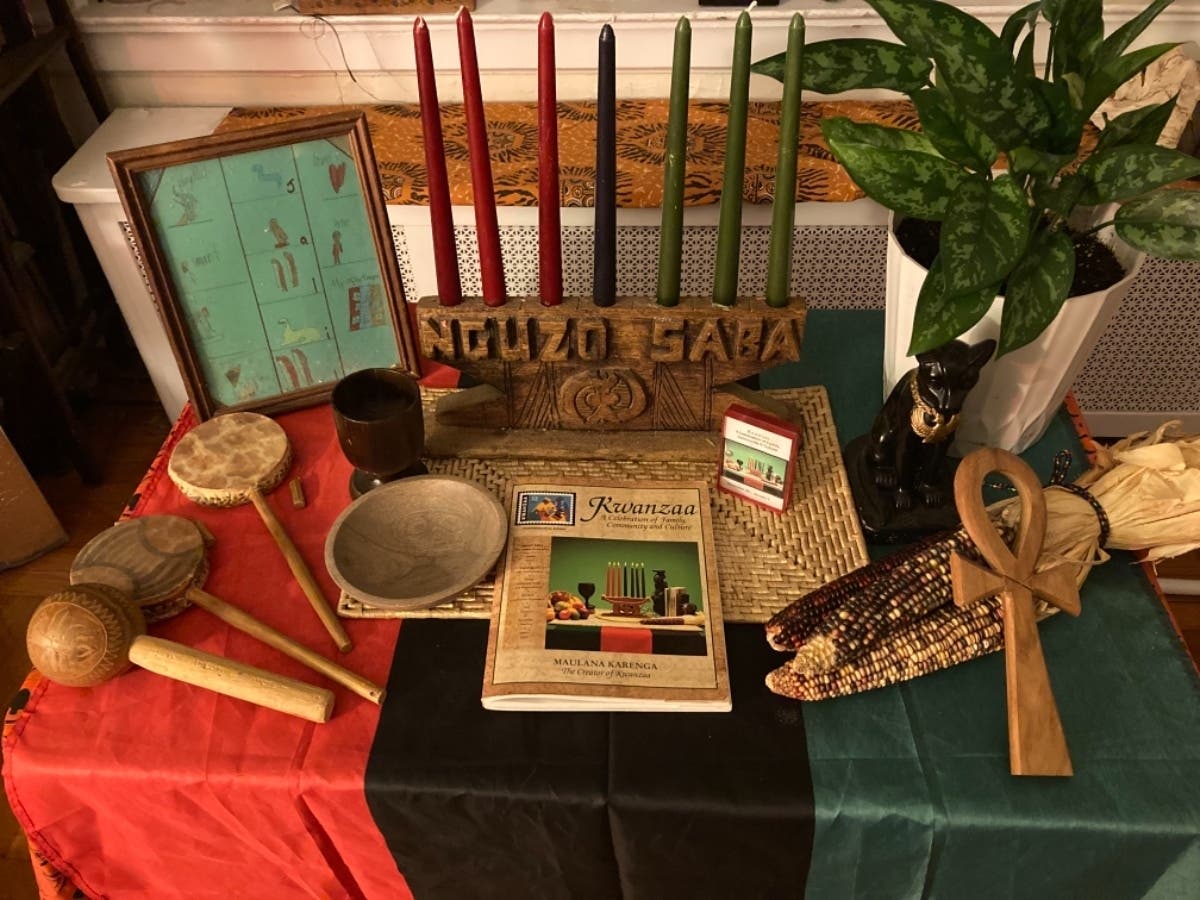
Dr. Karenga defines Kawiada as, “a communitarian African philosophy created in the context of the African American liberation struggle and developed as an ongoing synthesis of the best of African thought and practice in constant exchange with the world.” Kwaida became the foundation for Kwanzaa – a non religious Pan African centered holiday celebrated from December 26 to January 1. For more information about Kwanzaa and its symbols and traditions, please click on to this hyperlink (https://www.officialkwanzaawebsite.org/).
Dr. Karenga chose the pan African language of Kiswahili to connect and communicate Kwanzaa’s rituals and principles of the holiday internationally to the entire African world in the diaspora.
Many Us members, Black Nationalists, pan Africanist, Afrocentrists, and community activists began spreading the celebration of Kwanzaa from the African American community of Los Angles to the world.
The great Imamu Amiri Baraka, Newark, NJ’s own legendary community activist and freedom fighter, played a large role popularizing Kwanzaa to the masses of African people. He was once a member of the Us organization.
Inspired by leaders like Malcolm X, Imamu Amiri Baraka was known as one of the most respected Black Power leaders, poets, and writers of his time during the late 1960s and early 1970s. He eventually become the father of the Black Arts Movement (a movement of artists and writers capturing Black life in America and in the world on its own African definitions) and the father Black political power. Imamu
Amiri Baraka’s leadership help organized the world’s first Black Power conference in 1967 and the Black and Puerto Rican Convention. He helped Kenneth Gibson become Newark’s first Black Mayor. Imamu Amiri Barak leadership co-convene the National Black Political Convention in Gary, Indiana in 1972. The National Black Political Convention gathered over 10,000 African Americans to help our people seize political power in America. For more information on the history of Imamu Amiri Baraka, please click on to the hyperlink (http://www.myblackhistory.net/... )
As time moved forward, millions have embraced Kwanzaa as a holiday. However, with a correct understanding of the importance of Kwanzaa to African American families, unity in the African world, Black pride, and Black liberation, I believe millions more will embrace it as a respected holiday.
Kwanzaa yenu iwe na heri / Heri za Kwanzaa (Kiswahili for Happy Kwanzaa)!
Hotep (An Ancient African Egyptian Word for Peace)!!!
-Bashir Muhammad Ptah Akinyele is a History and Afrikana Studies teacher at Weequahic High School in Newark, NJ. He is also the co-coordinator for ASCAC’s (the Association for Study of Classical African Civilizations) Study Group Chapter in Newark, NJ. (https://ascac.org/ )