Politics & Government
It’s Time To Finally End New Jersey’s Drug War, ACLU Says (Video)
"Arrests don't keep people safe, healthy or alive – just punished," an advocate urged.


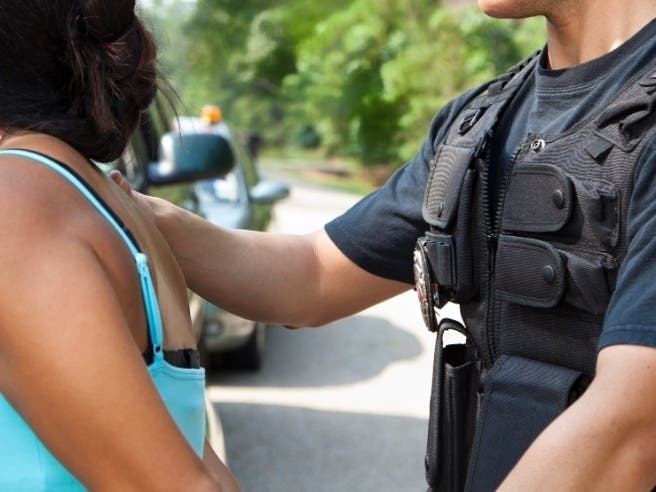
NEW JERSEY — Over-surveillance, over-policing and over-incarceration: That’s the legacy the Drug War has left in the Garden State, according to the ACLU of New Jersey.
On Thursday, the ACLU-NJ released a video titled “For Racial and Social Justice, New Jersey Must End Its Drug War” (watch it below).
The nonprofit summarized their latest effort in an email:
Find out what's happening in Newarkfor free with the latest updates from Patch.
“In this three-minute explainer, you'll get the deeper history of the Drug War (spoiler: it was racist then and it's racist now) – and what the fight for drug decriminalization has to do with public health, community safety, and racial and social justice. Over 50 years of flawed policies have led to the over-surveillance, over-policing, and over-incarceration of Black and Brown communities – it's time to end all civil and criminal penalties for drug use and possession, once and for all. And being as informed as possible on the history of the Drug War, its original design as a tool of white supremacy, and its intentional criminalization of Black and Brown communities, is crucial to that fight.”
Now, the ACLU-NJ is calling for the end of criminal and civil penalties for drug use and possession – joining a demand that other civil rights advocates across the state have been putting out for years.
Think that a drug conviction is small potatoes? Think again, activists say.
Find out what's happening in Newarkfor free with the latest updates from Patch.
“People convicted of drug possession face a host of legal consequences, as well as difficulty finding and keeping employment,” Ami Kachalia, a campaign strategist with the ACLU-NJ, wrote in a blog post.
That can include eviction from public housing, family separation through the family regulation system, loss of federal financial aid, disqualification from a range of occupational licenses, denial of public assistance, and immigration detention or deportation. These consequences only worsen the harms of arrest or incarceration, making it difficult for people to seek out opportunities, support their families and otherwise get their lives back on track, Kachalia said.
“Arrests don't keep people safe, healthy or alive – just punished,” Kachalia urged.
- See related article: 'It's Hard To Move Forward,' Says NJ Father Arrested For Weed
“By 2019, 21.6 percent of all arrests reported in New Jersey were drug-related,” Kachalia wrote. “This means that, in 2019, more than one in five of total arrests made by New Jersey’s state and local police departments were for a Drug War violation. And in New Jersey, Black residents are 3.3 times more likely to be arrested for drug war violations than their white peers, despite white people both using and selling criminalized drugs at higher rates.”
Contrary to what some people believe, most substance use is not unmanaged, Kachalia said:
“Over 3 million NJ residents will use a criminalized drug in their lifetime, with over 2 million residents using a criminalized drug other than marijuana. In 2018-2019, nearly 1.5 million in NJ reported using a criminalized drug, and only 3.1 percent problematically. Aggressive enforcement is expensive and harmful, and results in a waste of public resources and disastrous consequences on communities.”
New Jersey has made big strides towards justice by legalizing and decriminalizing cannabis, advocates said. Prior to 2021, when cannabis was legalized in New Jersey, more than 35,000 marijuana-related arrests took place each year, serving as a gateway into the criminal legal system for far too many people, according to Kachalia.
But there’s a lot more work to do, she added.
“New Jersey must take bold steps now to end drug criminalization and join the many jurisdictions across the country taking action to end the Drug War once and for all,” Kachalia concluded.
- See related article: New Jersey Spends $1B Every Year Fighting The Drug War, Report Says
- See related article: 5 Things You Need To Know About Marijuana Legalization In NJ
- See related article: NJ Weed Businesses Don't Hurt Home Values – And May Even Help, Study Says
Send news tips and correction requests to eric.kiefer@patch.com. Learn more about advertising on Patch here. Find out how to post announcements or events to your local Patch site.
Get more local news delivered straight to your inbox. Sign up for free Patch newsletters and alerts.