Politics & Government
March Planned On Anniversary Of 1967 ‘Newark Rebellion’
Progress has been made, but Black people still face many of the problems that drove them to rise up in 1967, a longtime NJ activist says.


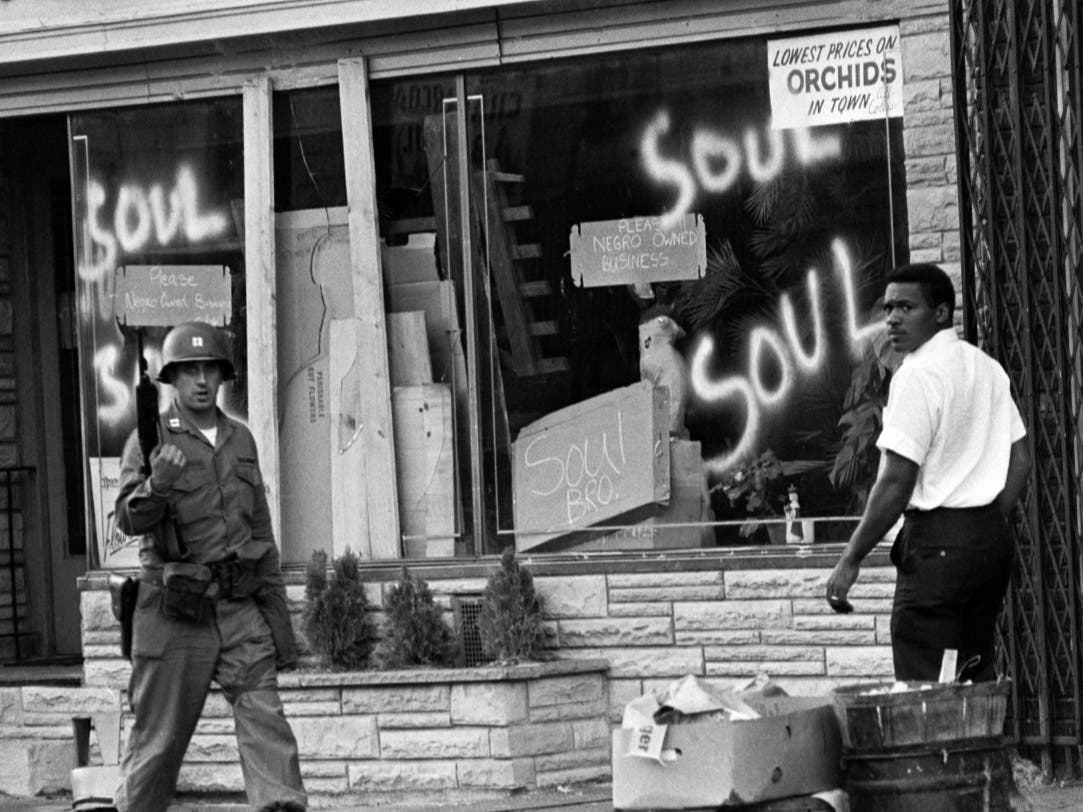

NEWARK, NJ — A march and rally will take place in Newark on the 58th anniversary of the 1967 race riots in Newark – which many are now calling a “rebellion.”
The People's Organization For Progress (POP) is planning to hold their annual commemoration of the 1967 uprising on Saturday, July 12. It will take place at noon starting at the Rebellion Monument, 250 Springfield Avenue. Participants will march from the monument to the 1st Police Precinct on 17th Avenue – the place where it all started.
Activists noted that the monument is in an area unofficially known as “Rebellion Park,” which is located on Springfield Avenue between Hayes Street and Irvine Turner Boulevard. It is dedicated to those killed during the unrest.
Find out what's happening in Newarkfor free with the latest updates from Patch.
For directions and other information, call the People's Organization For Progress at (973) 801-0001.
CIVIL UPRISING IN NEWARK
Find out what's happening in Newarkfor free with the latest updates from Patch.
Here’s how city officials have previously described what led to the events of 1967:
“The Rebellion was fueled by racial disparities in policing and arrests, unequal access to resources and opportunities, and civic disenfranchisement. On the evening of July 12, 1967, John Smith, a Black cab driver, was dragged out of his car and brutally beaten by police. His attackers then arrested him on charges of assault. News spread and Newark residents rose up. The uprising and police violence lasted for six days, resulting in 26 deaths and thousands of injuries and arrests – overwhelmingly affecting Black residents.”
Local community activists – many of whom lived through the violence – have said it caused a shockwave that still echoes to this day.
“Since the founding of the POP 43 years ago, we have commemorated the 1967 Newark Rebellion not simply because it was a memorable event, but more importantly for its continued relevance to our contemporary condition and circumstances,” explained the group’s chair, Lawrence Hamm.
People in Newark have been referring to the upheaval as a “rebellion” – “not a riot” – since long before the group was established, Hamm said.
“We did so because the rebellion was Black people’s collective response to years of on-going white racist oppression and not simply a spontaneous mob riot in response to a single random incident,” he said.
>> Read More: Newark Remembers 1967 Uprising: ‘Not A Riot, A Rebellion’
“The uprising was sparked by an incident of police brutality which had been a longstanding problem in Newark’s Black community,” Hamm continued. “Again and again Black people experienced and witnessed incidents of people being killed, brutalized, harassed and unjustly arrested by the police.”
“People complained and nothing substantive was done to remedy the problem,” Hamm added. “And then on July 12, two white Newark police officers beat an African-American cab driver named John Smith. That was it. People had enough.”
According to Hamm, the resulting upheaval was catastrophic, but it also gave added impetus to a dynamic movement for Black political power that led to the election of Kenneth A. Gibson as Newark’s first African American mayor, and eventually, a predominantly Black city council during his second term.
Hamm said that some progress has been made over the past 58 years, but Black people still face many of the problems that drove them to rise up in 1967.
“Police brutality, racism, inequality, poverty, segregation, discrimination, lack of affordable housing, low wages, unemployment, substandard education, and inadequate health care are just some of the problems that we are still plagued with,” Hamm said.
“It must be noted that Newark’s poverty rate in 1967 was 18 percent,” he said. “However, today it is 27 percent. The unemployment rate in 1967 was 7.3 percent. Today the unemployment rate is almost the same at 7 percent.”
“The question that faces the city almost six decades later is whether the conditions that led to the rebellion of 1967 still exist – and whether the city will be able to avoid another upheaval sometime in the future,” Hamm added.

Send local news tips and correction requests to eric.kiefer@patch.com. Learn more about advertising on Patch here. Find out how to post announcements or events to your local Patch site.
Get more local news delivered straight to your inbox. Sign up for free Patch newsletters and alerts.