Politics & Government
New Jersey's Prisons Are Failing Its Special Education Students, Lawsuit Claims
Are the Garden State's prisons failing its special education students? Just ask these 3 incarcerated teens from Essex and Union County.


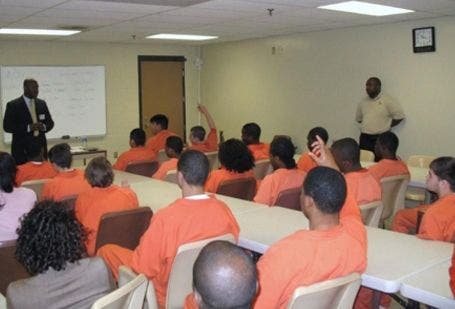
NEWARK, NJ — Adult prisons in New Jersey are routinely violating the rights of incarcerated high school students with disabilities, with some teens getting “no education whatsoever,” according to allegations in a federal class action lawsuit filed Wednesday.
The ACLU of New Jersey filed the lawsuit against the New Jersey Department of Corrections (NJDOC) and the New Jersey Department of Education (NJDOE) in U.S. District Court on behalf of three, incarcerated Garden State teens who live in Essex and Union counties.
According to the allegations in the lawsuit:
Find out what's happening in Newarkfor free with the latest updates from Patch.
- “Adam” from Union County has spent over 150 days in solitary confinement receiving virtually no education services, let alone special education. He entered NJDOC custody at age 18 and has a diagnosis of ADHD, but NJDOC has never investigated whether solitary confinement exacerbates his ADHD or whether his behavior resulted from his disability.
- “Brian” from Essex County has spent 180 days in solitary confinement – at first he received no education services, but eventually NJDOC gave him worksheets to complete while in a cage in the middle of the unit. He entered NJDOC custody before he turned 18 and has been diagnosed with oppositional defiant disorder, impulse control disorder, and ADHD, but NJDOC has never tested him for special education, despite being legally obligated to do so. Now at the age of 19, Brian has missed out on years of special education services while locked in adult correctional facilities. As with Adam, NJDOC has never investigated whether administrative segregation worsens Brian’s disabilities or whether his prior behavior resulted from his disabilities.
- “Casey” from Essex County has been in special education for most of his life but has received no special education services at all since entering NJDOC custody 17 months ago at age 19. NJDOC officials tried to excuse this failure by claming Casey’s sentence is “too long” for him to receive special education services, but federal law makes no such exceptions.
According to the ACLU, experts estimate that as many as 70 percent of young people in adult prisons require special education services. The group stated that federal and state laws are clear: students with disabilities incarcerated in adult prisons are entitled to special education through the age of 21.
Citing cases such as Adam, Brian and Casey, attorneys from the ACLU are now suing the New Jersey Department of Corrections (NJDOC) and the New Jersey Department of Education (NJDOE) for failing to provide education throughout the prison system, including to students held in solitary confinement.
Find out what's happening in Newarkfor free with the latest updates from Patch.
The lawsuit also charges that the NJDOE has failed to monitor and ensure that the NJDOC was providing special education and related services in compliance with federal and state law.
“Whether in a cage or a classroom, NJDOC has failed and continues to fail youth with disabilities, utterly ignoring a key component of rehabilitation: a meaningful education,” said Mary-Lee Smith, Director of Litigation at Disability Rights Advocates (DRA). “Youth with disabilities do not check their civil rights at the door of adult prison facilities.”
- See related article: Embattled West Caldwell Prison Company Keeps Getting N.J. Contracts
- See related article: Newark Plans To Give 75 Ex-Cons Jobs, Healthcare
- See related article: Essex County JV Detention Center Graduates High School Class
File Photo: FBI.gov
Send local news tips, photos and press releases to eric.kiefer@patch.com
Get more local news delivered straight to your inbox. Sign up for free Patch newsletters and alerts.