Politics & Government
New Jersey Is Replacing Its Lead Water Pipes – All Of Them
NJ launched a $2B war against lead poisoning. And sooner or later, every public water system in the state will be enlisted in the battle.


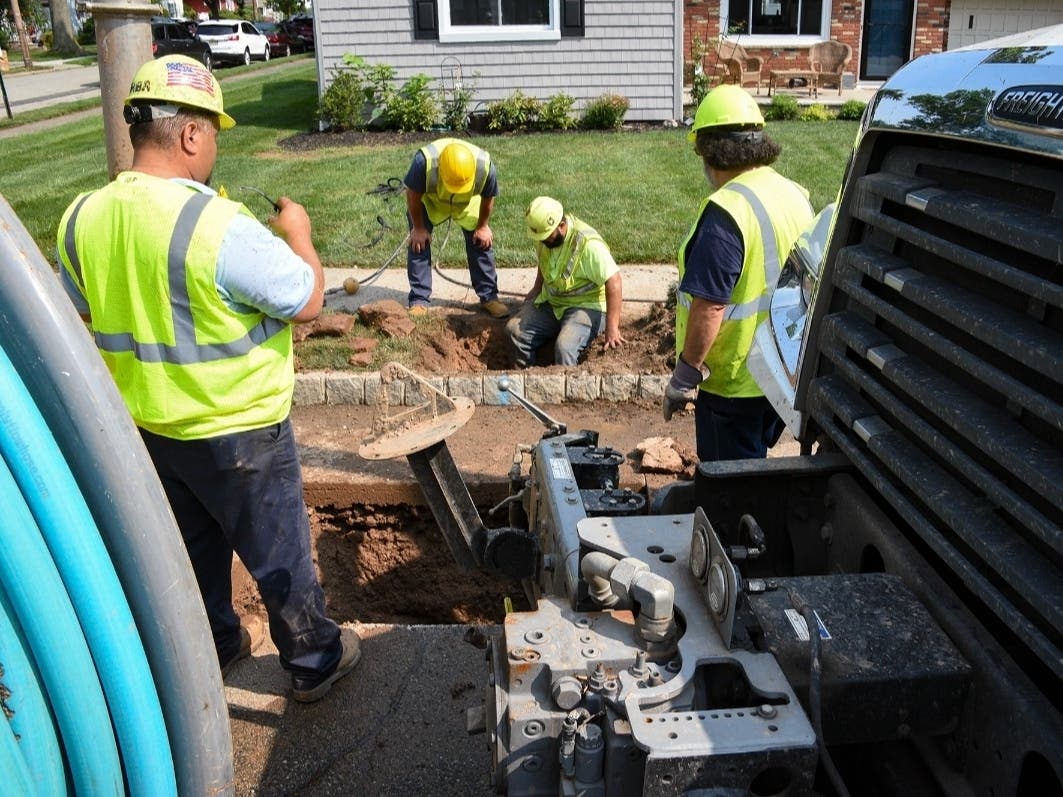
NEW JERSEY — It’s been nearly two years since the lead water crisis in New Jersey’s largest city hit a peak. Since then, Newark has replaced almost 20,000 lead service pipes – a massive effort that is projected to cost $120 million.
And over the next 10 years, every other town, city and public water system in the state will have to follow suit.
Last week, Gov. Phil Murphy signed a package of bills that will drastically change how New Jersey deals with the threat of lead poisoning, which can be especially dangerous for kids, pregnant women and other vulnerable populations.
Find out what's happening in Newarkfor free with the latest updates from Patch.
No safe level of lead exposure in children has been identified, according to the Centers for Disease Control and Prevention.
“Lead is the most common environmental toxin for children and even very low blood lead levels can cause permanent, irreversible neurologic damage,” New Jersey Department of Health Commissioner Judith Persichilli said.
Find out what's happening in Newarkfor free with the latest updates from Patch.
“Children spent significantly more time at home during the pandemic, when elevated blood lead levels increased by 29 percent and lead testing decreased by 20 percent,” Persichilli said.
REPLACING LEAD PIPES
One of the new laws, A-5343/S-3398, will require hundreds of community water systems in New Jersey to replace their lead service lines within 10 years.
The pipes – which connect local homes and businesses to the local water supply – can potentially leach contamination as water passes through them, one of the suspected culprits behind Newark’s recent woes. A portion of the pipes may be privately owned, complicating efforts to replace them.
Although Newark has reportedly turned the corner with its lead contamination crisis, there are still many other municipalities with lead service lines throughout the state. And that’s why the new law is desperately needed, advocates say.
The exact scope of the problem isn’t known. A complete inventory of all lead service lines in the state doesn’t exist – although the new law calls for one. But according to the American Water Works Association, there are nearly 350,000 homes and businesses in New Jersey served by lead service lines, among the most in the nation. And according to a 2019 study from New Jersey Future, lead service lines have been reported in 104 water systems across the state, potentially affecting five million residents.
- See related article: Newark Isn't Only NJ City At Risk Of Lead Water, Map Shows
- See related article: Lead in Water: Database Shows Many NJ Schools Had Too Much
The overall cost of replacing the state’s lead service lines is also hard to pin down, for the same reasons. But according to an estimate from the New Jersey Office of Legislative Services, total local government costs could reach $2.65 billion over 10 years, or $265 million annually. State costs are estimated to be $4.5 million.
Some advocates hope that New Jersey’s monumental effort to replace its lead pipes will become a national trend; only Michigan has rolled out a similar mandate so far.
Any “investor-owned” public water system will be allowed to recoup replacement costs from its customers, although it’s possible that federal funding can help soften the blow. Providers will also be allowed to apply for a five-year extension if they can’t meet the deadline.
A second bill passed last week, A5407/S3459, will remove restrictions on special assessments and bond issuances for lead service line replacements, giving towns and cities another way to finance the construction.
Story continues below
"Lead is not normally found in drinking water at the source, but typically enters drinking water from the service lines, plumbing and fixtures." -@NewJerseyDEP Deputy Commissioner Olivia Glenn
— NJDOH (@NJDeptofHealth) July 22, 2021
“Modernizing our aging water infrastructure with new lead services lines is critical in ensuring safe drinking water flows through our communities,” Murphy said at a news conference in Bloomfield on Thursday.
“No child or adult should have to live with the detrimental and lasting health effects of lead poisoning,” agreed Lt. Gov. Sheila Oliver, who also serves as commissioner of the New Jersey Department of Community Affairs.
The choice of venue wasn’t coincidental. Bloomfield officials recently announced they will be using a big chunk of federal funds from the American Rescue Plan to help replace lead service lines throughout the township – at no cost to local homeowners.
- See related article: Bloomfield Announces Plans For $26M In COVID Recovery Funds
Other towns in New Jersey have also been ahead of the curve, launching their own replacement projects over the past two years.
- See related article: NJ Suburb Follows Newark's Lead, Replaces Pipes To Protect Water
According to Peter Chen, an analyst at New Jersey Policy Perspective, the new laws represent a “sea change” in how a state can combat lead poisoning.
“New Jersey is now the first state in the country with a hard target to eliminate lead service lines in 10 years, as well as a funding mechanism to finance that investment,” Chen said.
Questions remain about who will be left footing the bill, however.
“You can't create a great law and then say, ‘Okay, municipalities, your residents [are] already overtaxed, already footing the bill for a lot of other services that are mandated and we're not going to help you with this,” Belleville Mayor Michael Melham told Gothamist.com.
Melham previously estimated that it could cost up to $24 million to replace the lead service lines in Belleville, which saw major pushback from residents when it raised its water rates last year.
Story continues below
LEAD PAINT INSPECTIONS
A third bill signed into law last week attacks the problem on a different front, creating more protections for New Jersey home renters when it comes to lead paint.
S-1147/A-1372 will require local inspectors to check every single-family, two-family and multiple rental dwelling located within a municipality for “lead-based paint hazards” every three years, or whenever a new tenant moves in.
Towns that don’t have a permanent inspection agency must hire a contractor certified by the state Department of Community Affairs.
Some exemptions exist, including rental units that are certified to be free of lead-based paint, and those that were constructed during or after 1978.
Advocates and public health experts say that people who live in older homes and houses in low-income neighborhoods are at greater risk of lead poisoning, since those properties are more likely to contain lead-based paint, as well as aging pipes, faucets and plumbing fixtures.
“About 80 percent of lead poisoning cases are caused by lead-based paint in homes built before 1978, affecting our low-income families the most,” Sen. Nilsa Cruz-Perez said. “Lead paint is a life-threatening hazard, especially to children, but by implementing statewide lead inspections, we can be certain that families in rental properties are safe from lead contamination.”
“With [Thursday’s bill] signing, New Jersey has become the fourth state in the nation to enact legislation targeted at ensuring our residential properties are free of lead-based paint, protecting our children against exposure,” Sen. M. Teresa Ruiz said.
“Within certain areas of the state, as many as 7.6 percent of children have elevated blood lead levels,” continued Ruiz, who represents Newark and Belleville. “This takes the first step in beginning to address the issue by identifying the properties in need of remediation and providing funding for landlords to remove this hazard before welcoming new tenants.”
“This legislation has been years in the making and I look forward to seeing this impact it has on families around the state,” Ruiz said.
- See related article: Lead Paint In Homes Is Still Endangering Newark Kids, Group Says
Send local news tips and correction requests to eric.kiefer@patch.com
Sign up for Patch email newsletters. Learn more about posting announcements or events to your local Patch site.
Get more local news delivered straight to your inbox. Sign up for free Patch newsletters and alerts.