Neighbor News
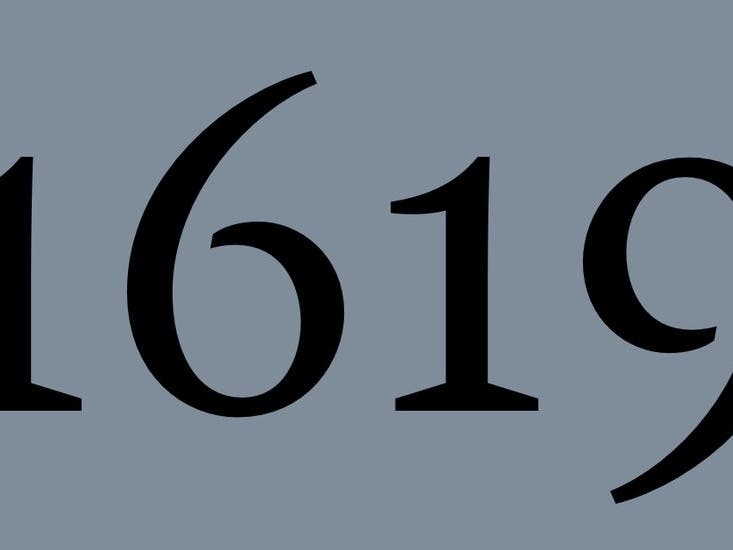
Nikole Hannah-Jones’ 1619 Project Coming To Weequahic High School
"The history of the enslavement of Black people in the United States is so much more deeper than what's been written in American history."


NEWARK, NJ — The following article comes courtesy of a Patch Newark community member. Learn more about posting announcements or events to your local Patch site.
Weequachic High School in Newark, NJ will play host to New York Times domestic reporter Nikole Hannah-Jones and the 1619 Project on November 20, 2019. The 1619 Project is a program organized by The New York Times in 2019 with the goal of re-examining the legacy of slavery in the United States and timed for the 400th anniversary of the arrival in America of the first enslaved people from Afrika. It is an interactive project by Nikole Hannah-Jones, a reporter for The New York Times, with contributions by the paper's writers, including essays, poems, short fiction, and a photo essay. Originally conceived of as a special issue for August 20, 2019, it was soon turned into a full-fledged project, including coverage in the newspaper and on its website.
Our history department has started the 1619 activities with our students to prep them for this historic visit to our school. We are honored to be first public school in Newark, NJ to take the lead on creating a great program for our students, the community, and the Weequachic family. Ms. Jones and the 1619 Project will see the great academic and collaborative work centered on the 1619 Project at our school. Thanks to our respected school leader, Principal Andre Byrd Hollis, for his vision to help put the 1619 Project program at Weequachic.
Find out what's happening in Newarkfor free with the latest updates from Patch.
For the record, I have been teaching on the history of 1619 for all of my 25 year teaching career. Yes, 1619 is the year that the first enslaved Black people arrived on the shores of America in Jamestown, Virginia. But the history of the enslavement of Black people in the United States is so much more deeper than what’s been written about in American history textbooks.
Our Afrikan ancestors were captured in Afrika, placed on the hauls of slave ships, separated from their families and loved ones, stripped of Afrikan languages and culture, prevented from practicing their faiths, stripped of their Afrikan names, stripped of their Black manhood, stripped of their Black woman hood, stripped of their Black childhood, and then auction off to plantations all over America by white -slave masters, like cattle, for hundreds of years. Thus, initiating the long and horrific journey Black people were endured In United States slavery!!!!!!! Some voices in the Black community use a Afrikan Kiswahili term for this inhuman experience called the MAAFA ( THE BLACK HOLOCAUST OR THE FORCED SCATTERING OF BLACK PEOPLE IN AFRIKA INTO THE WORLD BY WHITE SLAVE MASTERS). To end legalized and physical enslavement of Black people in America, it would take the ratification of 13th (1865), 14th (1868), and 15th (1870) Amendments to the US Constitution. But even then, these laws were not strong enough to keep Black people free. Racist White people found loopholes in these amendments to keep Black people enslaved and second class citizens. They enacted segregational laws to legally, racially, and violently discriminate against Black people in America. It would take almost another 100 years to legally and physically free Black people from American slavery. But even then, America’s enslavement of Black people left deep cultural, physical, and psychological scares on generations to come in the Afrikan American community.
Find out what's happening in Newarkfor free with the latest updates from Patch.
With that being said, all people in America must study the enslavement of Black people. United States slavery is over. However, American’s past involvement in slavery is still dramatically affecting Black people and Black communities to this day. The disparities between White wealth and Black wealth are deeply rooted in the American enslavement of Black people. These disparities have placed many members of the Black community into a permanent underclass. These facts about American history must be told in order for apologies, reparations, true healing, reconciliation, and true justice to take place in America in order this country and Black people to move forward as one. It is through the humanity of Black people that we have made the UNITED STATES OF AMERICA live up to its democratic creed. However, the remedies to permanently heal Black people in America are still being denied.
Hotep!!! (Peace)!!!
Bashir Muhammad Akinyele
-History teacher
-Chair of Weequachic High School’s Black History Month Committee
FYI: Spelling Afrika with a k is not a typo. Using the k in Afrika is the Kiswahili way of writing Africa. Kiswahili is an Pan -Afrikan language. It is spoken in many countries in Afrika. https://youtu.be/7xzNyrFhzew
Don’t forget to visit the Patch Newark Facebook page. Send local news tips and correction requests to eric.kiefer@patch.com