Politics & Government
NJ Inspectors Find Grim Violations At Newark Animal Shelter
The high-intake animal shelter serves more than a dozen towns in New Jersey. See what inspectors found during a surprise visit.


ESSEX COUNTY, NJ — The Associated Humane Society’s Newark animal shelter is one of the largest and busiest in New Jersey. For years, the nonprofit shelter has led Essex County in dog and cat intakes, accepting thousands of animals from suburbs around North Jersey into its Evergreen Avenue facility and adopting many out to happy homes.
But for every dog or cat that finds its "forever family" at the AHS Newark shelter, another may face a grim and uncertain future.
On Aug. 22, spurred by a complaint, four Newark and New Jersey Department of Health officials performed a joint inspection of the AHS Newark facility. While touring the building, the inspectors allegedly witnessed a medley of violations that included:
Find out what's happening in Newarkfor free with the latest updates from Patch.
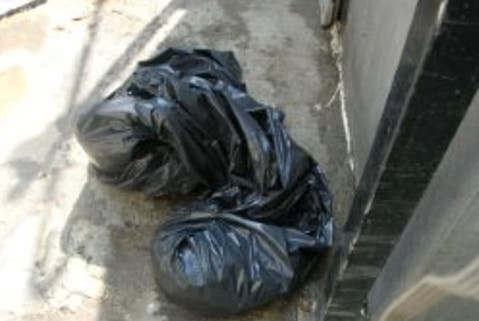
- Bags of animal carcasses left laying outside the building
- Sick animals with bloody urine, diarrhea, vomiting, Kennel Cough and nasal discharge
- Dogs and cats kept in cramped, dark enclosures without exercise
- A deteriorating, dirty building that posed health and safety risks
As a result of the violations, the AHS is currently working without a business license in Newark and has a “conditional satisfactory” permit from the city health department. The fallout from the inspection has caused a shakeup at the AHS Newark facility, with several policies being revamped in an effort to meet local and state standards, a spokesperson told Patch.
AHS, the self-described “largest animal sheltering system in New Jersey,” also maintains facilities in Forked River and Tinton Falls. And according to 2016 intake report data obtained by the NJ Animal Observer blog, the Newark AHS is paid to provide animal control officer and holding/impounding services to Belleville, Carteret, Clark, Fanwood, Hillside, Newark, Irvington, Linden, Fairfield, Plainfield, Roselle, Rahway and Winfield Park.
Find out what's happening in Newarkfor free with the latest updates from Patch.
Patch contacted the Newark and New Jersey Departments of Health seeking comment for this article. The Newark DOH did not reply to our request for more information.
The NJ DOH provided the following statement:
"The New Jersey Department of Health accompanied the Newark Health Department in a joint inspection of Associated Humane Societies Animal Shelter on Aug. 22. Numerous violations were documented and the Newark Health Officer is working with Associated Humane Societies management to fix the violations. The Newark Health Department is the lead agency. The New Jersey Department of Health has agreed to assist the Newark Health Department with a follow-up inspection."
The information below comes from a copy of the Aug. 22 inspection report, acquired via an Open Public Records Act request.

EUTHANASIA AND 7-DAY HOLDS
When a dog or cat is surrendered to a licensed New Jersey animal shelter, the facility is required by state law to offer the animal for adoption for at least seven days before euthanizing it. This law is especially relevant in Essex County, which led the state in euthanized dogs for the fourth straight year in 2016.
- See related article: Essex County Animal Shelters Had Most Dog Euthanasias In NJ (Again)
During the Aug. 22 inspection of the AHS Newark facility, officials expressed serious concerns about euthanasia procedures at the shelter, alleging that many animals were being put down before the required seven-day hold.
Records at the shelter showed that at least two dozen stray and surrendered animals were euthanized before their mandatory week of reprieve was complete. According to inspectors, several animals were also being accepted for “elective euthanasia” or were killed “on intake.”
Inspectors also raised two other concerns about the AHS-Newark’s euthanasia policies.
- “Animals were not being weighed prior to administration of euthanasia, immobilizing or tranquilizing agents.”
- “Staff were unable to access certain disposition records, including the required euthanasia documentation, and the paper records were incomplete.”
But according to AHS Assistant Director Jill Van Tuyl, there’s more to the story than the inspection report implies.
“We’re not euthanizing healthy animals that are coming in,” Van Tuyl told Patch. “These may be animals that are dying already, or that are in bad shape as deemed by the veterinarian. We don’t want animals suffering either. So I think that was taken out of context [by inspectors].”
“Our vet now has a way of manually keeping records for animals that might be euthanized before the seven-day period,” Van Tuyl said, adding that the new policy will help with transparency.
Whether this new transparency will placate local animal welfare activists remains to be seen.
“AHS-Newark's 2016 statistics are simply awful,” NJ Animal Observer blogger Alan Rosenberg charged in a recent blog post. “Last year, this shelter reported killing 2,261 animals (568 dogs, 1,533 cats and 160 other animals). On average, AHS-Newark killed six animals every day of the year. About 27% of dogs, 55% of cats and 85% other animals were killed, died or had undisclosed outcomes.”
“Clearly, AHS-Newark is a high-kill facility,” Rosenberg stated.
HEALTH AND SAFETY RISKS
During the Aug. 22 inspection, officials documented several risks to the health and safety of the animals in AHS-Newark custody.
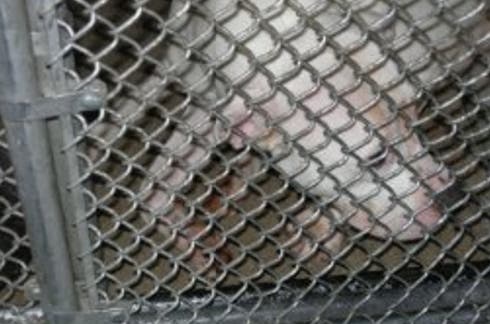
Several sick animals were found with symptoms such as bloody urine, diarrhea, vomiting, Kennel Cough and nasal discharge. Some of these animals were housed with the general population, alongside healthy dogs and cats awaiting spay or neuter surgeries before being released to their adoptive families.

Inspectors recorded the following violations:
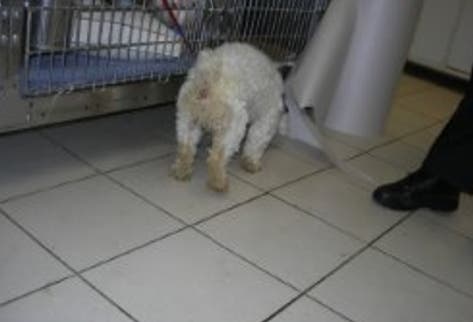
- “A white, poodle-type dog housed in the small dog room had urine-soaked fur on its rump and its legs and was unable to remain dry and clean.”
- “Adult dogs confined in cages… were not being exercised in runs at least twice a day or walked on a leash for at least 20 minutes per day. Dogs with a vicious disposition that were housed in the basement or the small dog and cat room were not walked at all and did not have access to an exercise run.”
- “Cats that were difficult to handle and classified as ‘feral’ were housed in enclosures that contained glass walls completely covered with cardboard and newspapers.”
- “A white, bully-type dog had an open wound on its paw and there was no evidence that this dog was provided with medical care.”
- “There was a large, black, mastiff-type dog housed in a small enclosure against the back wall of the main basement housing area. This enclosure did not provide sufficient space for this dog to turn about freely and lie in a comfortable, normal position.”
- “There were carpeted cat trees and sisal rope cat scratchers in the communal cat rooms that contained an accumulation of hair and dried feces or vomit.”
- “A large sheet of cardboard was being used as bedding in some of the small animal enclosures.”
- “Several animals that were housed in the basement isolation room were exhibiting signs of illness but the [shelter] manager stated that these dogs had not yet been seen by a veterinarian and were not receiving medical treatment.”
- “The room where the exotic animals were housed contained an accumulation of rabbit feces and urine on the walls, on the electrical outlet, behind the filing cabinet and on the floors and baseboards around and under the rabbit enclosures and a filing cabinet."
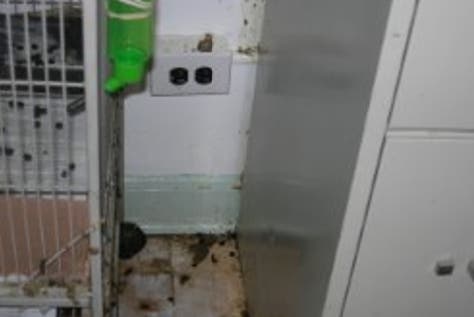
Other alleged violations included:
- Animal food bowls that weren't being scrubbed clean before being disinfected
- Dirty dishes, including a spoon and bowl with “caked-on food” and black mold
- Improperly stored bags of food at risk of molding and kibble scattered throughout the building
- An accumulation of rodent droppings in an upper storage area over the inside dog kennels
- A lack of cleaning that resulted in a “layer of black grime” on the walls and floors
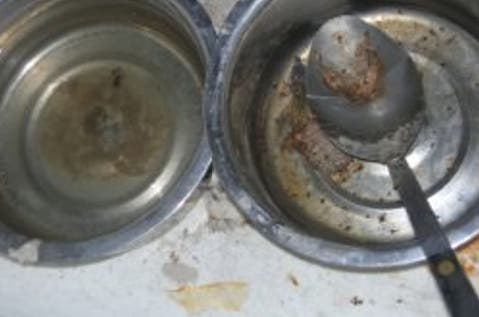
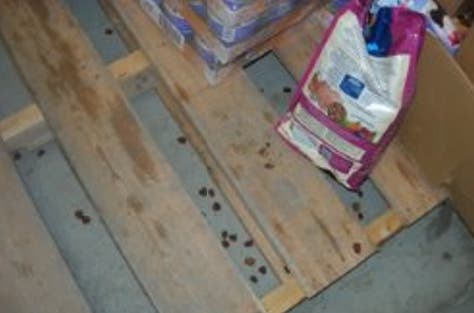
Van Tuyl told Patch that some of the alleged health and safety violations may have been a case of “bad timing.” For example, there was an incident where an animal had an accident and the responsible staff member didn’t get a chance to clean it before inspectors arrived.
“That being said, I’m not making any excuses,” Van Tuyl added.
The shelter is currently revamping its protocols to make sure that the health and safety issues get fixed. This includes efforts such as the phasing out of cardboard as bedding material and retraining of staff members, Van Tuyl said.
“I came up with a dog-walking log sheet so we make sure every animal is getting walked the proper amount,” Van Tuyl said. “We’re keeping a paper trail of it.”
BAGS OF CARCASSES
Inspectors also questioned the Newark shelter’s procedures for the disposal and storage of carcasses.
“There were bags of dead animal carcasses that had attracted a swarm of flies and were placed inside the gate adjacent to the dogs housed in the outdoor enclosures,” inspectors wrote. “These bags were stored outside of the walk-in refrigeration unit in the fenced area where the incinerator is located."
There were additional bags of carcasses and trash stored in a red shopping cart in the same area that were "covered with flies," inspectors wrote.

Van Tuyl told Patch that some of the carcasses that inspectors saw may have been brought to Newark from other towns.
“What happens is that other animal control officers will come to our driveway and leave the carcasses,” she said. “Staff may not be aware of it and that’s why they may be left out.”
To help solve the problem, visiting ACOs are now prohibited from leaving the front office until an AHS staff member has made sure that any carcasses they left have been properly stored, Van Tuyl said.
BUILDING AND REPAIR ISSUES
Inspectors also noted several issues with the condition of the building. Their observations included:
- Holes in the walls in numerous rooms that were “large enough for rodents to traverse”
- Concrete flooring and block walls in severe disrepair throughout the entire facility
- Peeling paint in the animal enclosures
- Exposed metal surfaces and electrical outlets throughout the facility that could cut or shock an animal
- Dog beds with damaged metal and plastic hardware, exposed screws and sharp edges that could cause injury
- A strip of welded wire hardware cloth with exposed, pointed wires hanging over the outdoor enclosures
- Screws protruding from the wall in the “feral” cat enclosure
- “Insufficient” ventilation in the basement
- An improperly maintained or incorrectly installed air conditioning system unable to control water runoff from the various units
- A debris-clogged rain gutter with runoff that overflowed into the outside dog kennel area
- Lighting fixtures that need repair throughout the facility
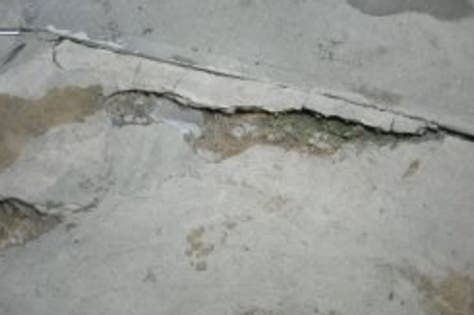

SKUNK IN THE SUN
While conducting the Aug. 22 inspection, officials found a skunk inside a small animal carrier that was completely covered with a heavy, black-and-white heather blanket and placed in direct sunlight on a concrete surface in 85-degree weather next to the shelter’s incinerator.
“When questioned, the [shelter] manager stated that the carrier was empty," inspectors wrote in their report. “When the inspector lifted the blanket and saw the skunk, the manager said the skunk was dead.”
When the inspector told the manager that the skunk was not in fact "dead" and needed to be moved immediately out of the direct sunlight, the manager moved the skunk several feet into a cooler area. Shortly after, the animal was placed in the hallway of the building.
The skunk was euthanized later that day, inspectors said. A cause of death wasn’t provided in the report.
Van Tuyl admitted that the skunk incident was unacceptable.
“That shouldn’t have happened,” she told Patch. “I’m still not sure where the breakdown in communication happened. I will say that a brand-new employee was involved in that. It goes back to the retraining that we’re doing right now to make sure things like that don’t happen again.”
MAKING REPAIRS
According to Van Tuyl, the shelter’s effort to get things up to code is already at full steam ahead.
After the Aug. 22 inspection, the shelter embarked on a series of emergency improvements, agreeing on a Sept. 11 deadline with the Newark Department of Health for a follow-up inspection, which the shelter passed.
The shelter’s next round of repairs is slated to finish on Sept. 23, at which point the city will make another visit, Van Tuyl said.
For now, staff have made "significant progress," she pointed out. Repairs already completed include:
- Removing the chain link fence above the kennels
- Disposing of dirty food containers
- Throwing out dirty cat trees
- “Proactively” replacing drain caps in the kennels
- Revamping record-keeping procedures, including intake and euthanasia paperwork
- Removing old shelves in the cat areas
While the remaining violations from the Aug. 22 inspection are still unabated, Van Tuyl asserted that the shelter’s staff are hard at work on making things right.
“We’re looking at this as an opportunity to address some things that we’ve always wanted to,” she told Patch. “This can be the change that everyone has wanted, including the staff.”
The AHS posted a statement about the inspection on their Facebook page on Sept. 12, writing that the experience was an opportunity to review and improve its processes, as well as to “retrain” staff members.
LOW PAY, HIGH-REWARD: A TOUGH JOB
Van Tuyl said that working at the AHS Newark shelter is a different experience from any other in Essex County.
“Other shelters don’t necessarily hold bite cases or aggressive dogs or other unadoptable animals, whereas in Newark, that’s where they’re brought,” Van Tuyl said. “So it looks like we’re disproportionately euthanizing animals, but were getting in a lot of very tough cases, animals that are not necessarily adoptable.”
And it really gets her goat when people accuse the shelter’s workers of being uncompassionate, she told Patch.
“I’ve been doing this for 25 years,” she said. “If I didn’t care about the animals, I wouldn’t be in such a stressful industry. The staff does the best we can. It’s a tough building with a lot of challenges. And I don’t think that anyone is working here for the very low rate of pay. They can go down the street and make more money at McDonald’s.”
- See related article: ‘The Sweetest 110-Pound Monster I Ever Met’ (A Tale From A Newark Shelter)
MOVING TOWARDS A BETTER FUTURE
According to Van Tuyl, the most unproductive thing that that people can do for the shelter and its animals right now is to start playing the blame game.
“It’s easy to point fingers and say we’re not doing things right,” she told Patch. “But very few people have stepped up to the plate to help.”
The shelter needs volunteers and donors who can pitch in and clean, do projects and generally help in any way possible, Van Tuyl said. In particular, there is an urgent need for linens and bedding at the moment.
The shelter can also use Kuranda-brand beds to help them withstand some of the roughhousing from the facility’s “very strong bully breeds,” Van Tuyl said.
A good example of recent help from the community was AHS’s first-ever participation in the annual “Clear The Shelter” adoption event, which was pulled off with the key assistance of some longtime volunteers.
“People can just reach out and ask us, ‘What do you need?’” Van Tuyl emphasized.
Contact the shelter and learn more about the AHS by clicking here.
Send local news tips and feedback to eric.kiefer@patch.com
Photos: New Jersey Department of Health, via OPRA request
Get more local news delivered straight to your inbox. Sign up for free Patch newsletters and alerts.