Politics & Government
Passaic River Cleanup Remains Stalled, Newark Protesters Demand Action
New Jersey environmentalists are demanding action at one the nation's largest hazardous waste cleanups: the Diamond Alkali Superfund site.


NEWARK, NJ — If you take a walk near the Passaic River in Newark and stare out at the water with the right sort of eyes, you can see more than half a century into New Jersey’s past – and it’s not a pretty sight, advocates say.
Over the past few weeks, environmental activists in Newark have been demanding more action on the long-stalled cleanup of the Diamond Alkali Superfund site.
The site remains one of the nation's largest and most complex hazardous waste cleanups. It covers a sprawling swath of North Jersey, including parts of Newark Bay and the lower 17 miles of the Passaic River.
Find out what's happening in Newarkfor free with the latest updates from Patch.
The site’s history of pollution goes back to the 1940s and 1950s, when pesticides and herbicides were manufactured out of a factory on Lister Avenue near the river, including components for the infamous “Agent Orange.” Over years of heavy industrial activity, dioxins and other hazardous chemicals began seeping into the surrounding soil and water, joining a toxic mélange from dozens of other nearby factories.
In 1983, sampling revealed high levels of dioxin near the factory and in the river. The following year, federal authorities added the site to the Superfund list.
Find out what's happening in Newarkfor free with the latest updates from Patch.
And that’s where it has stayed for more than 40 years.
CLEANING UP THE PASSAIC
The U.S. Environmental Protection Agency (EPA) has divided the cleanup into several parts.
Long-term remediation at the former Lister Avenue plant is nearing the finish line. The EPA also continues planning an interim cleanup for the river's upper nine miles.
Other parts of the plan have been less successful.
Federal authorities approved final engineering design for the lower part of the river in 2024, including a plan to dredge about 2.5 million cubic yards of contaminated sediment, cap the riverbed and restore wetlands and mudflats. The bulk of the work remains stalled while the EPA works to finalize agreements for the remedial work and supporting facilities.
Major legal disputes have added to the delay.
The cost of cleaning up the lower portion of the river has been estimated at a whopping $1.4 billion. In 2024, a federal judge approved a consent decree that required a group of more than 80 potentially responsible parties to pay $150 million toward the effort.
Occidental Chemical Corp. (OxyChem), which bought the Diamond Alkali Company and operated the factory on Lister Avenue in the 1950s and 1960s, has argued that it has been left “holding the bag” for much of the remaining cost, even though nearly 100 companies are potentially responsible for generating and releasing the pollution.
The corporation – which prepared the EPA-approved engineering design for the lower river and has performed years of technical investigation and planning under federal oversight – is demanding that other companies pay for a larger portion of the cleanup.
However, a group of 85 other businesses claim they are only responsible for 0.1 percent of the pollution, alleging that OxyChem needs to step up and “pay its fair share.”
OxyChem has also faced criticism from environmental activists, who have accused the company of dragging its feet when it comes to the cleanup: a concern shared by the Newark City Council.
‘POLLUTERS MUST PAY’
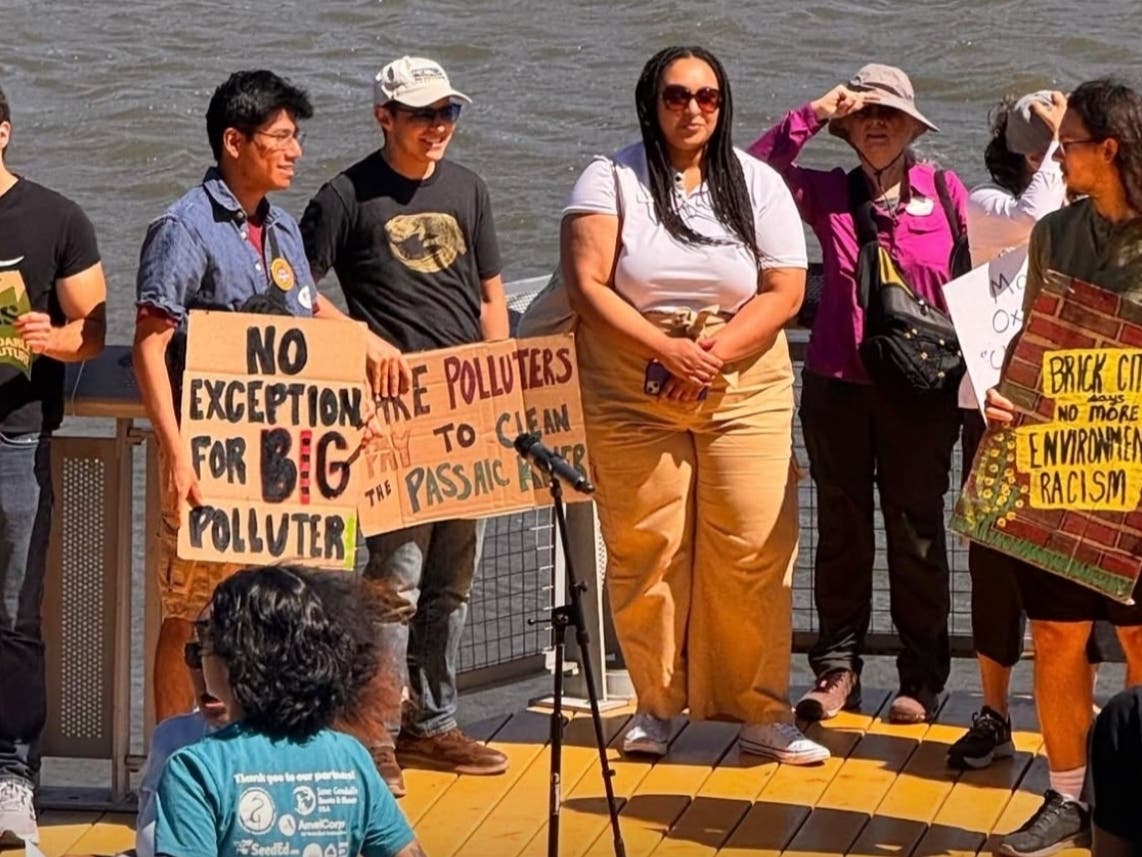
Last week, the Ironbound Community Corporation and the Passaic River Community Advisory Group held a rally at Riverfront Park, calling for more action at the longstanding Superfund site.
“For too long, major polluting corporations have seen Newark and the Passaic River as nothing more than a dumping ground for toxic waste,” one activist said. “But the message from today's rally and subsequent petition is simple: polluters must pay, the cleanup must move forward, and the people most impacted by this crisis must have a voice in shaping the river's future.”
On Monday, advocates followed up on their campaign by penning a letter to the EPA, the U.S. Department of Justice and other agencies demanding an “immediate cleanup for the Passaic River.”
Activists also said they are worried about Occidental’s recent $9.7 billion sale of OxyChem to Berkshire Hathaway, which they say could throw a monkey wrench into the cleanup effort.
According to Occidental, environmental liabilities associated with legacy cleanup projects – including the Passaic River – were retained by Environmental Resource Holdings LLC. Glenn Springs Holdings Inc., another Occidental subsidiary, will manage remediation activities and work with EPA.
In the meanwhile, millions of cubic yards of toxic sediment laden with a century’s worth of dioxin, PCBs, heavy metals, pesticides and other contaminants continues to lurk at the bottom of the Passaic. The contaminants are swept up into the water column with the tides and during storms, and are redistributed throughout the river.
To this day, it’s still a terrible idea to eat seafood from the lower part of the Passaic, according to the EPA.
“Once these various river and bay cleanups have been completed, it will still be many years before the levels of contamination in fish and crab have decreased to levels that are considered safe to eat,” the agency recently said.
In a 2023 blog post, an executive committee member with the New Jersey of the Sierra Club wrote that the river has been polluted for over 150 years.
It’s time to start asking some bigger questions about what it all means, she said.
“The EPA knows it will take decades before the mess is cleaned up enough to safely swim and fish there again,” the post reads. “In the end, those who pay taxes will ultimately pay for the cleanup. Did our society get enough satisfaction from the products manufactured to justify paying for the destruction of our environment? Have we learned any lessons?”
Send local news tips and correction requests to eric.kiefer@patch.com. Find out how to post announcements or events to your local Patch site.
Get more local news delivered straight to your inbox. Sign up for free Patch newsletters and alerts.