Politics & Government
Rep. Payne Blames Rail Industry As Nationwide Strike Threat Looms
"This would impact every American family and increase the cost of food at the grocery store, along with the costs of other essential goods."


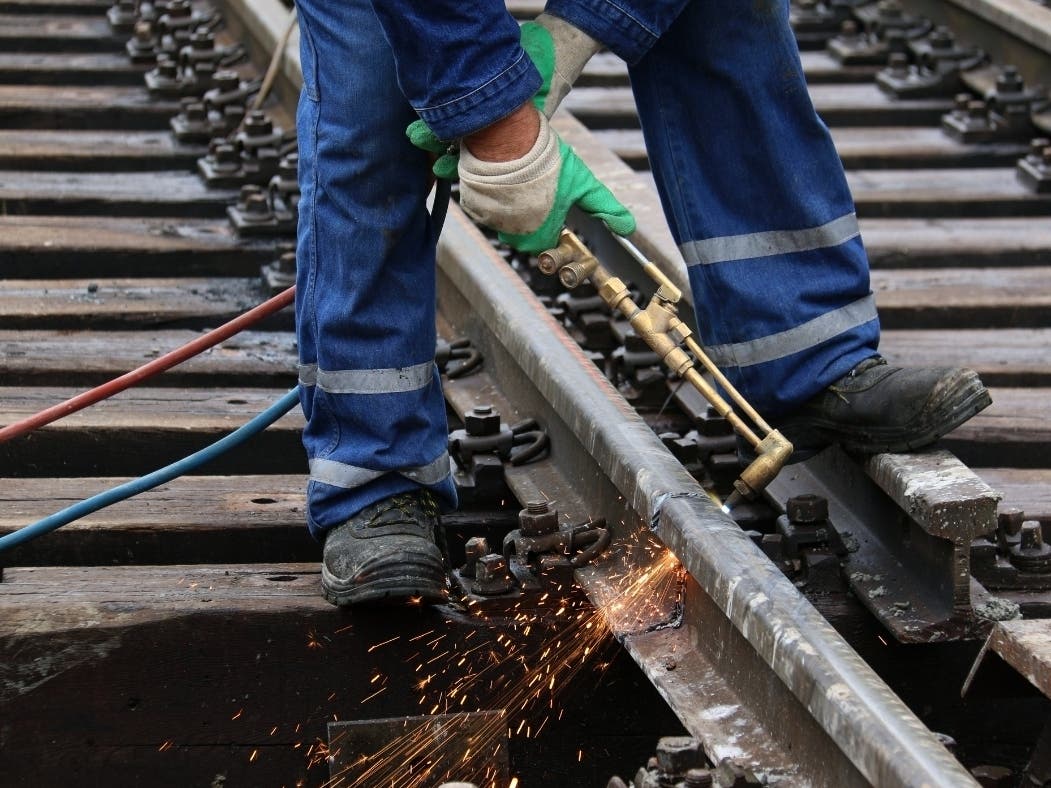
NEW JERSEY — Think the railroad is obsolete? Here’s something to consider, a New Jersey congressman says: nearly a third of the nation’s freight is moved by rail.
On Tuesday, U.S. Rep. Donald Payne of New Jersey was among the federal lawmakers who sounded an alarm about the possibility of a national railway strike involving nearly 115,000 workers this holiday season. Payne, who was recently re-elected to his Congressional seat in the state’s 10th district, is the chair of the House Subcommittee on Railroads, Pipelines and Hazardous Materials.
“With nearly one-third of the nation’s freight moved by rail, the failure to prevent a rail stoppage would not only stunt our economic growth and interrupt supply chains around the world, but also skyrocket the costs of fuel and food just before winter, putting us dangerously close to the possibility of a recession – again,” Payne said.
Find out what's happening in Newarkfor free with the latest updates from Patch.
“This would impact every American family and increase the cost of food at the grocery store, along with the costs of other essential goods,” the congressman continued. “It would also produce higher prices at the pumps and create long lines at gas stations across America, resulting from fuel shortages. It will even disrupt the transport of critical medications for Americans in need.”
New Jersey’s recently redrawn 10th Congressional district includes the following municipalities:
Find out what's happening in Newarkfor free with the latest updates from Patch.
- Essex County – Caldwell, East Orange, Essex Fells, Irvington, Montclair (part), Newark (part), Orange, Verona, West Orange
- Hudson County – Jersey City (part)
- Union County – Cranford, Garwood, Hillside, Kenilworth, Linden (part), Roselle, Roselle Park, Union Township
Several large freight rail companies and 12 unions representing their employees have been going toe-to-toe since 2019 over scheduling, working conditions and pay. The negotiations took a turn for the worse this fall; a potential strike was narrowly averted in September after a marathon session at the U.S. Labor Department.
Negotiators and lawmakers cheered the tentative agreement at the time. But the deal has yet to be ratified, and a Dec. 9 strike date looms heavy in the background.
Both sides have agreed that the consequences of a strike would be economically devastating. A railroad industry trade group said shutting down the nation’s railroads would halt shipments of food and fuel at a cost of $2 billion a day. Read More: A Rail Strike Looms, And The Impact On U.S. Economy Could Be Broad
On Monday, President Joe Biden called on Congress to immediately pass legislation that would adopt the tentative agreement and put an end to the threat of a strike. Biden wrote:
“This agreement was approved by labor and management negotiators in September. On the day that it was announced, labor leaders, business leaders, and elected officials all hailed it as a fair resolution of the dispute between the hard-working men and women of the rail freight unions and the companies in that industry. The deal provides a historic 24% pay raise for rail workers. It provides improved health care benefits. And it provides the ability of operating craft workers to take unscheduled leave for medical needs. Since that time, the majority of the unions in the industry have voted to approve the deal. During the ratification votes, the Secretaries of Labor, Agriculture, and Transportation have been in regular touch with labor leaders and management. They believe that there is no path to resolve the dispute at the bargaining table and have recommended that we seek Congressional action.”
“As a proud pro-labor president, I am reluctant to override the ratification procedures and the views of those who voted against the agreement,” Biden added. “But in this case – where the economic impact of a shutdown would hurt millions of other working people and families – I believe Congress must use its powers to adopt this deal.”
House Speaker Nancy Pelosi said she plans to call a vote this week to carry out Biden’s request, which means paid sick leave – a major point of contention during negotiations – won’t be included in the deal.
Pelosi wrote:
“Democrats know that the middle class is the backbone of our democracy – and the middle class has a union label on it. Proudly, we have long stood with the hard-working railroaders in their fight against greedy railroad corporations for fairer wages, benefits and working conditions. And it is outrageous that every developed country in the world has paid sick leave, yet America does not. It is with great reluctance that we must now move to bypass the standard ratification process for the tentative agreement. However, we must act to prevent a catastrophic strike that would touch the lives of nearly every family: erasing hundreds of thousands of jobs, including union jobs; keeping food and medicine off the shelves; and stopping small businesses from getting their goods to market.”
“After hearing from our members, we are in agreement that a nationwide rail strike must be prevented – and that more must be done to secure the paid sick leave that hardworking railroaders deserve,” Pelosi said.
- See related article: Donald Payne Praises Pelosi As She Steps Down From House Leadership
On Wednesday, the U.S. House of Representatives voted to impose the tentative contract, sending the proposal to the Senate for another vote. The House also passed a separate bill that would add seven paid sick days to the agreement, but the fate of that bill in the Senate is uncertain, Politico reported.
CONGRESSMAN: ‘THE RAIL INDUSTRY SHOULD BE ASHAMED’
Meanwhile, Rep. Payne has offered a different take on the dispute, pointing the finger of blame at the railway industry – not its workers.
The congressman’s full statement follows below.
“It is unfortunate that Congress has to assume the role of mediator to avoid the widespread repercussions of a rail industry lockout or strike due to the inability of the railroads to negotiate with the nearly 115,000 dedicated, hard-working, and essential freight rail workers who’ve kept our economy alive.
“As Chairman of the House Subcommittee on Railroads, Pipelines, and Hazardous Materials, the decision to intervene and prevent a freight rail shutdown was by no means easy.
“Several months ago, due fully to the ingenuity of President Biden’s economic recovery policies and record-breaking job growth, our nation was fortunate enough to avoid a recession. Any disruption to the freight rail industry would cost our economy $2 billion dollars per day in just the first week. Our nation remains deeply reliant on the rail industry and more specifically, its workers.
“With nearly one-third of the nation’s freight moved by rail, the failure to prevent a rail stoppage would not only stunt our economic growth and interrupt supply chains around the world, but also skyrocket the costs of fuel and food, just before winter, putting us dangerously close to the possibility of a recession, again.
“This would impact every American family – and increase the cost of food at the grocery store, along with the costs of other essential goods. It would also produce higher prices at the pumps and create long lines at gas stations across America, resulting from fuel shortages. It will even disrupt the transport of critical medications for Americans in need.
“The rail industry should be ashamed for failing to meet the needs of the men and women who’ve demonstrated nothing short of courage over the past couple of years. As railroad management implemented drastic changes that brought steep workforce cuts, closures of yards and shops and associated jobs, and pushed workers to the brink, railroad workers showed up every day and night out of their commitment to our country. They even did so during the height of the COVID-19 pandemic and as they suffered through strict attendance policies – all in order to keep our economy alive. Paid sick time is a basic necessity required to recover from being ill and help prevent sick workers from making preventable safety mistakes.
“Time has proven that the railroad industry is unwilling to settle this dispute, despite having more than enough money to pay for these basic benefits. While taking in record breaking profits and CEO salaries that can exceed 144 times what the average railroad worker makes, they are unwilling to bend for paid-sick time off. They know that their profits were built on the backs of railroaders and their unwillingness to bend is shameful.
“Despite the challenging decision to intervene, I will continue to press the rail industry to do what they know to be right by their workers, and I will introduce legislation to guarantee paid sick leave for rail workers.”
Send news tips and correction requests to eric.kiefer@patch.com. Learn more about advertising on Patch here. Find out how to post announcements or events to your local Patch site.
Get more local news delivered straight to your inbox. Sign up for free Patch newsletters and alerts.