Politics & Government
Rutgers Law Experts In NJ Probe ‘Stunning’ Supreme Court Abortion Case
What are some potential reasons for the leak? Will the court's opinion stand? And what implications it could have beyond abortion rights?


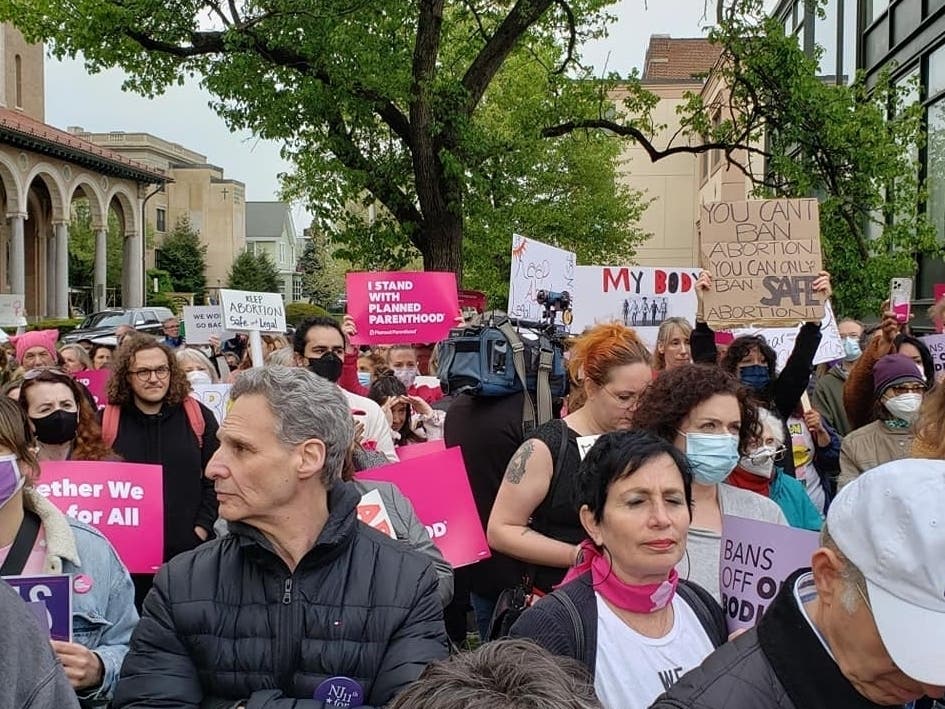
NEW JERSEY — With the U.S. Supreme Court apparently ready to strike down Roe v. Wade, the landmark ruling that made abortion legal in all 50 states, a maelstrom of questions remains about how it would affect the nation — including New Jersey.
But according to Kimberly Mutcherson, co-dean and professor of law at Rutgers Law School in Camden, and David Noll, a professor at Rutgers Law School in Newark, if the nation’s highest court follows through on the draft opinion, there’s one thing that is for certain: It would be an “unprecedented” move.
What's it all about?
Earlier this week, there was a leak of a U.S. Supreme Court majority draft opinion, which indicates that the court may overturn Roe v. Wade (1973) and Planned Parenthood v. Casey (1992). Chief Justice John Roberts confirmed Tuesday the draft opinion — first reported by Politico — is authentic.
Find out what's happening in Newarkfor free with the latest updates from Patch.
Much can change before the court publishes its final decision, likely in June or July. As draft opinions are circulated among justices, votes can and have changed on controversial cases, Politico reported. Read More: Roe V. Wade Will Be Struck Down, Politico Reports, Citing Leaked Draft
If the landmark cases are struck down, women's access to abortion could change depending on where they live. However, it’s worth noting that Gov. Phil Murphy signed the Freedom of Reproductive Choice Act into New Jersey law earlier this year. This ensures access to abortions in the Garden State, whether or not the Supreme Court overturns the two cases.
Find out what's happening in Newarkfor free with the latest updates from Patch.
- See related article: Abortion Access Would Remain In New Jersey If Roe v. Wade Overturned
Explaining a 'stunning' case
On Tuesday, Mutcherson and Noll answered some frequently asked questions about the developing situation, including potential reasons for the leak, whether they think the decision will stand, and the implications it could have beyond abortion rights.
Their full replies follow below.
Why was the decision leaked? And how did we get to this point in American politics where SCOTUS decisions are now leaked?
Chief Justice Roberts has now confirmed that this is a genuine draft, but we can only speculate about who leaked, and why. One explanation is that someone with access to the draft — a Justice, clerk, or member of the Court’s staff — leaked it to sound an alarm bell about the majority’s support for states’ attacks on reproductive health care. It’s also possible, however, that the draft was leaked by someone sympathetic to the majority who was acting for strategic reasons.
That the opinion was leaked reflects the unfortunate reality that the Court has become an important forum for political movements to pursue their agendas — and one that political leaders often prefer to policymaking through more democratic means. Politicians on the right have engaged in a decades-long project to take control of the judiciary, with the explicit goal of overturning Roe. As pro-business Republicans lost influence to the actors aligned with the Tea Party and MAGA, the movement became more and more willing to engage in hardball tactics to achieve its goals. At some point, norms of fairness and respect for institutions reach their breaking point. That’s what we are seeing here.
Should we consider this a done deal? Is Roe v. Wade as good as overturned?
To be clear, until the Court issues an actual opinion in this case, Roe remains the law of the land and abortion is still a constitutional right. In cases with major political repercussions, Justices’ votes are in play until days before decisions are released, so there will inevitably be changes in the positions the Justices take and how far the opinion goes.
At the same time, it’d be naïve to assume that this Court will faithfully apply its reproductive rights precedents. The Justices in the majority were selected precisely because they disagree with and are willing to overturn Roe, despite any protestations to the contrary made at their confirmation hearings. And they have already allowed Texas to largely dismantle abortion access through its vigilante enforcement scheme, which the Court has allowed to operate for months despite the opportunity to halt it. Donald Trump may have been overstating things when he said that Roe would be overturned “automatically” once his nominees to the Court were confirmed, but he wasn’t that far off.
What is the precedent of overturning a precedent like this?
There is none. We can’t think of any case where the Court recognized a fundamental right to personal autonomy and then said, “oops!” and took away the right. We are in completely uncharted territory here. That being said, the Court has been chipping away at Roe for decades, most drastically in Planned Parenthood v. Casey in 1992, but this is the first time there have been enough conservative votes to actually overrule both Roe and Casey. It’s telling that the State of Mississippi changed its position on whether the Court should use this case to overrule Roe once they knew that Justice Barrett would be one of the people deciding the case and that the conservative majority was solidified.
Justices Amy Coney Barrett and Brett Kavanaugh testified during their confirmation hearings that they considered Roe v Wade settled law. Clearly that was not the case. Do you anticipate this will affect confirmation hearings going forward?
We doubt it. Setting aside hearings that reveal serious allegations of wrongdoing, the confirmation process has become a form of political theater. The Justices decline to discuss their views at anything but a high level of generality. In turn, Senators use their questioning as an opportunity to shape the political and media agenda and to highlight issues that sometimes have little to do with the work of the Court. We don’t think Roe’s fall will fundamentally alter these dynamics, though it will of course put reproductive rights at the center of the national agenda and reinforce that the Supreme Court is far from being an apolitical institution. Unlike the executive and legislative branches, however, we cannot directly vote for Supreme Court Justices.
How does it change the court if opinions are now getting leaked?
It’s tough to say but the most immediate fallout will be a loss of trust among the Justices and an awareness that things said during deliberations are never truly private. We suspect this will lead to further polarization on the Court, since Justices will be less willing to discuss matters with Justices they perceive as ideological enemies. Longer term, we suspect the leak will have negative effects on public perceptions of the Court. People can see for themselves the stridency of the majority’s anti-abortion views and just how far it is willing to go to dismantle settled law. That hardly inspires trust in the institution.
Have you had a chance to review the leaked opinion yet? What do you think this means for all other Supreme Court precedents including marriage equality?
We have. What stands out to us is that it reads less like a judicial opinion that carefully engages the facts, law, and opposing arguments, and seems more like a work of advocacy that selectively deploys history to reach a pre-determined result. Justice [Samuel] Alito glorifies history and tradition but ignores that the many laws to which he cites that banned abortion in the 19th century were passed before women even had a Constitutional right to vote. He stresses the state right to protect potential life but ignores the risks to pregnant people that a world without legal access to abortion creates, especially in a country with an abysmal rate of maternal morbidity and mortality. He makes claims about women’s increased political power but ignores that women are woefully under-represented in state legislatures and in Congress. His opinion in no way reflects the reality of women’s lives.
Further, though he claims that this opinion is only about abortion and has no impact on other rights, the language that he uses does not support this narrow interpretation. He argues that rights not explicitly contained in the Constitution are specious, which has serious implications for a number of rights that many of us hold dear. For example, the right to marry is not explicit in the Constitution. The right for parents to make decisions on behalf of their children is not explicit in the Constitution. The right to access contraception is not explicit in the Constitution.
As we watch states battle over what can be said and taught in public schools about race, history, LGBTQ people and more, the draft opinion’s sweeping logic can easily be deployed to attack all of these rights. The path that’s charted in this opinion leads to a serious constriction of rights for all sorts of people, not just those seeking abortions.
Send news tips and correction requests to eric.kiefer@patch.com
Sign up for Patch email newsletters. Learn more about posting announcements or events to your local Patch site.
Get more local news delivered straight to your inbox. Sign up for free Patch newsletters and alerts.