Schools
Rutgers Newark To Honor Social Justice Icon, Jazz Legend (VIDEOS)
The 2019 commencement ceremony at Rutgers-Newark will pay tribute to teacher/activist Dorothy Roberts and jazz pioneer Wayne Shorter.


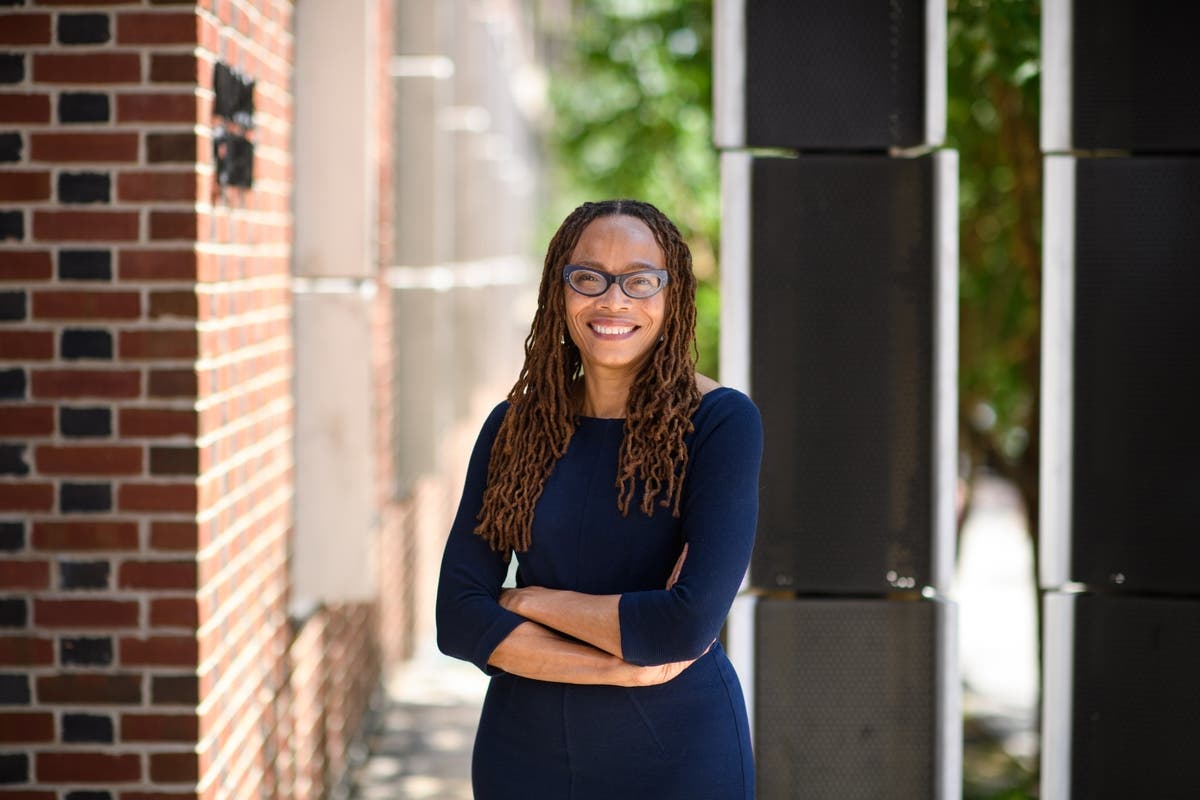
NEWARK, NJ — Social justice icon Dorothy Roberts and jazz legend Wayne Shorter will be the honored guests at Rutgers-Newark’s 2019 commencement ceremony, university officials announced Tuesday.
Roberts will deliver the keynote address at the commencement ceremony on May 22, and will receive an honorary doctor of laws degree. Shorter will receive an honorary doctor of fine arts degree.
Rutgers administrators offered glowing words of praise for Roberts and Shorter, both of whom have deep connections with Newark.
Find out what's happening in Newarkfor free with the latest updates from Patch.
“Dorothy Roberts is one of the nation’s leading voices striving to expunge deeply embedded discriminatory ideas and practices from the American social fabric,” Rutgers-Newark Chancellor Nancy Cantor said.
Cantor also lauded Shorter, noting that from his early training at Newark Arts High School, he went on to become “recognized globally as one of the great musicians of our time,” win multiple Grammy Awards and become an inspiration to people around the world, “especially here in his hometown of Newark.”
Find out what's happening in Newarkfor free with the latest updates from Patch.
Rutgers University provided the following biographies for Roberts and Shorter. Don’t forget to visit the Patch Newark Facebook page here.
A VOICE FOR JUSTICE
As a scholar, teacher, and activist whose work appears in both scholarly and popular venues—including myriad television and radio shows and a wildly popular TED Talk viewed by more than a million people to date—Roberts has aimed in her work to sharpen perception of discriminatory assumptions and practices woven into our everyday lives. She advocates for realizing a vision of the world in which human beings of all backgrounds, genders, religions, and abilities actually are valued as equal.
Following undergraduate study at Yale University and law school at Harvard University, Roberts clerked in the U.S. District Court of the Southern District of New York, later joining Paul, Weiss, Rifkind, Wharton and Garrison LLP, before launching on an academic career that started notably at Rutgers Law School, Newark, where she served on the faculty for a decade starting in 1988. During her time at Rutgers-Newark, she achieved national renown, publishing a landmark article on black women's reproductive rights in the Harvard Law Review in 1991, then under the editorial leadership of future President Barack Obama. She also completed her first book, "Killing the Black Body: Race, Reproduction and the Meaning of Liberty," widely acclaimed as one of the most enduringly important books on the topic. She went on to successive faculty appointments at Northwestern University and the University of Pennsylvania, where she remains and is the founding director of the Penn Program on Race, Science & Society.
GENIUS CULTIVATED IN NEWARK
Born and raised in Newark, Shorter switched from playing clarinet to saxophone while a student at Newark Arts High School and began playing in jazz ensembles and big bands. After graduating from New York University in 1956 with a Bachelor of Music Education degree, he was drafted into the U.S. Army. Upon leaving the military two years later, he played with Maynard Ferguson’s big band, then joined Art Blakey and the Jazz Messengers, establishing himself as one of the premier saxophonists in the world over the next five years, during which he became the legendary band’s music director. He subsequently played with the cutting edge Miles Davis Quintet, proving to be one of the ensemble’s most productive composers, while also striking out as a solo artist, recording numerous albums that included enduring jazz classics such as “JuJu,” “House of Jade,” and “Yes and No.”
While his brilliant work in counterpoint to Joe Zawinul in the innovative jazz group Weather Report remains some of his most popular with audiences, including the crossover 1977 hit “Birdland,” he continues to push the boundaries of improvisation through new compositions. A National Endowment for the Arts Jazz Master and 10-time Grammy Award winner, the now 85-year-old Shorter was named a 2018 Kennedy Center honoree.
Learn more about posting announcements or events to your local Patch site here. Send local news tips and correction requests to eric.kiefer@patch.com
Photo: Rutgers University–Newark
Get more local news delivered straight to your inbox. Sign up for free Patch newsletters and alerts.