Sports
Rutgers Professor: Here’s Why Soccer Is More Than A Game In Brazil
After Brazil faces Morocco in the FIFA World Cup competition, the results may work their way into one of Isadora Grevan's classes.


NEWARK, NJ — The following article was originally published by Rutgers-Newark and is reposted here with permission.
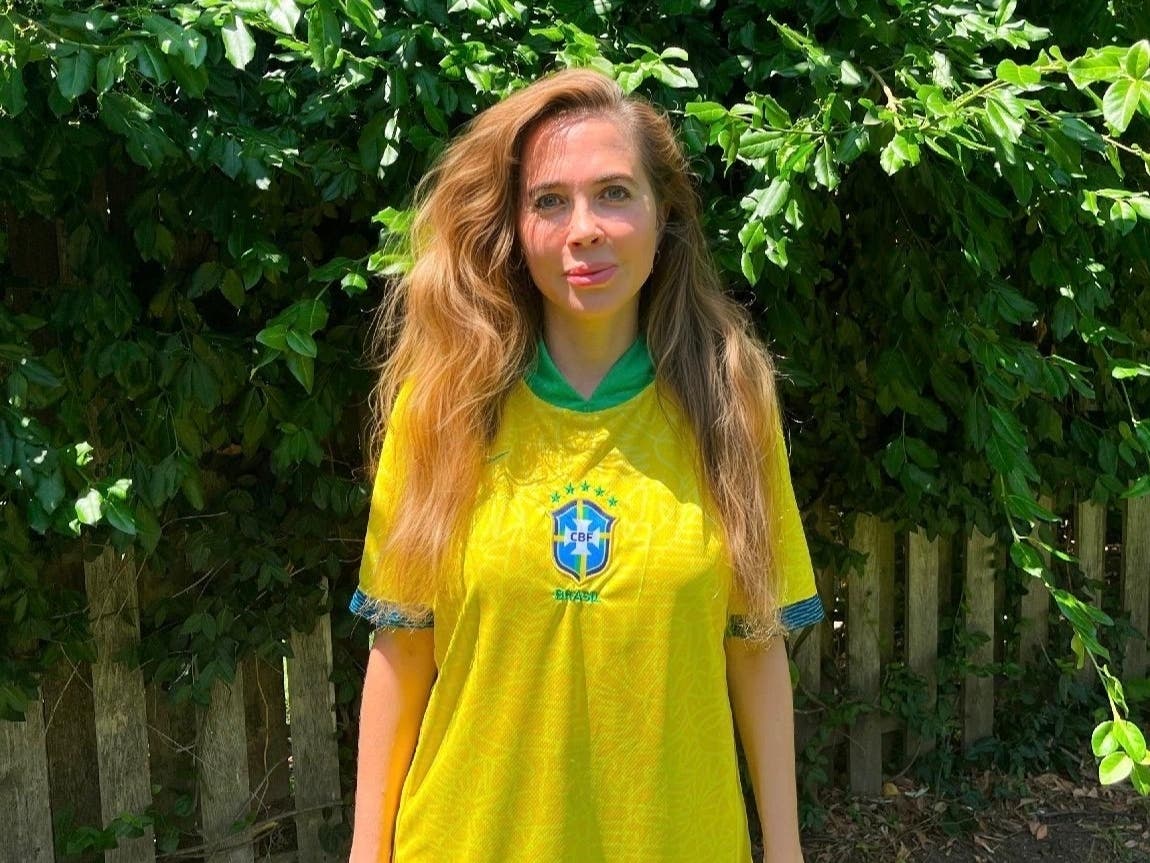
When Brazil faces off against Morocco Saturday in the FIFA World Cup competition, Rutgers University–Newark professor Isadora Grevan will be watching the game. She might also be adding it to her syllabus.
Grevan teaches a course called “Soccer, Samba, and Spiritualism: Performing Brazil,” which explores soccer’s central role in the nation’s cultural life. The popular class, which she has taught every spring semester for the past five years, examines how soccer is intertwined with samba music and dance, along with aspects of African spirituality. All developed in tandem, said Grevan.
Find out what's happening in Newarkfor free with the latest updates from Patch.
“They’re all very much a part of Brazil’s national imagination. There’s a synchronic relationship,’’ said Grevan, a soccer fan who grew up in Rio de Janeiro and teaches on a campus close to Newark’s Ironbound district. The community is home to many Brazilians – and some of the most zealous soccer fans in America.
But in Brazil, where soccer permeates daily life, as well as the national psyche, fans are even more passionate. It’s played in streets, beaches, schoolyards and apartment courtyards, in wealthy neighborhoods and poor communities. Team loyalties are hereditary. For generations, Grevan’s own family has been fans of the city’s Fluminense Football Club.
Find out what's happening in Newarkfor free with the latest updates from Patch.
Underscoring soccer’s connection to spiritualism, it's not uncommon for fans to pray during the game, said Grevan. “It’s so enmeshed in Brazilian soccer, people will light candles for their team to win. People will do incantations and prayers. Even me, and I’m not religious. In the middle of the game, I’ll go somewhere and pray,” said Grevan, a faculty member in the Department of Spanish and Portuguese Studies, who normally teaches literature.
In Brazil during major international competitions, businesses shut down, streets fill with green and yellow decorations, and entire neighborhoods organize around match schedules. When Brazil wins, there’s an outpouring of joy. A loss is met with tears and short-term depression.
“There’s nothing like being in Brazil when the Brazilian team plays,” Grevan said. “Everything closes. Nobody works.”
But soccer’s cultural importance runs deeper than the game itself. In her course – which is especially popular among Rutgers–Newark’s soccer team – Grevan introduces the work of anthropologists, historians and literary scholars. They argue that soccer functions as a kind of social drama where Brazilians negotiate questions of race, class and identity.
The class examines the writings of anthropologist Roberto DaMatta, who described soccer as one of the spaces where Brazilian society expresses itself most fully. Students also read historian Joel Rufino dos Santos, who traced the sport’s development from an elite pastime introduced in the 1890s by Charles Miller – whose background was British – to national obsession shaped by Black and working-class Brazilians.
According to Grevan, Afro-Brazilian culture is essential to understanding what makes Brazilian soccer distinctive. The course explores how religious traditions such as Candomblé and Umbanda, brought to Brazil by enslaved Africans, shaped samba, and the Brazilian martial art of capoeira. All influenced a style of play known as ginga—the fluid, improvisational movement associated with Brazilian soccer.
“Music, oral history and dress influenced Carnival,” Grevan said. “You see that circle in Candomblé rituals, but also in samba circles and capoeira. Some players have done samba records.” Fans are known for their rhythmic drumming, called bateria.
The course also examines how governments used soccer to promote Brazil as a harmonious multicultural society. During the 1930s, President Getúlio Vargas elevated both samba and soccer as national symbols while promoting the idea of Brazil as a “racial democracy.”
“He wanted to create a positive image of Brazil,” Grevan said.
Yet the story is more complicated. While Black athletes such as Pelé became global symbols of Brazilian excellence, many scholars argue that the celebration of a multiracial society often obscured inequality and discrimination
“A lot of critics thought it was a way for Brazilians not to deal with national problems,” Grevan said.
Those debates remain relevant today. The course examines contemporary examples, such as the racist abuse directed at Brazilian star Vinícius Júnior in Europe and asks students to consider how race continues to shape both Brazilian society and global soccer.
Grevan’s course attracts a diverse mix of students, including student athletes, soccer fans, and students interested in race, culture and history.
While they’re initially drawn to the course’s pop culture appeal, they grow to appreciate Grevan’s weighty analysis of the game and its symbolism.
“People are attracted by the fun part of it and the light part, but it ends up being very deep,’’ said Grevan.
She also learns from her students. “I know the history but I don’t know all the statistics, who scored what, stuff like that. There are Brazilian players that play for big teams in Europe that they know all about. That’s very helpful. Sometimes, they know more than me.”
Send local news tips and correction requests to eric.kiefer@patch.com. Learn more about advertising on Patch here. Find out how to post announcements or events to your local Patch site.
Get more local news delivered straight to your inbox. Sign up for free Patch newsletters and alerts.