Neighbor News
Safety Tips for Allergy Sufferers
Allergy season is expected to get worse before it gets better. Learn a few safety tips from the poison experts.


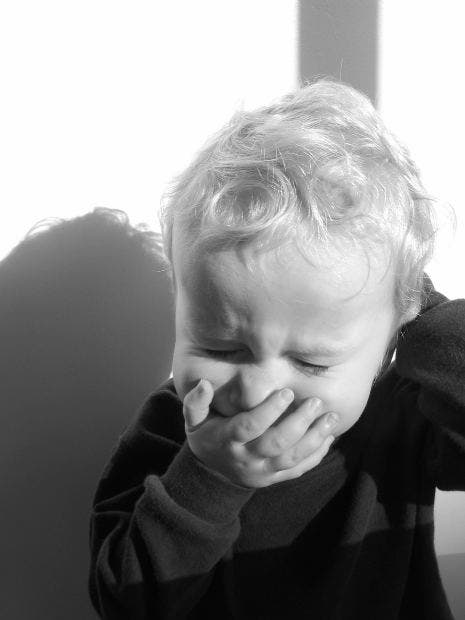

Spring allergy season is here and health experts expect it to get much worse before it gets better. The prolonged period of wet weather is keeping the pollen at bay, but once things dry up, expect symptoms to increase. Allergy sufferers know the symptoms…sneezing, watery itchy eyes, nasal congestion, runny nose, etc. This has led sufferers to go to their local pharmacies/supermarkets to seek medicines to relieve the discomfort associated with their allergies.
The NJ Poison Experts encourage consumers to exercise caution when taking allergy medicines or giving them to a child. There is a common misconception that non-prescription (over-the-counter/OTC) medicines are not dangerous because they are sold without a prescription. Such medicines may, in fact, produce serious side effects which may cause harm to those taking them.
“Remember, all medicines have side effects, whether prescription or over-the-counter,” said Bruce Ruck, Pharm.D., NJ Poison Center. “We want to raise awareness about the potential side effects from OTC and prescription allergy medications. Effects can range from agitation to drowsiness and/or stomach upset to liver damage.”
Find out what's happening in Newarkfor free with the latest updates from Patch.
Before you reach for any allergy medication, either OTC or prescription, we recommend the following tips to prevent problems related to medication use:
- Almost all allergy medications can cause drowsiness. These side effects can cause operating equipment and driving to be dangerous. Be mindful of taking other medicines that can also cause drowsiness.
- Avoid drinking alcoholic beverages while taking medicine, including allergy medicine. Mixing the two together can prove dangerous.
- Allergy medications may interfere with vision. Blurring of vision may occur and interfere with driving and similar skills.
- Select medications that treat ONLY the symptoms you have. For example, use a decongestant if you are congested, but only use decongestants with cough suppressant if you have a cough as well.
- Watch for duplicate active ingredients in products taken at the same time. Many times medications with different names and even different intended purposes contain the same active ingredients. Taking these together, can result in serious overdose.
- Remember that more does not mean better. Don’t take medicines longer or in higher doses than the label recommends. If symptoms persist, it is time to see a doctor.
- Be particularly careful about dosage recommendations. With liquid medications, it is best to use a measuring spoon or a dosing cup marked in teaspoons, not a common kitchen spoon.
- Avoid drug interactions. If you are currently taking any prescription or non-prescription medications, ask your pharmacist or health care provider for assistance in choosing non-prescription medications. If this is not possible, questions can be directed to NJPIES at 1-800-222-1222.
In the event of an exposure, don’t waste valuable time looking up information on the Internet when every minute counts. If someone has collapsed, stopped breathing, or convulsing/seizing call 911 immediately, otherwise call the NJ Poison Experts at (1-800-222-1222). Experts are always here to help 24 hours a day, 7 days a week, every day of the year. Calls are free and confidential. Help is available in more than 150 languages.
Find out what's happening in Newarkfor free with the latest updates from Patch.
Time is of the essence in many situations since poisons and medicines may act very quickly. Having a poison expert give you exact instructions for your specific situation can help significantly during those critical first few minutes. Program the Poison Help line (800-222-1222) into your cell phone and post it near your home and office phones too
Help is Just a Phone Call Away!
We are social. Join us on Facebook (www.facebook.com/njpies) and Twitter (@NJPoisonCenter) for breaking news, safety tips, trivia questions, etc. Stay tuned for more poison prevention week safety information.
Real People. Real Answers.
___________________________________________________________________________________________________________________________________About NJPIES
As New Jersey’s only poison control center, the New Jersey Poison Information & Education System provides information on poison prevention and treatments. Chartered in 1983, NJPIES provides free consultation through telephone hot line services and the Web. Medical professionals such as physicians, registered nurses and pharmacists offer confidential advice regarding poison emergencies and provide information on poison prevention, drugs, food poisoning, animal bites and more. These specialists are available 24 hours a day, seven days a week.
NJPIES coordinates state poison education and research and is designated as the regional poison center by the New Jersey Department of Health and Senior Services and the American Association of Poison Control Centers. It tracks incidences of adverse reactions to food, drugs and vaccines in order to monitor potential public health issues and provide data to the U.S. Food and Drug Administration and the Centers for Disease Control and Prevention. A division of the Department of Emergency Medicine of the New Jersey Medical School of Rutgers, The State University of New Jersey. NJPIES has a state-of-the-art center located on the school’s Newark campus. NJPIES is funded, in part, by the NJ Department of Health and the United States Department of Health and Human Services.
New Jersey residents seeking immediate information about treating poison emergencies, and those with any drug information questions, should call the toll-free hot line, 800-222-1222, any time. The hearing impaired may call 973-926-8008. For more information, visit www.njpies.org or call 973-972-9280.
About Rutgers
Established in 1766, Rutgers, The State University of New Jersey, is America’s eighth oldest institution of higher learning and one of the nation’s premier public research universities. Serving more than 65,000 students on campuses, centers, institutes and other locations throughout the state, Rutgers is the only public university in New Jersey that is a member of the prestigious Association of American Universities.
Rutgers Biomedical and Health Sciences (RBHS) is the health care education, research, and clinical division of Rutgers University, comprising nine schools and their attendant faculty practices, centers, institutes and clinics; New Jersey’s leading comprehensive cancer care center; and New Jersey's largest behavioral health care network.
###