Politics & Government
Sen. Menendez: Lies Outlasted Presidents In ‘Flawed’ Afghan War
Sen. Robert Menendez (D-NJ): "Successive administrations lied to Congress over the years … and we need to understand why."


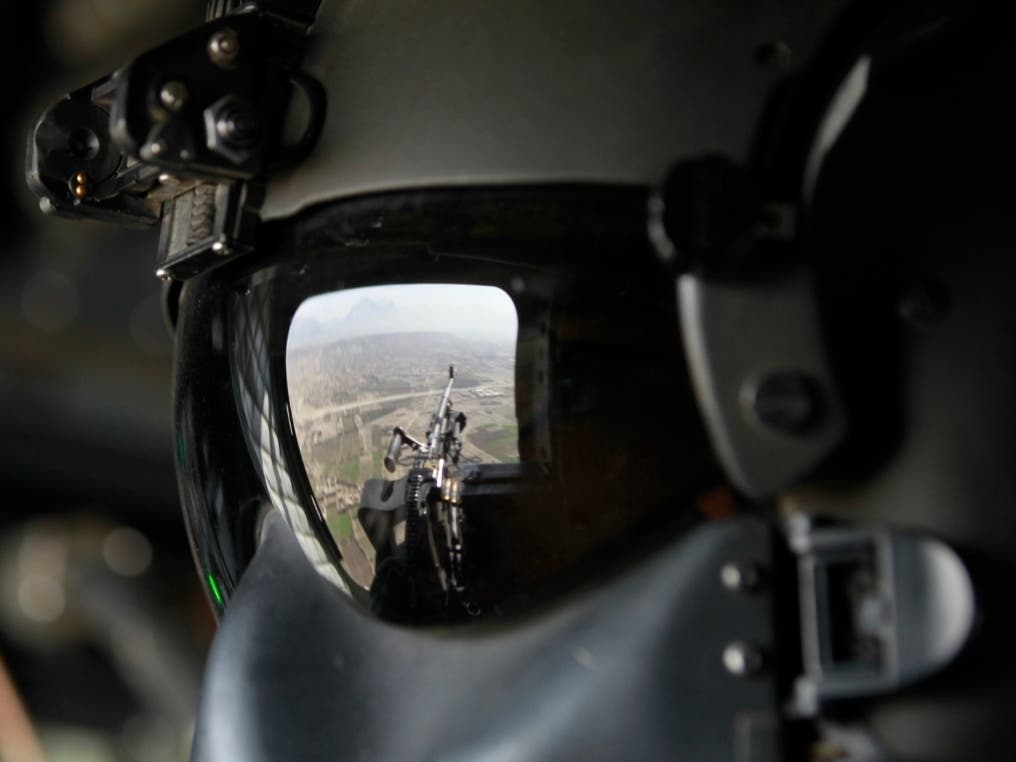
NEW JERSEY — Since the launch and recent end of America’s longest war, there have been four U.S. presidents, each of whom tried their own approaches in Afghanistan. But there’s a common link to the past two decades of U.S. military presence in the Middle Eastern nation, according to Sen. Robert Menendez of New Jersey.
Lies.
On Tuesday, Menendez (D-NJ), who serves as chair of the Senate Foreign Relations Committee, delivered opening remarks at a hearing on the United States’ controversial withdrawal from Afghanistan (see video below).
Find out what's happening in Newarkfor free with the latest updates from Patch.
During the hearing, Menendez grilled Secretary of State Antony Blinken, accusing several presidential administrations – going all the way back to George W. Bush – of misleading Congress members about the Afghanistan government’s ability to stay in power once U.S. forces withdrew.
“Mr. Secretary, the execution of the U.S. withdrawal was clearly and fatally flawed,” Menendez said. “This committee expects to receive a full explanation of [the Biden administration’s] decisions on Afghanistan since coming into office last January.”
Find out what's happening in Newarkfor free with the latest updates from Patch.
“There has to be accountability,” Menendez added.
The senator said many costly errors have been made over the course of the past 20 years, by Democrats and Republicans alike.
“We need to understand why successive administrations made so many of the same mistakes repeatedly,” Menendez pressed. “Perhaps most urgently, we need to understand why the Afghan government and military collapsed so precipitously. This rapid collapse laid bare a fundamental fact – that successive administrations lied to the Congress over the years about the durability of Afghan military and governing institutions. And we need to understand why.”
Menendez’s full remarks follow below.
- See related article: Blinken Faces New Round Of Afghanistan Questions In Congress
- See related article: Pentagon Reliance On Contractors Hurt U.S. In 9/11 Wars, Study Says
“Secretary Blinken, thank you for joining us today.
“Last week, the New York Times reported on a local Afghan reporter who goes by the name of Nemat. He was covering a demonstration by several women protesting against the Taliban. He was arrested, and his camera was confiscated.
“Nemat said and I quote: ‘I told them I was a journalist and showed them my ID card, but they accused me of organizing the protests. They took me into a room, tied my hands with a scarf and started beating me with a cable.’
“The horror he experienced is hard to fathom. He described a demonstrator covered in blood after being severely beaten, and saw Taliban militants abusing prisoners. One of Nemat’s colleagues said, ‘They were mocking us and saying: ‘You want freedom? What freedom?’
“This is not the Taliban of 2001. This happened last week.
“Amid the extensive oversight work planned on Afghanistan, we must not lose sight of people like Nemat and the courageous women who continue to protest in the streets, calling for freedom in the face of violence and threats. The repression of the Afghan people is happening in real time. The world must bear witness and hold the Taliban accountable.
“Let me turn to the focus of today’s hearing.
“Mr. Secretary, the execution of the U.S. withdrawal was clearly and fatally flawed. This Committee expects to receive a full explanation of this Administration’s decisions on Afghanistan since coming into office last January. There has to be accountability.
“We will have other hearings to develop a set of lessons learned over the course of the war to understand the many mistakes made over the course of 20 years. The diversion of attention and resources when the Bush administration decided to invade Iraq despite its irrelevance to the 9/11 attacks. The double dealing by Pakistan in providing a safe haven to the Taliban. The list goes on. We need to understand why successive administrations made so many of the same mistakes repeatedly. Perhaps most urgently, we need to understand why the Afghan government and military collapsed so precipitously. This rapid collapse laid bare a fundamental fact – that successive administrations lied to the Congress over the years about the durability of Afghan military and governing institutions. And we need to understand why.
“The chaos of last August is due in large part to the February 2020 surrender deal negotiated by Donald Trump, a deal that was clearly built on a set of lies. A deal that led to the release of 5,000 hardened Taliban fighters, boosting the militant group on the battlefield this summer.
“We know now that the Taliban had no intention of pursuing a political path and peace deal with the Afghan government.
“It had no intention of pursuing a democratic path.
“It had no intention of breaking ties with Al Qaeda.
“And it clearly had no intention of allowing women to have their rightful seat at the table and to participate fully in society.
“To demand the Taliban abide by its commitments now and expect a different result I think is somewhat absurd. The Taliban rules Afghanistan so we will have to deal with it in some form. But let’s not kid ourselves. There is no such thing as a reformed Taliban. This group is woefully stuck in the 14th century with no will to come out. Their concept of political representation and legitimacy is based squarely on the use of violent force and intimidation.
“The Administration says that we should judge the Taliban by their actions and I agree. And their actions since taking over Afghanistan have been pretty horrifying. Beating women activists. Murdering ethnic and religious minorities, such as the Hazara. Separating classrooms by gender. Shutting down local media. Refusal to break with Al Qaeda. Appointing the head of a Foreign Terrorist Organization that is designated by our government from the Haqqani network to lead the Ministry of Interior. And the list goes on.
“With this in mind, the United States and the United Nations should maintain existing sanctions on the Taliban. The U.S. should re-impose those sanctions that were waived during the negotiations process. And the U.S. should consider new measures to impose higher costs on the group and its leaders, while ensuring that life-saving humanitarian aid is able to assist those most vulnerable to hunger, disease, and disaster.
“Nor should any country be in a rush to unilaterally recognize this regime. At a minimum, the following criteria must be met before recognition is even considered: absolute repudiation by the Taliban of all cross-border terrorism, including Al Qaeda and associated groups; equality of rights for girls and women; protection of minority ethnic and religious groups; commitment to democratic elections; and ending all narcotics-related activity.
“Yes, the Taliban now run Afghanistan. But that does not mean we ever accept their behavior.
“I supported the decision to eventually withdraw our military from Afghanistan. I have long maintained, however, that how the United States left mattered. Doing the right thing in the wrong way can end up being the wrong thing. And to get this right, the Biden administration needed to answer two fundamental questions.
“First, would the withdrawal leave a durable political arrangement in its wake?
“Second, would the U.S. and our allies maintain an ability to collect intelligence and conduct counterterrorism operations, in a region still rife with groups, including ISIS-K, seeking to do us harm?
“I believe the U.S. clearly fell short on the first measure. Time will tell on the second, but the prospects do not look promising.
“So let me start with some framing questions about the Biden administration’s Afghanistan decision-making.
“First, upon coming into office, how did the Biden administration assess the impact on the ground of President Trump’s flawed deal with the Taliban? Did the Administration attempt to negotiate better terms with the Taliban upon coming into office?
“Second, did the president’s April withdrawal announcement set in motion any explicit contingency planning in the event that the Taliban rapidly took over the country?
“What was the plan to evacuate all Americans?
“What was the plan to evacuate SIVs, P1s, P2s and other at risk groups? What was the plan to evacuate staff and those affiliated with Radio Free Europe/Radio Liberty, Voice of America, the National Endowment for Democracy, and other U.S.-funded organizations?
“President Trump with Stephen Miller intentionally blocked SIVs from being processed, which I think is a barbaric and cruel decision which likely resulted in death for some U.S. partners. How did the Biden administration specifically accelerate processing SIVs upon coming into office?
“And third, what was the plan to try to avoid or deal with a refugee and humanitarian crisis?
“I expect that you will address some of these issues in your opening remarks.
“Let me applaud the efforts of the personnel on the ground from the Departments of State and Defense who worked under horrific circumstances. Their actions in evacuating over 120,000 individuals were nothing short of heroic. These personnel deserve answers. The American public deserves answers. And the Afghan people certainly deserve answers.
“Let me close with three points.
“First, while communication from the Administration has been frequent throughout this crisis, information from State, the Pentagon, and the White House has been often been vague or contradictory. This was obviously a fluid and difficult situation, frustration among many members was high, and this has to improve. And to put this in context, member frustration came on top of years of stonewalling by the Trump administration and its refusal to engage the Senate on the Taliban negotiations. This is one of the examples why I have been trying to pursue reforms to the CASE Act to understand what are the written agreements that come between an Administration and others. Maybe if we had seen all of the elements of it we would have been poised in a better position.
“Second, I am very disappointed that Secretary Austin declined our request to testify today. A full accounting of the U.S. response to this crisis is not complete without the Pentagon – especially when it comes to understanding the complete collapse of the U.S. trained and funded Afghan military. His decision not to appear before the Committee will affect my judgement on Department of Defense nominees. I expect that the Secretary will avail himself to the Committee in the near future. If he does not, I may consider the use of the Committee’s subpoena power to compel him and others over the course of these last twenty years to testify.
“Third, I implore the Administration to remain focused on Afghanistan. It is critically important that the world bear witness and take action when possible in response to Taliban abuses. Your visit, Mr. Secretary, to Qatar and Germany sent the right message, and I strongly urge sustained attention to Afghanistan in the months and years to come. I also urge the Administration to strengthen its resolve and efforts to secure the relocation of our civil society partners, now at grave risk, who were left behind in Afghanistan. They include heroic individuals working for organizations on the front lines of U.S. efforts to strengthen democracy and human rights, including the rights of Afghan women and girls.
“Finally, I note that Senator Young is not with us today. He is home in Indiana attending the funeral of Marine Corporal Humberto Sanchez. Corporal Sanchez was among those killed in the horrendous terror attack on August 26 at the Kabul Airport. I’d like to suggest that we have a moment of silence and pay our respects to all those brave American service members who were killed or injured that day. And that we also honor the thousands of American service members, Afghan soldiers and civilians who were causalities of this 20-year war.”
Send news tips and correction requests to eric.kiefer@patch.com
Sign up for Patch email newsletters. Learn more about posting announcements or events to your local Patch site.
Get more local news delivered straight to your inbox. Sign up for free Patch newsletters and alerts.