Schools
At Mason Gross, Art Is for Art’s Sake – and Health’s
An initiative supported by a multimillion-dollar grant seeks to position Rutgers as a leader in promoting art as a resource for well-being

To Ian Koebner, an arts scholar and cultural strategist at the Mason Gross School of the Arts at Rutgers University-New Brunswick, public health partners are everywhere: on stage, in the recording studio, even in the museum.
“For millennia, people have recognized a relationship between art and healing; ancient texts, including the Bible, describe the capacity of art, sound and music to support healing,” said Koebner, who in 2025 was appointed the inaugural chair and endowed professor of Arts in Health.
“What is new, and what we are building upon at Rutgers, is a growing body of evidence supporting that deeply held human intuition: cultural engagement is a health behavior, much like physical activity or healthy eating,” he said.
Find out what's happening in New Brunswickfor free with the latest updates from Patch.
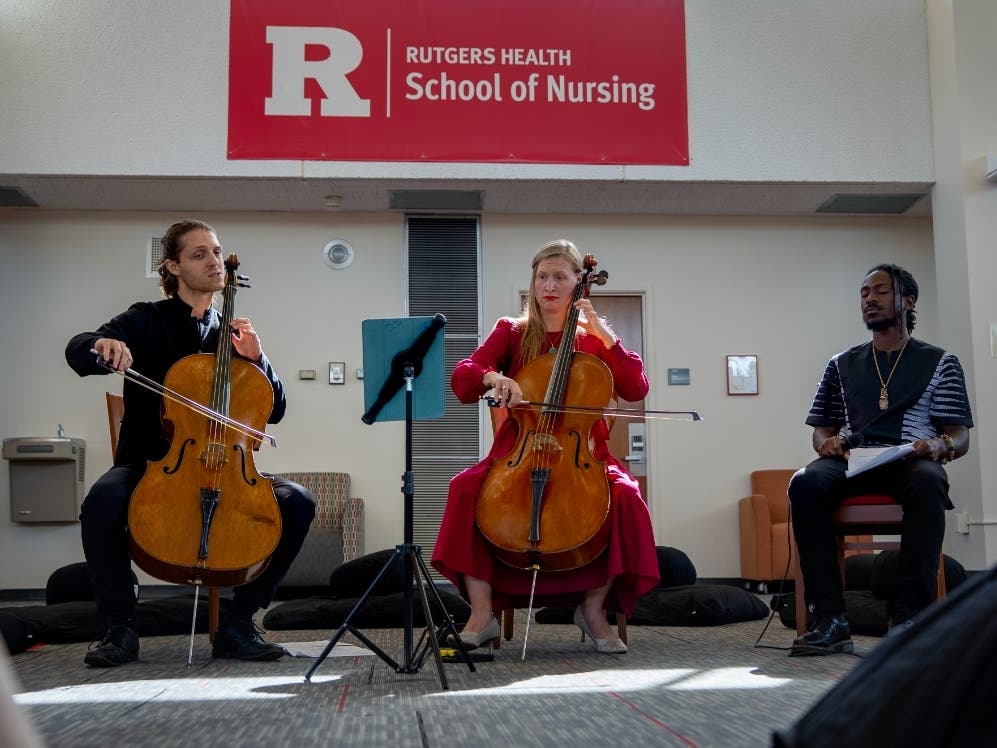
Arts in Health begins this year with a series of events and research collaborations. The program calendar opened on Sept. 23 with a Well-Being Concert created in partnership with the Weill Music Institute at Carnegie Hall for nursing students with Philadelphia cellist Arlen Hlusko and hosted by artist, neuroscientist and psychiatrist AZA Allsop of Yale University.
A growing body of research examines how engagement with arts and culture relates to physical, mental and social well-being. Rutgers and Mason Gross have been nurturing this connection for several years. Koebner said his goal at Rutgers is to build on that foundation across four areas: student well-being, scholarship, learning and curation and public programming.
Find out what's happening in New Brunswickfor free with the latest updates from Patch.
First, Scarlet Arts RX connects Rutgers-New Brunswick students with arts and cultural experiences that support mental health, well-being and a sense of belonging. By integrating creative engagement into campus life, the RX program recognizes the arts as an important resource for student health and flourishing.
Second, scholarship and research examine the relationships among arts, health and well-being. The Arts in Health Research Lab, launched in 2023 as a partnership among Mason Gross, the Rutgers School of Public Health and the New Jersey Performing Arts Center, supports interdisciplinary research and shares emerging scholarship across the field.
Third, learning creates opportunitiesfor students, educators, health professionals, artists and the public to engage critically with arts and health. “Introduction to Arts in Health,” a three-credit course open to Rutgers students across the university and included in the undergraduate minor in holistic wellness, examines the evidence, ethics and practice in the field.
New educational programs extend learning beyond the university classroom. These include professional learning focused on well-being in the music classroom, as well as custom courses developed with cultural, health care and community partners for artists, health professionals, educators and other practitioners.
Finally, curation and public programming bring artistic excellence, rigorous scholarship and care into public and institutional settings. Current programs include Well-Being Concerts developed in partnership with Carnegie Hall; a Distinguished Residency Program that brings artists, scientists and curators into sustained engagement with the Rutgers community (Yale’s AZA Allsop has been named the inaugural Scientist in Residence); and Composing Health, which engages Rutgers faculty and students in creating and curating sound for health care environments.
“When I came to Rutgers, I asked where a university-based arts in health program could make a distinctive contribution,” said Koebner. “I saw an opportunity in building from the arts outward—drawing on the creative and intellectual life of an arts school while engaging the extraordinary breadth of a major public research university. That gives us an unusual platform to identify important work, bring artists and scholars into conversation and create programs that generate new experiences, research and collaborations.”
Koebner’s position was made possible by the largest gift in Mason Gross’s history, an $8.8 million anonymous bequest to fund the Arts in Health professorship.
He holds a doctoral degree in health care leadership and a master’s degree in pain research, education and policy. While at the University of California, he established the nation’s first partnership between a contemporary art museum and an academic medical center devoted to researching the potential for museum and virtual museum engagement to mitigate loneliness and pain.
“At Rutgers Arts in Health, we’re interested in what becomes possible when we begin with the arts,” said Koebner. “Rather than simply asking what the arts can do for health, we’re also asking what artistic practice and experience can teach us about what it means to live well.”