Health & Fitness
Twenty-Five Years Later, the 9/11 Health Crisis Continues to Impact Responders
Since 2003, the World Trade Center Health Program Clinical Center of Excellence at Rutgers University has provided clinical and mental healt
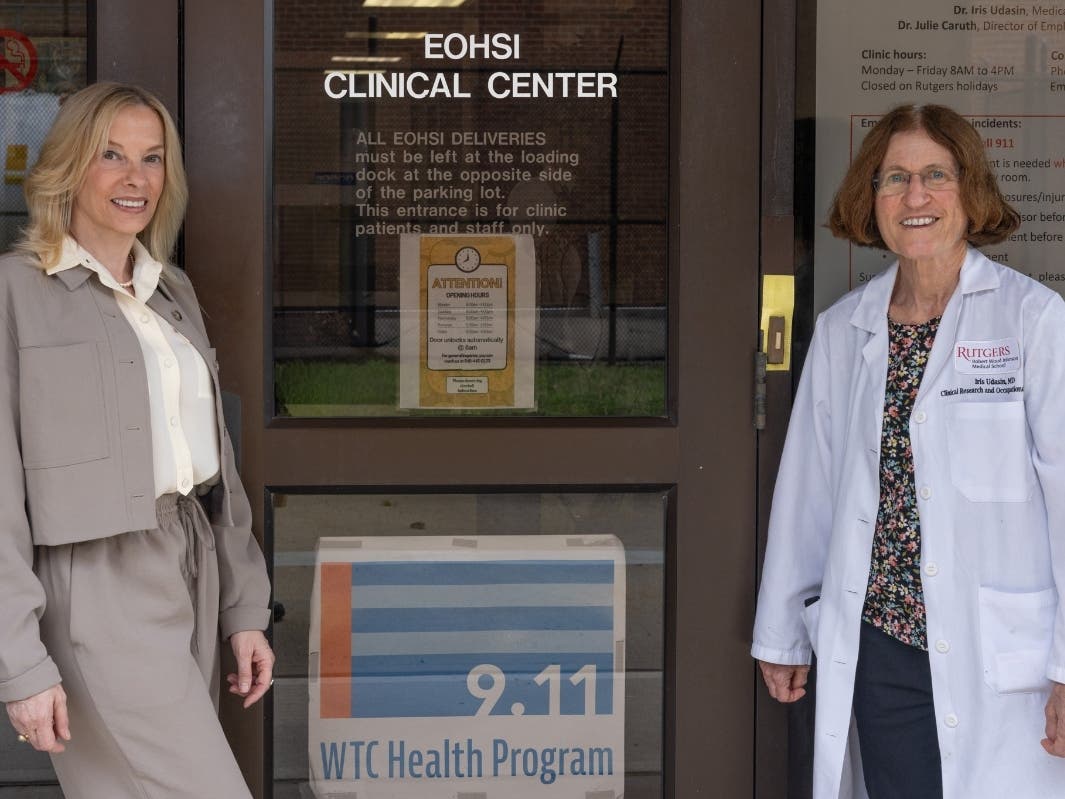
A quarter of a century after nearly 3,000 people lost their lives in the events that took place on September 11, 2001, the World Trade Center Health Program is still treating first responders exposed to both trauma and toxins when they rushed to Ground Zero.
“One might think that 25 years is enough time to grieve,” said Jodi Streich, director of mental health services at the World Trade Center Health Program at Rutgers. “In reality, many who responded that day held in their grief for 25 years and only now are they ready to talk about it.”
Since 2003, the federally funded program has treated more than 130,000 people, according to the Centers for Disease Control and Prevention. More than 6,500 of them have relied on Rutgers for care of conditions ranging from respiratory, neuromuscular and gastrointestinal disorders to cancers, post-traumatic stress disorder, depression and anxiety, according to Streich.
Find out what's happening in New Brunswickfor free with the latest updates from Patch.
Frank Geffre, 61, a firefighter from Piscataway, N.J., spent time at Ground Zero supporting recovery efforts. In the years since, he’s had cancerous nodes on his sinus canal, colon cancer, and almost lost his left kidney because of intense radiation. Many of the people he worked with during those days have since died.
The WTC Health Program at Rutgers provided him with a community of support and a network of clinical and mental health services that saved his life – and then extended it, he said.
Find out what's happening in New Brunswickfor free with the latest updates from Patch.
“I tell all 9/11 first responders,” that the Program at Rutgers “is the best there is.”
Many of the patients share that sentiment.
“People feel recognized here,” Streich said. “They know they’re not alone.”
That sense of community can be especially important in August, when anniversary-related symptoms often intensify.
“When I train my trainees, I always say August is our heaviest month,” Streich said.
The years immediately after 9/11 brought a surge in mental health needs among emergency workers, particularly those who left their jobs. Lockdowns during the COVID-19 pandemic brought another wave of retirements – and another wave of grief.
But many first responders who remained on the job suppressed their feelings, Streich said. Once they left, symptoms surfaced, often for the first time. This grief can be compounded by their own illnesses as well as trauma unrelated to 9/11.
“Think about what difficult jobs our patients had,” said Iris Udasin, medical director. “They’re not just recovering from what happened on 9/11. They’re recovering from whatever happened to them when they were police officers, firefighters or first responders.”
The range of health challenges linked to working at Ground Zero continues to increase. Today, all cancers linked to 9/11 exposure are covered by the program, including uterine cancer, which was added to the WTC Health Program List of WTC-Related Health Conditions in 2023.
“Latency for some cancers is 20 or 30 years, so we’re seeing more cancers than ever before,” Udasin said. “We’re also concerned about other chronic physical illnesses that could be related to WTC exposure.”
Geffre shared about the invisible load caregivers carry, as well. His wife, who recently died, was his support system. As amazing as she was, she couldn’t always comprehend his mental anguish, he said. “It was hard for her to understand why I’d wake up at night in cold sweats, screaming or why some things were triggering,” he said.
As 9/11 responders age, they may face new health challenges. If they do, it’s natural that their grief would be compounded, Streich said.
To some, reflecting on the past is cathartic. The World Trade Center Health Program Clinical Center of Excellence at Rutgers will commemorate the 25th anniversary of 9/11 with a ceremony to honor those who died and the first responders who answered the call.
“For many of our members, taking part in the commemoration itself – whether performing, speaking or simply standing together – is its own form of catharsis,” Streich said. “They’re not just honoring that day. They’re also paying tribute to who is standing alongside of them.”
For others, a ceremony is not how they prefer to recognize the anniversary. Geffre, for instance, will be paying tribute in his own way by attending a Yankees-Mets baseball game with his son.
“As a first responder, ‘never forget’ brings up things that I don’t always want to remember,” he said. “Sometimes, I do want to forget.”
The Rutgers University World Trade Center Health Program commemoration event will be livestreamed beginning at 9:30 a.m. on September 11, 2026. To watch live coverage, visit: https://go.rutgers.edu/911tributelive