Schools
Two Rutgers Faculty Elected to National Academy of Sciences
Gabriel Kotliar and Masayori Inouye among 100 new members nationwide
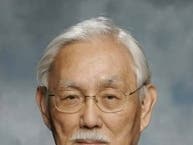

Gabriel Kotliar, Board of Governors professor in the Department of Physics and Astronomy at Rutgers University–New Brunswick, and Masayori Inouye, Distinguished Professor at the Center for Advanced Biotechnology and Medicine and Department of Biochemistry and Molecular Biology, Rutgers Robert Wood Johnson Medical School, have been elected to the National Academy of Sciences.
They join 98 other new members and 25 foreign associates in recognition of their distinguished and ongoing achievements in original research. Forty percent of the newly elected members are women, the most ever elected in a year to date. The new members bring the total number of active members to 2,347 and the total number of foreign associates to 487. Foreign associates are nonvoting members of the academy, with citizenship outside the United States.
“Election to the National Academy of Sciences is one of the most prestigious honors a scientist can receive,” said Brian Strom, chancellor of Rutgers Biomedical and Health Sciences. “We are proud that the work being done by our researchers has been recognized in this way by the Academy.”
Find out what's happening in New Brunswickfor free with the latest updates from Patch.
Rutgers University–New Brunswick Chancellor Christopher J. Molloy said, “This high honor speaks to the achievements of Rutgers faculty members who are creating great benefits for our students and for society as a whole through their groundbreaking research and excellence in education.”
Kotliar is well known for his contributions to the theory of strongly correlated and disordered electron systems. He is one of the pioneers of dynamical mean field theory and approach, which revolutionized the ability to calculate the physical properties of these complex systems. His current research interests include the theory of the Mott transition, superconductivity in strongly correlated electron systems, the electronic structure of transition metal oxides, lanthanides and actinides and the development of first principles approaches for predicting physical properties of materials.
Find out what's happening in New Brunswickfor free with the latest updates from Patch.
He was an Alfred P. Sloan Research Fellow from 1986 to 1988; received a Presidential Young Investigator Award in 1987, a Lady Davies Fellowship in 1994 and 2011 and a Guggenheim fellowship in 2003; was appointed Board of Governors professor in 2004 and the Blaise Pascal Chair in 2005; and received the Agilent Technologies Europhysics Prize in 2006 and a Humboldt fellowship in 2019. He has been a general board member of the Aspen Center for Physics (2006-2016) and is currently a member of the Canadian Institute for Advanced Research. He has been a visiting professor at the Ecole Normale and the Ecole Polytechnique in Paris and Hebrew University in Jerusalem. He has been a fellow of the American Physical Society since 2001 and has co-authored more than 350 publications in refereed journals.
Inouye is a leading scientist in the field of molecular biology and biochemistry. He joined the medical school in 1987 as chair and professor of biochemistry, a position he held until 2007. In 2008, he was appointed Distinguished Professor and currently is a resident member of the Center for Advanced Biotechnology and Medicine.
Inouye has made a number of important discoveries in life science. His pioneering contributions are represented by his more than 650 publications. His research has led to significant advances in the fields of protein folding, bacterial stress response and gene regulation. Most notably, in 1984 Inouye discovered a new principle of gene regulation by RNA, which opened an unprecedented avenue for engineering gene expression from bacteria to humans.
The National Academy of Sciences is a private, nonprofit institution established under a Congressional charter signed by President Abraham Lincoln in 1863. It recognizes achievement in science by election to membership and, with the National Academy of Engineering and the National Academy of Medicine, provides science, engineering and health policy advice to the federal government and other organizations.
The complete list of new NAS members is available on the Academy’s website.