Neighbor News
Free Upcoming Workshop Offers Insight on Childhood Stress
Preschool and Elementary Educators are invited to learn from education specialists on how to keep students on track despite trauma
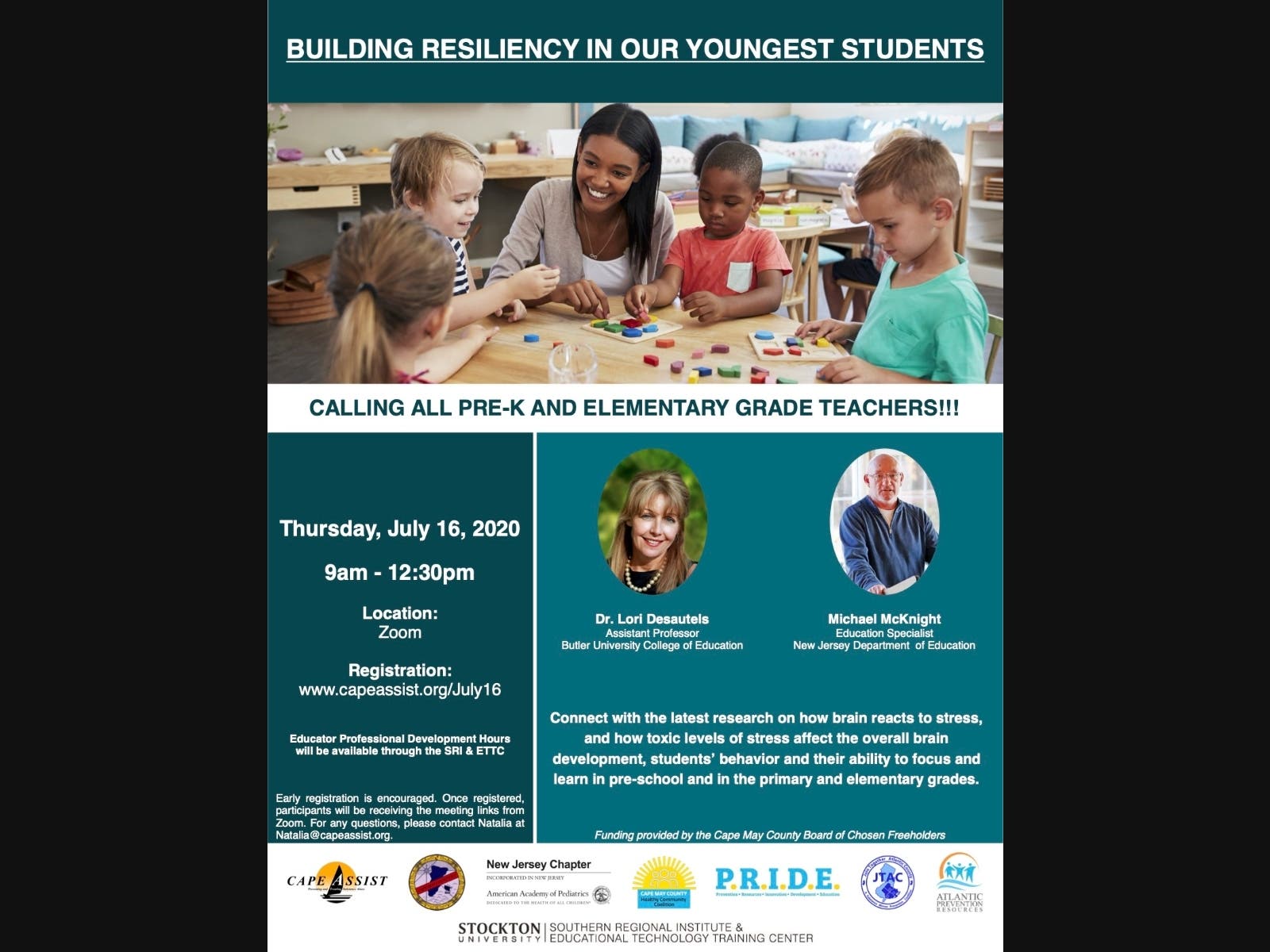
Young children who face excessive stress, including trauma and instability at home, have been shown to react, behave, and cope differently in the classroom. These issues, compounded by the additional stressors brought on by the COVID-19 pandemic, can put children on a precarious path.
Preschool and elementary educators are invited to participate in a virtual workshop, “Building Resiliency in Our Youngest Students,” led by respected education specialists Dr. Lori Desautels and Michael McKnight on Thursday, July 16. This free session will provide guidance on how to effectively work with impacted students, including tips for regulating children’s attention and behavior. The presenters also will share insight on how the young brains of children and adolescents learn, behave, and handle hardships.
Workshop participants will hear the latest research on how the brain reacts to stress and how toxic levels of stress affect the overall brain development. Dr. Desautels and McKnight will offer valuable information on how to create environments that enhance growth and development to keep kids on the right track. Additionally, the topic of student behavior and the ability to focus and learn within pre-school, primary, and elementary schools will be discussed.
Find out what's happening in Ocean Cityfor free with the latest updates from Patch.
· To register for the 9am – 12:30pm workshop, visit www.capeassist.org/July16
The free workshop is sponsored by the Cape May County Board of Chosen Freeholders and hosted by Cape Assist in partnership with the Cape May County Healthy Community Coalition, P.R.I.D.E., JTAC, Atlantic Prevention Resources, and New Jersey Chapter, American Academy of Pediatrics.
Find out what's happening in Ocean Cityfor free with the latest updates from Patch.
About the presenters
Dr. Lori Desautels
Esteemed educator and author Dr. Desautels has been an Assistant Professor at Butler University since 2016, teaching both undergraduate and graduate programs in the College of Education. She is also the founder of the Educational Neuroscience Symposium, and creator of a nine-hour graduate certification at Butler University in Applied Educational Neuroscience/Brain and Trauma.
Dr. Desautels’ passion is engaging students through the application of neuroscience as it applies to attachment, regulation, and educator brain state, and teaching students and staff about their neuroanatomy.
Dr. Desautels has conducted brain institutes and workshops throughout the United States, Canada, Costa Rica, and Dubai on Mind Brain Teaching and Learning. She has created webinars for educators, clinicians, and administrators illustrating how educators and students alike must understand their neuroanatomy to regulate behavior and calm the brain.
Michael McKnight
Michael McKnight is an educational specialist for the New Jersey Department of Education’s Cape May County Office, and is involved with a wide range of issues across the county’s 16 school districts. He is also an adjunct professor at Stockton University, teaching Inclusive Learning in Education.
Prior to joining the Department of Education, McKnight spent 23 years in schools working with and developing programming for emotionally and behaviorally troubled students.
He has a passion for creating and supporting Reclaiming Environments for “at-risk” children and youth, as well as the adults who serve them. McKnight provides professional development to schools, and his current focus is helping create school-level “Resiliency Teams” for districts working with children and youth who suffer toxic levels of stress. The resiliency teams are designed to create turnkey training in schools and move schools toward becoming trauma responsive.
Dr. Desautels and McKnight are the coauthors of two books: “Unwritten: The Story of A Living System” about school transformation and “Eyes Are Never Quiet: Listening Beneath the Behaviors of Our Most Troubled Students.”