Health & Fitness
Report Says These Are New Jersey's Dirtiest Beaches
A new report from an environmental group finds how potentially unsafe many New Jersey beaches are for swimming.


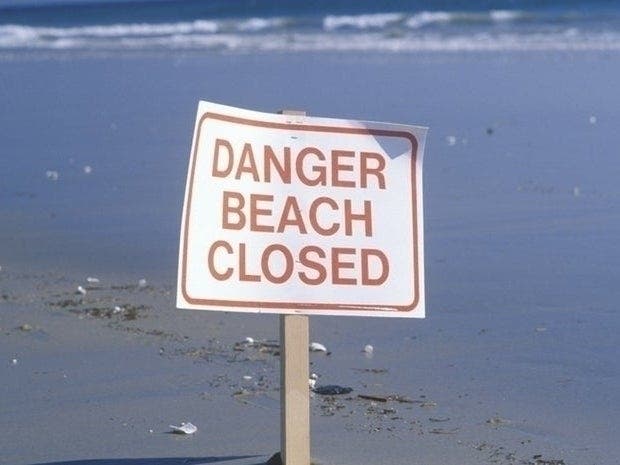
Plenty of summer days remain for New Jersey residents to enjoy the beach but a new report finds that the state’s beaches may not always safe for swimming and the filthy waters can lead to illness. Indeed, 10 of the state's beaches were cited for their not-so-successful record of safety.
The report by the Environment America Research & Policy Center looked at data for 2018 collected by local and federal officials from 4,523 beaches across America. According to the report, waters polluted with sewage or fecal matter can make swimmers sick, and millions of waterborne illnesses are reported each year in the United States.
In 2018, 356 beach sites were sampled in New Jersey. Of beaches where sampling took place, tests at 133 indicated potentially unsafe levels of contamination on at least one day, according to the report.
Find out what's happening in Ocean Cityfor free with the latest updates from Patch.
A sampling site at Beachwood Beach West in Ocean County tested as potentially unsafe for 14 days – more days than any other site in the state – and 64 percent of the days that sampling took place. In Monmouth County, the average beach was potentially unsafe for swimming on 9 percent of the days that sampling took place, a higher percentage than any other county in the state.
Ironically, the report was issued just as two New Jersey beaches were closed because of bacteria. Read more: 1 Barnegat Light Beach Closes Due To High Fecal Bacteria: DEP
Find out what's happening in Ocean Cityfor free with the latest updates from Patch.
The report did not look at what has become a problem at a number of inland beaches: algae bloom.
Indeed, cyanobacteria has been blooming at several New Jersey swimming sites. The state Department of Environmental Protection has been taking action by either shutting down the beaches or issuing advisories to minimize the risk of toxic blue-green algae. Read more: Harmful 'Cyanobacteria' Shuts Down Swimming At Several NJ Sites
The top 10 New Jersey beaches by the most number of days that were potentially unsafe for swimming (including the number and percentage of sampling days when they were determind to be unsafe) are:
- Beachwood Beach West: 14 days, 64 percent
- Belmar at L Street Beach: 11 days, 52 percent
- Berkeley Township at West Beach Avon Road: 8 days, 42 percent
- Brick Township at Windward Beach: 8 days, 36 percent
- Highlands at Highlands Rec Center: 8 days, 42 percent
- Berkeley Township at East Beach Station Avenue: 7 days, 28 percent
- Barnegat Light at 25th Street: 7 days, 41 percent
- Upper Township at Beesley's Point Beach: 5 days, 24 percent
- Long Beach Township at New Jersey Avenue: 5 days, 33 percent
- Ocean Gate Borough at Anglesea: 5 days, 25 percent
Here are the average percentages of potentially unsafe sampling days in 2018 for beaches in New Jersey counties:
- Monmouth County 9%
- Ocean County 9%
- Atlantic County 4%
- Cape May County 2%
Looking at bacteria sampling data collected by authorities in 29 states and Puerto Rico, the report authors found that more than half the beaches tested in America were potentially unsafe for swimming on at least one day in 2018. The analysis also showed that 610 beaches were potentially unsafe on 25 percent of the days they were tested for bacteria.
Beaches cited in the report posed a swimming risk if the bacteria samples exceeded the Environmental Protection Agency’s “Beach Action Value,” which is a stricter threshold than recommended by the agency for recreational water. The “Beach Action Value” used in the report corresponds to an estimated 32 illnesses for every 1,000 swimmers. One of the report’s recommendations to make beaches safer is to use the stricter EPA standard for making decisions on advisories and closures.
The report notes that beaches cannot be compared to each other since the testing takes place on different schedules and at different frequencies.
To make waters safer for swimming, the report says pollution from urban runoff, sewage and manure needs to be curtailed.
Read the full report from the Environment America Research & Policy Center.
Get more local news delivered straight to your inbox. Sign up for free Patch newsletters and alerts.