Community Corner
Gov. Livingston Slept Here—And Now, I Do
My 50-year-old house is on National Register of Historic Places. But to me, it's not just a monument. It's home.
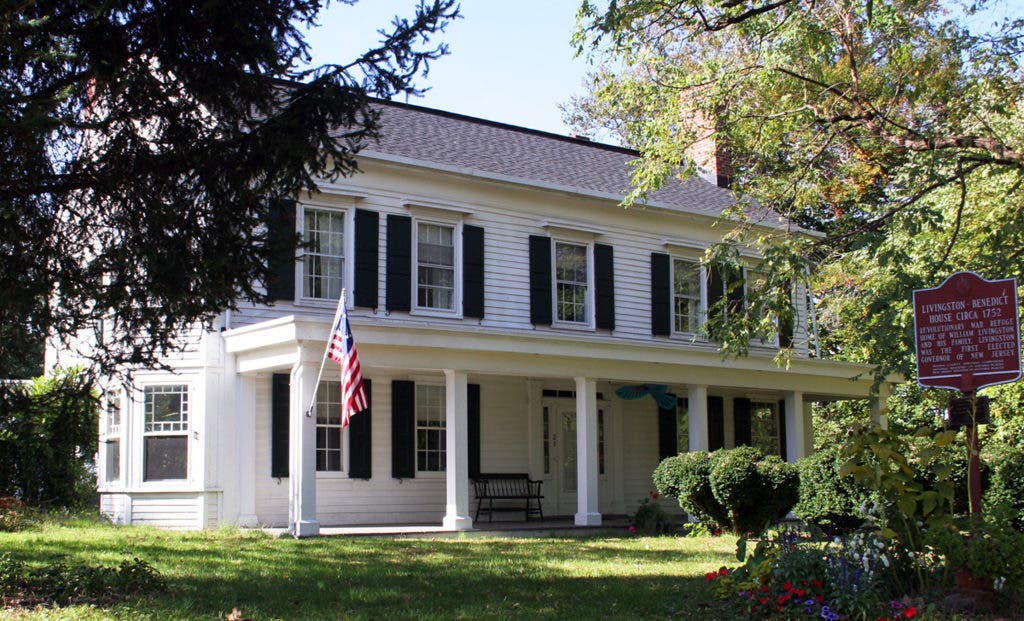
Living in a 250-year-old house is like living with an ancient person. The house has wisdom, memories, is a great teacher and can be difficult.
My husband and I live in the Livingston Benedict House on Old Parsippany Road. It is one of Parsippany’s few surviving pre-Revolutionary War houses, and was listed on the National Register of Historic Places in 1973.
The house has special meaning to me, since I have been in and out of it since I was born. When I was brought home from the hospital, I came home this house. Six months later, my parents and I moved to the little house (originally the out kitchen of the bigger house) across the road, but since my grandmother and grandfather lived in this house, I was always around.
Find out what's happening in Parsippanyfor free with the latest updates from Patch.
The National Register listing of the house is due to the Revolutionary War occupancy of Gov. William Livingston and his family. Livingston was the first elected governor of New Jersey (1776 -1790), and commanded the militia during the war. He was a close colleague of George Washington, and a signer of the U.S. Constitution.
In 1857, my ancestor, Farrand N. Benedict, purchased the house and moved here from Burlington, Vt., where he was a professor and surveyor. He and his wife, Susan Ogden, were both natives of Parsippany and returned here because she was ill and wanted to be near her family in Troy.
Find out what's happening in Parsippanyfor free with the latest updates from Patch.
Relatives of mine have lived here for the last 150 years. What makes this strange and wonderful is that all of these people have left pieces of themselves: their marks, their stories and possessions, in the house.
A few months ago, I found letters that my grandmother wrote to my grandfather during their engagement in 1909. My great-grandfather's sermons are in a chest in the attic, and I found a bayonet buried in the dirt floor of the cellar.
We have a set of notes from Columbia Medical School that belonged to my aunt's first husband, surveying equipment from the early 1900s. and many, many old books and magazines (all dusty). Both my grandmother and my aunt wrote memoirs about the house. And because I spent my childhood listening to my grandmother's stories, I feel like I know many of the people that she knew.
I also know a lot about the Livingston family. They leased the house and moved here in 1777, when it was not safe for them to remain at Liberty Hall, in Elizabeth, due to the close presence of British troops. It was National Register nomination which saved the house from being demolished during the construction of Interstate 80.
The original 160 acres planted by the Livingstons has shrunk to 4 1/2. A fox, hawks, many birds call our property home, and deer and an occasional bear wander through. The trees and perennials were planted by generations of gardeners in my family. My husband and I especially like the opportunity that we have to be outdoors caring for the property.
An agreement with the New Jersey Historic Trust legally protects the site from development. The wooden barns, houses and outbuildings must be maintained the way they appear now. My husband and I do most of the restoration work ourselves, often finding places where a repair has been made in the past.
Thus, when we work, we are connecting ourselves to a long line of workers who have cared for the house: my great grandfather, grandfather and grandmother, father and mother.
Each year in April, we invite the public to two open house afternoons, during which volunteers act out the roles of people who have lived here. This year, we'll do that on April 16 and 17. We write scripts and find costumes, enlist volunteers. This year’s event is on Saturday and Sunday afternoons, presented in cooperation with Morris County Tourism’s Revolutionary Times Weekend.
An old house invites people to imagine the past: a time before the Internet, cell phones, cars, television, stores, central heating, indoor plumbing. As years pass, houses change, but the first beams of our house were laid before 1752, before the United States was a country.
This house has been here through every war in U.S. history, through blizzards, heat waves and droughts. It has seen Parsippany change from a wilderness to a developed suburb. Through it all, it has sheltered people with love and contained their memories.