Politics & Government
10 New N.J. Laws That May Change Your Life In 2016
Here are 10 of the most significant and interesting changes to laws governing PARCC, car seat usage, drugs, voting, guns and other issues.


A number of new N.J. laws went into effect in 2015, or will go into effect in 2016, that could change your life. Here are 10 of the most significant and interesting changes to laws governing PARCC, car seat usage, voting, guns and other issues.
Drug abuse
Gov. Chris Christie signed legislative measures to enhance the state’s Project Medicine Drop program and to strengthen the Attorney General’s law enforcement coordination efforts against opioid drug abuse.
“I’m proud of what we’ve done in New Jersey and proud of the work that we continue to do together to help people reclaim their lives. But we cannot become complacent,” said Christie.
Find out what's happening in Point Pleasantfor free with the latest updates from Patch.
A-2859 advances the continuation of the Department of Law & Public Safety’s (L&PS) existing Project Medicine Drop program. In addition, the bill provides for future expansion of the program at the funding discretion of the Department.
Furthermore, L&PS is required to post on its website a list of all secure prescription medicine drop-off locations, including receptacles maintained by the Division of Consumer Affairs, as well as any receptacle located in New Jersey that is approved by the federal Drug Enforcement Administration.
Find out what's happening in Point Pleasantfor free with the latest updates from Patch.
Project Medicine Drop, an initiative of L&PS’ Division of Consumer Affairs, provides residents with a safe and secure way to dispose of unneeded medications through “prescription drug drop boxes” located at law enforcement agencies usually comprised of police departments, sheriff’s offices, and State Police barracks across the Garden State, according to state officials.
Currently, there are 126 Project Medicine Drop locations across the state with approximately 50 having mobile boxes for special off-site collection events. Since its creation in November 2011, New Jersey residents have dropped off approximately 53,924 pounds or nearly 27 tons of unused medications.
Ban of “commericially-developed” tests for young students (PARCC?)
The law bans “commercially-developed” standardized tests in kindergarten through second grade, unless required by state or federal law, according to state officials.
The law excludes diagnostic and formative assessments used by teaching staff members to identify particular student learning needs, or the need for special services, or to modify instructional strategies for individual student learning, according to the New Jersey Principals and Supervisors Association.
NJ Spotlight speculated on Gov. Chris Christie’s approval of the law, citing his presidential ambitions:
The bills – each winning overwhelming bipartisan support -- nonetheless fly against the administration’s earlier push for expanded and more sophisticated testing in schools, led by the new online PARCC exams that are now seeing their first results released.
Christie’s actions yesterday raised eyebrows among those who have spent years in the midst of the battle over the issue.
The law also provides that its provisions would not preclude a classroom teacher or a board of education from developing, administering, and scoring an assessment for students in those grades. NJPSA successfully argued to limit reporting to exclude truly diagnostic and formative assessments from exclusion.
Drinking water
Gov. Chris Christie signed legislation authorizing up to $1.94 billion in state financing for projects to improve drinking water and wastewater infrastructure across the state. The funding includes $776 million to upgrade and protect facilities from storms and flooding such as occurred during Superstorm Sandy.
“There can be no compromise when it comes to the integrity of the State’s water infrastructure systems and the impact they have on our communities and our environment,” said Governor Christie. “Through this legislation, more than 280 projects will be authorized for low-interest loans and no-interest financing that will make infrastructure throughout New Jersey more storm-resilient, enhance and protect the state’s water quality, and create jobs and advance economic development.”
Safe disposal of unused prescription drugs
The purpose of this bill is to provide information to the general public about how to ensure proper and safe disposal of unused prescription drugs.
Specifically, the law requires that each pharmacy practice site and each prescriber distribute, for every prescription drug dispensed, a copy of a notice prepared by the Division of Consumer Affairs in the Department of Law and Public Safety and posted on its website, to advise patients about: the availability of drug take-back programs sponsored by a local, state or federal government agency; and how to obtain information from those programs concerning where unused prescription drugs may be dropped off for safe, secure, efficient, and environmentally sound disposal.
Gun law changes
Gov. Chris Christie announced a change to the state’s firearm policy, reacting to the June 3 death of 39-year-old Berlin Township woman Carol Bowne, according to nj.com
During the summer, Christie announced that acting state Attorney General John Hoffman will file a new regulation to require applications for gun permits for victims of domestic violence, other violent crimes or “those living under a direct or material threat” be processed “quickly and without delay,” according to the report.
The governor also signed an executive order to create the New Jersey Firearm Purchase and Permitting Study Commission, which is tasked with reviewing the state’s laws, regulations and procedures pertaining to the ownership and possession of firearms, according to the report.
School supply of epinephrine for anaphylactic reactions
Prior law required school officials to develop policies concerning the emergency administration of epinephrine to a student, provided that the student’s parent or guardian provided written authorization for administration of the epinephrine, as well as written orders from a physician that the student requires epinephrine for anaphylaxis.
The new law provides that school nurses and trained designees are permitted to administer epinephrine to any student when the nurse or designee in good faith believes that the student is having an anaphylactic reaction.
The law also requires that public and nonpublic schools maintain in a secure but unlocked and easily accessible location a supply of epinephrine auto-injectors that is prescribed under a standing protocol from a licensed physician, and is accessible to the school nurse and trained designees for administration to a pupil having an anaphylactic reaction.
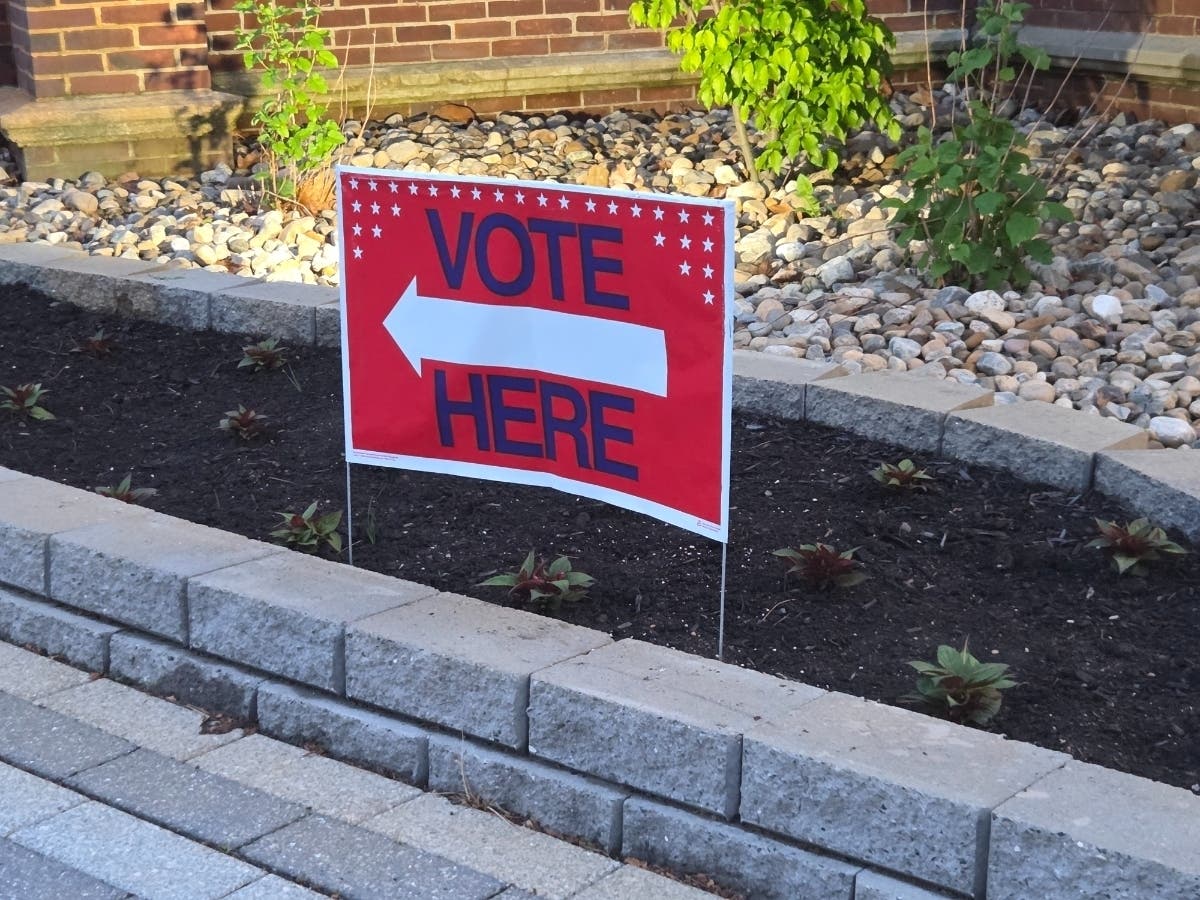
Vote-by-mail law amended
N.J. law provides that a person can serve as an “authorized messenger” for no more than 10 qualified voters in an election. In addition, after a voter completes a mail-in ballot, a person known as the “bearer” can mail or deliver the completed ballot to the county Board of Elections for the voter. “The Vote By Mail Law” law does not limit the number of completed ballots that a “bearer” may collect or deliver in an election.
The new law decreases the number of mail-in ballots that an “authorized messenger” can obtain from 10 to three. It also limits the number of completed mail-in ballots that a “bearer” can mail or deliver to three. In addition, the new law requires that when the person serving as a “bearer” delivers a voted mail-in ballot to the county board of elections, the person must provide proof of identity as specified in the law, according to state officials.
Finally, the law revises the requirements for a conviction of a crime under “The Vote By Mail Law.” Currently, it is a crime of the third degree to “knowingly and with intent to commit fraud” violate any of the provisions of the law, commit other fraud relating to voting, or to aid and abet another in doing so. The new law removes the requirement that a person acted “with the intent to commit fraud” when the law was knowingly violated.
Car seat law changes
Gov. Chris Christie has signed legislation which changes the way parents and caretakers must use car seats in the state of New Jersey. Those revisions went into effect in September.
New Jersey state law formerly required all children under the age of 8, weighing less than 80 pounds, to ride in the back seat of a vehicle in either a child safety seat or booster seat. Those under the age of 8, and those between the ages of 8 and 18, were only required to wear a regular safety belt.
Here’s how the revised law will work according to each age group:
Infant to age 2:
- Car seats must remain rear-faced in the vehicle if the child is under 30 pounds and under the age of 2. The car seat also has to have a five-point harness.
- Once the child has exceeded the weight and age limited, the car seat can be faced forward.
Ages 2 to 4:
- Children under the age of 4 or under 40 lbs. must remain in either a rear-facing or a forward-facing car seat with a five-point harness in the back seat of a vehicle.
- Once the child has exceeded the weight or age limited, they can switch over to a booster seat.
Ages 4 to 8:
- Children under the age of 8 or height requirement of 57 inches tall must remain in the back of the vehicle in a booster seat.
- Once the child has exceeded the weight and height limited they are eligible to use a regular seat belt.
When can my child sit in the front seat?
- A child can sit in the front seat of a vehicle if that vehicle does not have a back seat - such as a pick-up truck or a sports car. However, the car seat and booster seat regulations still apply (i.e. Car seats must remain rear-faced in the vehicle if the child is under 30 lbs. and under the age of 2).
- Also, the vehicle’s passenger-side airbag must be disabled if a rear-facing car seat is strapped into the front seat of the vehicle.
What if I don’t comply with the law?
- Those who don’t follow the new laws will face fines ranging from $50 to $75 beginning in September. Before the revisions, the fines were only $10 to $25.
The Opportunity to Compete Act
The Opportunity to Compete Act, otherwise known as the Ban the Box Law signed by Gov. Chris Christie, took effect on March 1.
The law generally prohibits an employer from requiring that an applicant for employment complete any employment application during the initial application process that asks about an applicant’s criminal record. It also prohibits an employer from making any oral or written inquiry during the initial employment application process regarding an applicant’s criminal record, according to state officials.
New drug law
Gov. Chris Christie signed a bill in 2015 aimed at prohibiting the sale of medications containing dextromethorphan, a substance found in more than 120 over-the-counter cold medications, to any person under the age of 18 unless they have a prescription, according to drugstorenews.com.
New Jersey is the ninth state to implement a law restricting the sale of DXM-containing products to adults, according to the report.
“The enactment of similar legislation in states across the country has indicated that limiting teen access to DXM is a proven way to prevent abuse,” stated Scott Melville, president and CEO of the Consumer Healthcare Products Association.
The new law will take effect on Feb. 1, 2016.
Get more local news delivered straight to your inbox. Sign up for free Patch newsletters and alerts.