Politics & Government
Gov. Phil Murphy Signs Bill Into Law To Cut Sales Tax In 5 Towns
New Jersey Gov. Phil Murphy brought back a tax-cut program that ex-Gov. Chris Christie eliminated.


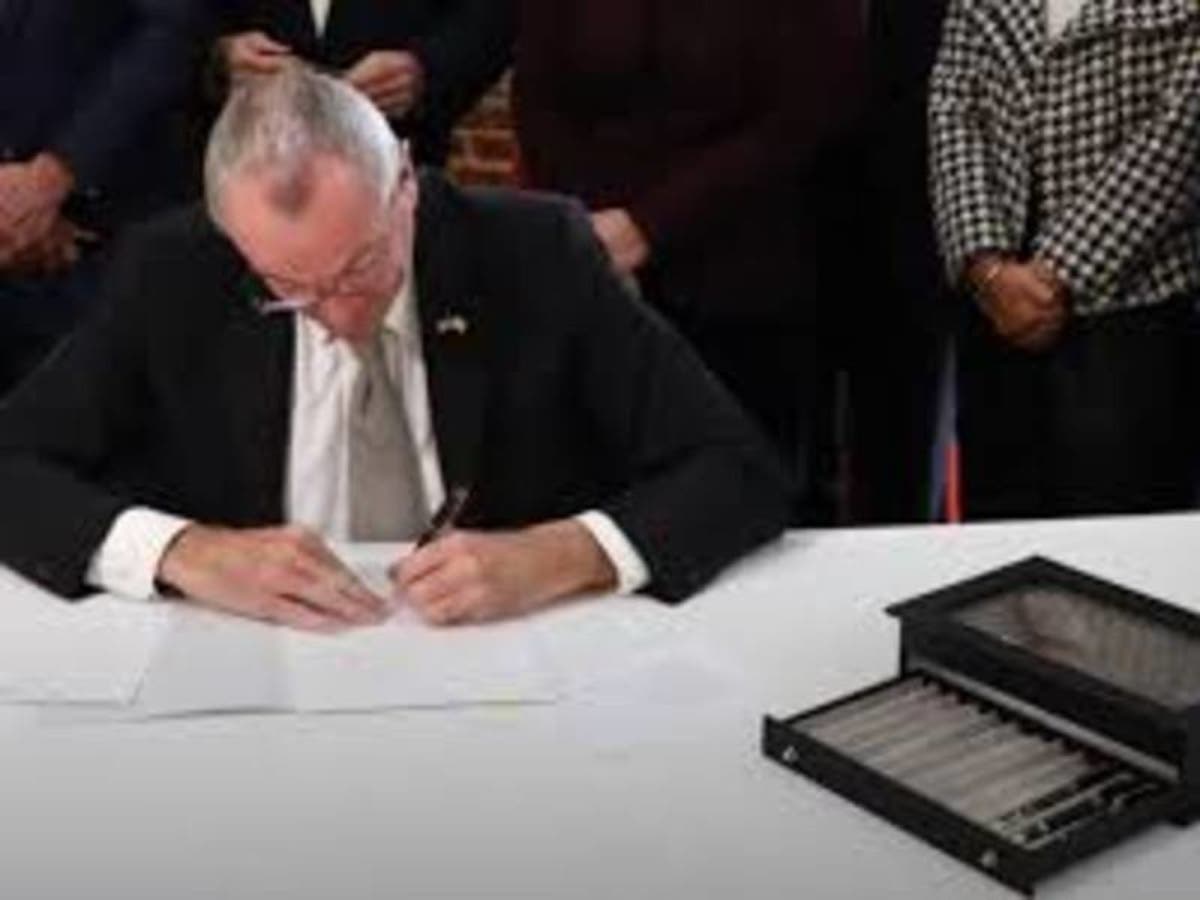
New Jersey Gov. Phil Murphy signed a bill into law this week that cuts the sales tax in five towns, bringing back a program to municipalities that was nixed last year by ex-Gov. Chris Christie.
Murphy signed a bill (S846/A3549) which will reinstate the Urban Enterprise Zone program for five years in the five municipalities where the designation had expired.
It means shoppers in Bridgeton, Camden, Newark, Plainfield and Trenton will pay 3.3 percent sales tax – not the statewide 6.62 percent sales tax – effective immediately.
Find out what's happening in Point Pleasantfor free with the latest updates from Patch.
The bill was among 14 signed by Murphy on Wednesday, including a new law that brings back the Obamacare mandate to New Jersey. Read more: Gov. Murphy Signs 14 Bills Into Law, Making Big Obamacare Change
Last year, Christie said state resources to aid financially distressed municipalities were intended to be temporary, and this program was a "failed 30-year experiment" that has been costly and would probably bring in $2.33 billion less revenue over the next decade.
Find out what's happening in Point Pleasantfor free with the latest updates from Patch.
The new law also requires the New Jersey Department of Community Affairs to study the program and report its findings to the Legislature, along with a recommendation as to whether the program should continue as it currently exists, be amended, or expire.
"The Urban Enterprise Zone program has been an important tool for cities to spur economic development and create jobs for local residents, but the program could still be stronger and offer more sustainable results," said New Jersey Future Executive Director Peter Kasabach.
"We are encouraged by the governor and Legislature's commitment to strengthening our cities, and we look forward to a revamped UEZ program that emphasizes accountability and links incentives to local economic development and downtown revitalization strategies more effectively."
Some Republicans continued to be opposed to the sales tax cut, calling the Urban Enterprise Zone program a "proven failure" that's costing the state revenue and providing no economic growth, according to a 2011 study on the program.
“How do we keep our business models equal and fair with businesses thriving in this state when we pit them one against the other at the loss of state tax dollars?” said Assemblymen John DiMaio, R-Warren, said before the bill was approved by the Assembly in April by a 54-19 vote. The Senate approved it by a 27-5 vote.
“If you look immediately there is a $19.6 million, $43 million and a $51 million loss to the sales tax income to state over the next three years.”
Bridgeton, Camden, Newark, Plainfield and Trenton were the first cities to offer the sales-tax break after the UEZ program debuted in 1986 after it was signed into law by then-Republican Gov. Tom Kean. The program has since expanded to 32 designated enterprise zones in 37 municipalities, according to NJ Spotlight, with approximately 6,800 private businesses.
That includes Elizabeth, where many people like to shop at the Jersey Gardens Mall, Toys R Us and IKEA off the New Jersey Turnpike, because of the sales tax break.
The program was created the 1980s as a way to give a boost to New Jersey's struggling urban communities, NJ Spotlight noted. The UEZ program has allowed businesses in the specially designated economic-development districts to charge half the state sales tax.
Lawmakers sought a 10-year UEZ extension in 2016, but Christie rejected the plan in a conditional veto because, he said, the program was not helping the state.
Gov. Phil Murphy photo
Get more local news delivered straight to your inbox. Sign up for free Patch newsletters and alerts.