I spent 10 days in a world I was never familiar with. A world most of us aren’t, but one that is a reality of many.
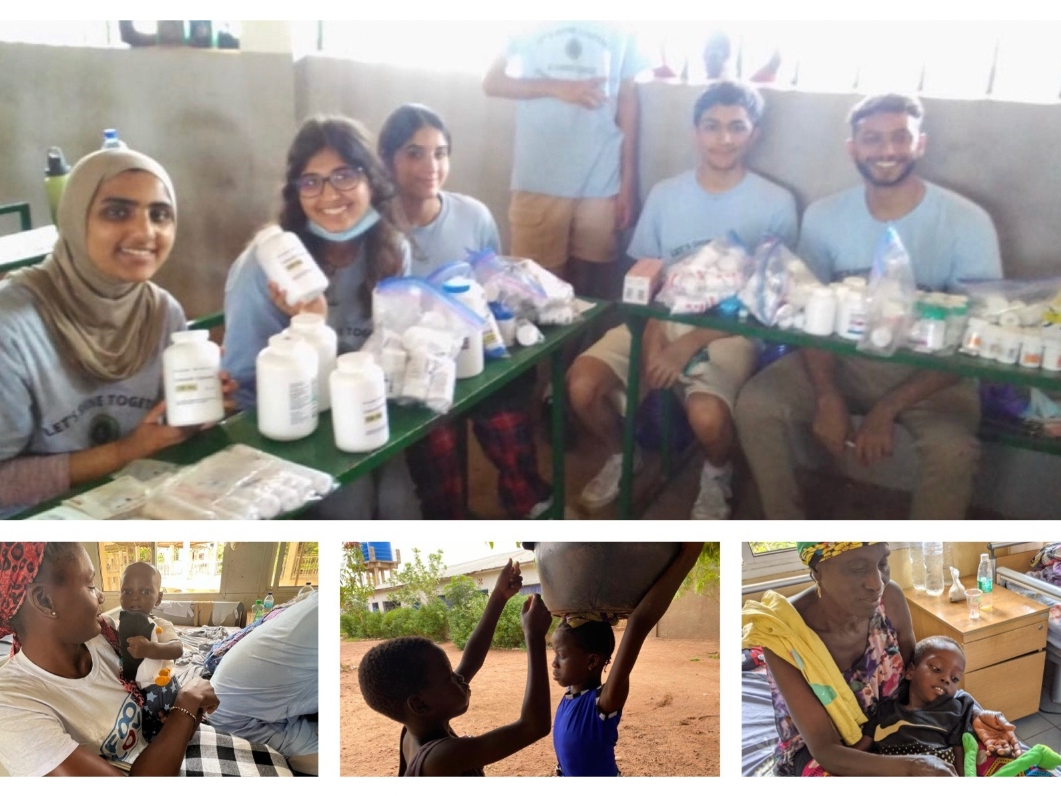
In July of 2022, I took a medical relief trip with Rahbar Trust (rahbartrust.org) to The Gambia in Africa. Our team spent our days seeing patients, prescribing them medications, taking their vitals, packaging products, and distributing vital supplies. The moments of reality really crept in when we visited public hospitals.
There are 3 of them in the whole country.
Find out what's happening in Princetonfor free with the latest updates from Patch.
I wasn’t aware of the severity right at where it all starts: Maternity wards. I remember the look on a Gambian woman’s face when she held her baby moments after birth, with tears in her eyes in the cold air room, feeling lost in an almost empty facility with barely any workers for support when we walked in. Not to mention the lack of resources within these facilities and how that ultimately puts women in danger- “The Standard,” A Gambian news source had labeled maternity wards as a “death trap” for Gambian women following the death of a woman due to lack of blood and no donors available when she and her baby were bleeding to death. But what if it’s a young woman involved? These women are struggling immensely. The Gambia continues to battle the public health problem of early motherhood. These girls lack female education, empowerment, reproductive health life skill training, and awareness, and they are overall disadvantaged. A 15-year-old girl our team saw had not been feeling well after getting pregnant. The translator informed me that this young woman had attempted to terminate the pregnancy. I was shocked at first, but with the uncertainty these women are being left with and with few resources, what can we truly expect? Many people are realizing the struggles these women are bound to endure when walking through life and recently, according to worldly news source “RFI”: “hundreds of Gambian women used the hashtag #WomensLivesMatter to protest against what they consider as high maternal mortality. They also took to the streets of Westfield outside the capital, Banjul, in September [2020] to call attention to the fact that their mothers, sisters, and aunts are dying.”
I shadowed a Gynecologist when I came back from my trip and witnessed the comprehensive maternity care given in this country involving organized clinical prepartum and postpartum protocols, an appropriate amount of staff, and diverse positions including doulas, doctors, nurses, midwives, etc. When we get out of our American bubble involving a privileged life with everything we need and more, we realize the discrepancies when it comes to socio-cultural factors like poverty, cultural acceptance of adolescent sex, child marriage, and psychological perspectives that create general health problems. This trip taught me to count my blessings- each and every day, especially as a young woman.
Find out what's happening in Princetonfor free with the latest updates from Patch.
The connections I made in The Gambia are like no other, and the gratefulness in the children’s eyes was heartwarming. One day, we held a medical site at a school near a village in the city of Basse and split up into teams of people that would be organizing medicine bottles for prescribed medications, people that would take the vitals of patients, and people that would be handing out toys and menstrual products to the children and women, respectively. With my love for children and passion for helping women, I chose the third team. I wasn’t prepared for what was going to happen once I took out a bundle of pencils from our bag of supplies. Hundreds of Gambian kids came smiling swarming my way, from behind me, in front of me, to the left of me, to the right of me. As a kid, pencils wouldn’t have entertained me at all. I couldn’t put my finger on why these kids were so excited. I realized that I wasn’t thinking from the perspective of someone who didn’t grow up with things as simple as pencils. The truth is that these issues go beyond The Gambia. This trip has proved to me that traveling to developing countries is one of the most important things one can do for themselves- more importantly, their soul. Beyond this notion is the fact that it’s a necessity to do all we can to help people who need our help the most. I was grateful to be able to explore this Idea in The Gambia. Despite the circumstances these women and children are in, I never failed to see them smiling and welcoming the team on the streets of The smiling coast of Africa.