Business & Tech
Achieving Industry Inclusion at We Make in New Jersey
We Make, Autism At Work is a nonprofit in Pennington, NJ influencing the world of employment one company at a time.

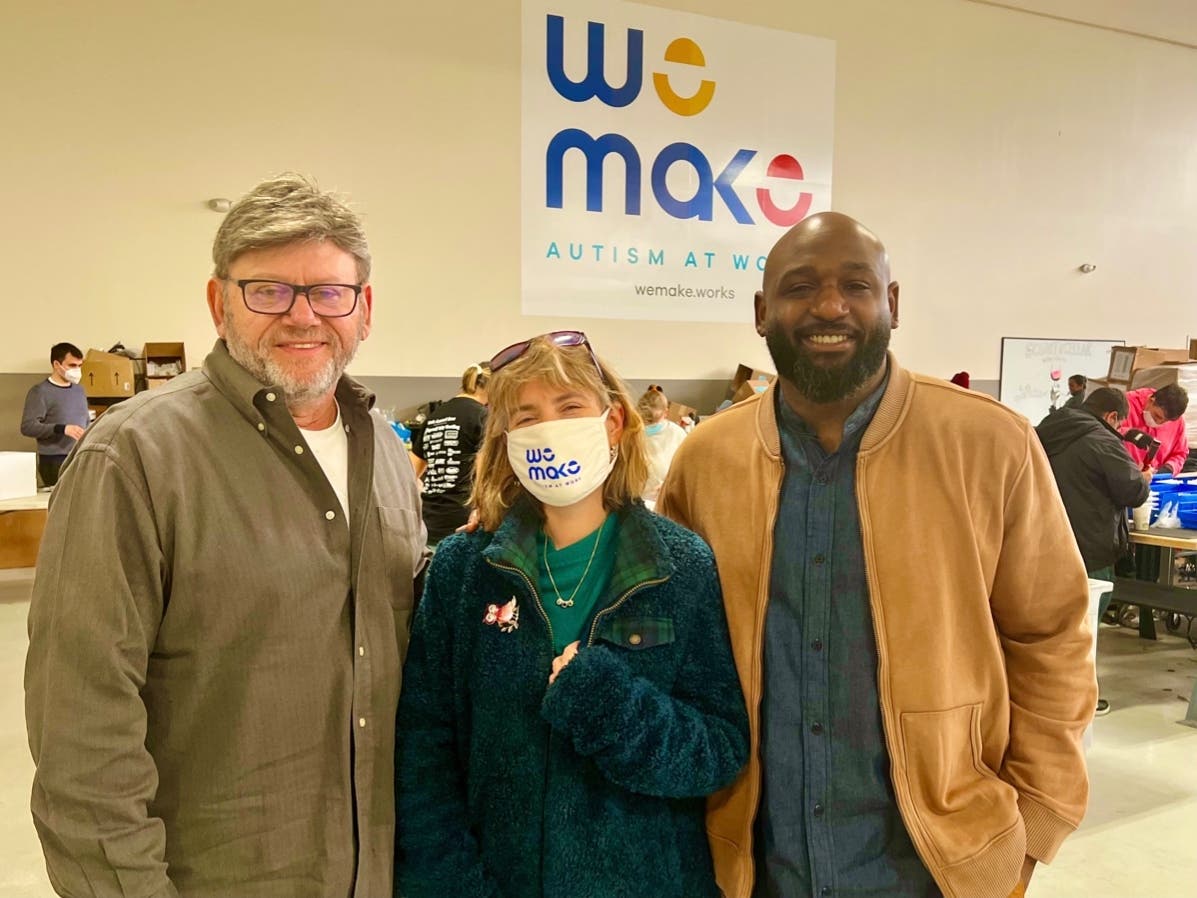


Mercer County, NJ—A few miles down the road from some of the most thought provoking, research-gathering, policy-developing academic institutions on the East Coast, there is a nonprofit disrupting the typical governmental model of serving persons with autism. We Make, Autism At Work (We Make) is a major contributor to the conversation of inclusion in the workplace, and has honed a successful model of operation for over six years. The brainchild of We Make is Tony Lesenskyj who has a son with autism and he stated, “The original mission since our founding in 2016 has stayed consistent, we want to create, inspire and implement an innovative approach to meaningful careers for people with autism, (or a related diagnosis) with everything from the environment, the processes, the opportunities, to product fulfillment built around shared needs.”
Equity, Diversity, and Inclusion is all the buzz right now with many companies and major corporations sprinting to get policies and practices in place in an effort to prove their commitment to building a heterogeneous workforce. Unfortunately, the inclusion part of the equation is often an afterthought. Inclusion is the practice of affirming that ALL employees feel a sense of belonging in the workplace and are afforded regular opportunities to fit in. Diversity, Equity and Inclusion is vital to creating and maintaining a successful workplace founded on the principle and value that all people can thrive personally and professionally.
In 2020, Caroline Casey wrote in the Harvard Business Review, “Businesses have long been drivers of social change. Across the globe, companies have begun acknowledging vital challenges and injustices such as climate change and pay gaps. Diversity and inclusion is one such defining issue, and, although huge progress has been made towards equality across boundaries of gender, race and sexual orientation, one aspect of D&I is too often neglected: disability… Although 90% of companies claim to prioritize diversity, only 4% consider disability in those initiatives, according to a report from the Return On Disability Group. And only a small subset truly serves customers with disabilities.
Find out what's happening in Princetonfor free with the latest updates from Patch.
We Make’s Executive Director, Moe Siddiqu knew from the beginning that the concept for We Make was progressive, yet disruptive and that he had the chance to evolve as a leader with a brand-new way of supporting persons with autism. There was no hesitation, Moe needed to be part of this blooming paradigm shift in the nonprofit sector. Handpicked by Tony, Moe was recruited because of his energy and passion for working with individuals with autism or an autism related diagnosis (ASD) and he was chosen for his acumen with landing new employment opportunities and inroads for his clients.
Moe stated, “Achieving Industry Inclusion is our main focus at We Make. We have created a viable model in the manufacturing, packaging, and assembly industry and now we are looking to partner with like-minded companies to provide industry inclusion support and consultation in order to increase the number of persons with ASD who are provided opportunities to become employed and to thrive in the workplace.”
Find out what's happening in Princetonfor free with the latest updates from Patch.
The United Nations estimates that 80 % of adults with autism are unemployed, as discriminatory hiring practices and workplace environments often present impossible challenges for neurodivergent people to overcome. The numbers are quite shocking compared to unemployment rates for all people with disabilities (about 69 %) and for the general population (43 %). Job interviews and traditional hiring screening processes can be extremely challenging to neurodivergent and autistic people, as adjusting to a new workplace might require time and support.
It is not just the overlooked applicants that could be missing out. The same characteristics that can make individuals with autism exceptionally successful in the workplace – extreme focus, accuracy, innovative thinking – often bar them from entering the workforce in the first place. Fostering acceptance of neurodivergent people in society requires a conceptual shift and discernment from a deficit-based model to a strength-based model, looking at the particular skills of individuals with autism and how those can contribute in positive ways to the workplace. This shift is exactly where We Makes thrives and where they have experienced growth and success.
Joy Taylor, Principal, Operational & Organizational Transformation Solution Family Leader at Grant Thornton and a founding board member at We Make stated, “So many organizations talk about diversity, equity, inclusion, and access and they seek out people with different experiences, education, capabilities, gifts, and talents. We Make is ensuring every day that those on the autism spectrum can develop more traditional work skills so their next employer will reap the many benefits of such gifts and talents and of course they’re very unique perspective. The reason I love We Make is because I know that those that are employed here today will be employed somewhere else in the future, and parents who came before me with children on the autism spectrum would’ve never thought that goal was possible to achieve!”
This year, We Make will expand services to a second location in northern New Jersey and soon, We Make will be able to double the number of persons with autism who will obtain a chance to work on developing a viable career plan and will be paid a fair and meaningful wage. One statistic that We Make is really proud of is the fact that 100% of the staff at We Make earn more than the federal minimum wage per hour. At We Make, industry inclusion is happening right here in New Jersey! If you know someone with autism that might benefit from becoming employed at We Make, or to set up a time to explore if your company is a good fit for inclusionary hiring practices, visit We Make's website or send an email to: info@wemake.works.