Politics & Government
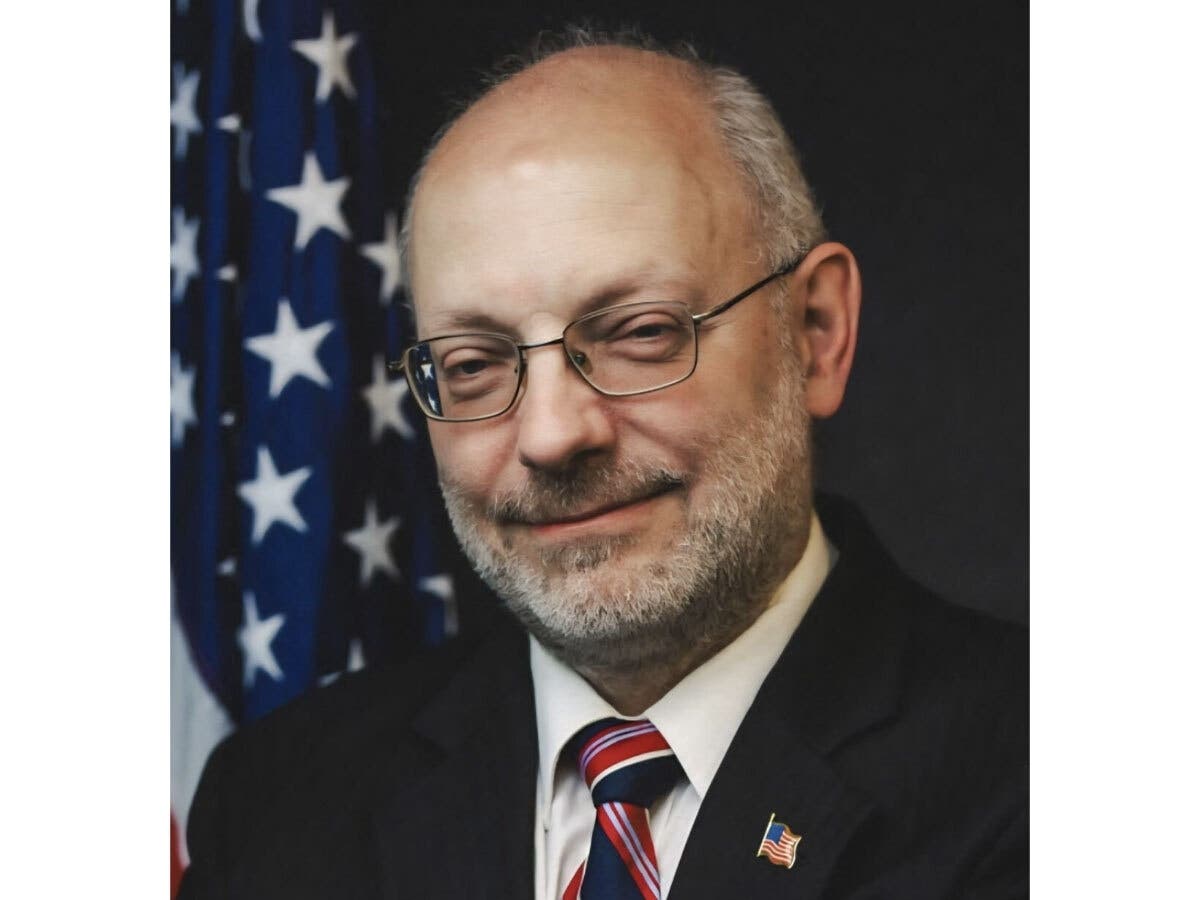
Candidate Profile: Gregg Mele For NJ-12 Congressional District
Republican Gregg Mele answers Patch's questions on taxes, data centers, health care and housing in the race for New Jersey's 12th District.


PRINCETON, NJ — Voters in New Jersey’s 12th Congressional District will pick a new member of Congress this year. Rep. Bonnie Watson Coleman, a Democrat who has held the seat since 2015, is retiring. Four candidates are on the ballot: Democrat Adam Hamawy, Republican Gregg Mele, Green Party candidate Andres Jinete and independent Winston Jordan. The district covers parts of Mercer, Middlesex, Somerset and Union counties, including Princeton, South Brunswick and East Brunswick.
Patch sent all four candidates the same ten questions. Mele, 61, is the first to respond.
He is an attorney, businessman and former graduate professor who ran unopposed in the Republican primary. Mele’s answers cover taxes and electric bills, the proposed South Brunswick data center, health care, housing, election security, campaign money, prices and the Route 1 corridor.
Find out what's happening in Princetonfor free with the latest updates from Patch.
The general election is on Nov. 3.
Name: Gregg Mele
Find out what's happening in Princetonfor free with the latest updates from Patch.
Party: Republican
Office sought: U.S. House, New Jersey’s 12th Congressional District
Age as of Election Day: 61
Hometown or town of residence: Clark, New Jersey
Occupation: Attorney, businessman and former graduate professor
Campaign website: Mele4America.com
1. Why are you running for Congress, and what in your background shows you can do this job?
I am running because Central Jersey deserves a representative who will put results before ideology and constituents before party leadership. Families are being squeezed by taxes, utility bills, housing costs and everyday prices. At the same time, too many elected officials offer sweeping promises without explaining what they will cost or whether they will work.
I was raised by blue-collar parents and built a career spanning law, business, finance, technology and higher education. As an attorney, I have worked with contracts, securities, real estate, businesses and families. I have also taught graduate students about law and economics. That background taught me to read the fine print, understand the consequences of government decisions and insist on measurable results. In Congress, I would support what works, reform what is failing and oppose proposals that leave taxpayers paying for promises Washington cannot keep.
2. What are the biggest differences between you and the other candidates on the ballot?
The greatest difference is our approach to government. My Democratic opponent supports an expansive progressive agenda that places more authority, spending and economic decision-making in Washington. I believe government must perform its necessary functions effectively, but that bigger government is not automatically better government. I support constitutional government, public safety, secure borders, parental rights, reliable American energy, a strong alliance with Israel and disciplined federal spending. When an agency fails, my first response is to fix the failure, hold the responsible people accountable and preserve the functions Americans still need—not abolish an entire institution. I will work with President Trump when his policies produce good results for NJ-12. When any administration gets something wrong, I will say so constructively and propose something better. Country before party. Results before ideology.
3. Taxes and electric bills are among the top concerns for New Jersey voters. What can a member of Congress realistically do to lower them?
New Jersey property taxes are primarily a state and local responsibility, so a candidate for Congress should not pretend that Washington can simply order them lower. Congress can, however, stop making the problem worse. I would fight inflationary deficit spending, protect taxpayers from unfunded federal mandates and support a fair federal tax code that recognizes the unusually high state and local tax burden borne by New Jersey families.
On electricity, Congress can accelerate the permitting of reliable generation, modernize the grid, encourage nuclear power and domestic natural gas, and remove federal obstacles that delay new transmission and generation for years. Large new electricity users should pay the infrastructure costs they create. Families and small businesses should not be forced to subsidize special power arrangements for hyperscale data centers or other major industrial customers.
4. A large data center is being built in South Brunswick, and residents have raised concerns about air pollution, water use and electric costs. Should Congress pause, ban or regulate data centers? What would you do?
I do not support a nationwide ban on data centers. They are essential to finance, medicine, communications, national security and emerging technology. But no company is entitled to impose its electricity, water, pollution or infrastructure costs on surrounding communities.
For the South Brunswick project, construction should not outrun environmental review. Residents deserve disclosure of projected electricity and water use, cumulative emissions from all backup generators, noise effects, emergency-response demands, tax arrangements and who will pay for grid upgrades.
The proposed facility is approximately 341,000 square feet, while the pending air permit covers twelve large diesel emergency generators. NJDEP recently extended the public-comment period on that permit. Congress should establish transparent national reporting standards and close permitting loopholes, while leaving legitimate land-use decisions primarily to state and local governments. My standard is simple: data centers must bring their own power capacity where practicable, pay their own infrastructure costs and comply with rigorous environmental review.
5. After recent federal changes to Medicaid funding, what is your plan for health care costs?
Medicaid must remain a dependable safety net for children, pregnant women, seniors, people with disabilities and genuinely vulnerable families. At the same time, a sustainable program must verify eligibility, reduce fraud and encourage able-bodied working-age adults toward employment and employer-sponsored coverage when realistically available.
New Jersey is already implementing eligibility changes, with additional requirements scheduled to begin in 2027. The state’s own guidance shows that the changes will occur in stages, making clear communication and accurate administration especially important.
I would protect coverage for vulnerable patients, simplify eligibility verification so qualified people are not lost through paperwork errors, expand price transparency, strengthen health savings options, increase competition among insurers and providers, and protect access to community health centers.
Congress should also target prescription-drug middlemen and hospital-market practices that inflate prices without improving care. The answer is neither writing an unlimited federal check nor abandoning people who need care. It is better accountability, greater competition and a safety net that is both compassionate and financially sustainable.
6. Many young families say they can't afford to buy or rent in Central Jersey. If elected, what would you do to help people in their 20s and 30s stay in the district, and where do you stand on building more housing?
Young adults should not have to leave Central Jersey simply because they cannot afford to rent an apartment or purchase their first home.
The federal government should not dictate local zoning from Washington, but it can help communities build responsibly. I would support faster permitting, redevelopment of vacant commercial properties and contaminated brownfields, infrastructure grants tied to realistic housing plans, and incentives for starter homes, accessory dwelling units and housing near appropriate transit corridors.
I would also examine federal rules and financing practices that unnecessarily raise construction costs or favor large institutional buyers over families trying to purchase their first home.
We need more housing, but location and infrastructure matter. Development should be accompanied by sufficient roads, schools, drainage, utilities and emergency services. Simply adding density without the infrastructure to support it replaces a housing problem with congestion, flooding and a declining quality of life.
7. Confidence in elections is a national issue, with NJ being in the news for voter registration blunder. What would you do to instill voters' trust in the results?
Election confidence requires both access and verification. Voters should not be told to ignore documented administrative errors, but ordinary mistakes should not automatically be portrayed as proof that an election was stolen.
I support accurate voter rolls, routine interstate and government-database cross-checks, citizenship verification at registration, identification requirements with free identification available to eligible voters, secure chain-of-custody procedures, auditable paper records and prompt public reporting of discrepancies.
When New Jersey identifies an erroneous registration or database problem, officials should disclose how it happened, how many records were affected, whether any ballot was cast and what correction prevents a recurrence.
The same rules should be applied consistently, regardless of which party benefits. Transparency is the strongest answer to suspicion, and every eligible voter should be able to vote once and have that lawful vote counted accurately.
8. How is your campaign funded, and what would you change about money in politics?
My campaign is funded primarily through individual contributions and substantial personal loans I have made because I believe strongly enough in this race to invest my own resources. I am not the candidate of a national ideological movement, political machine or multimillion-dollar Super PAC campaign.
The latest complete FEC reporting period currently available covers activity through June 30. It shows my campaign receiving approximately $79,425: about $25,679 from individual contributors and $53,746 in candidate loans.
The contrast is significant. Dr. Adam Hamawy’s campaign reported approximately $1.53 million in receipts through June 30, including about $1.47 million from individuals and $61,806 from political committees. Those are lawful contributions, and many apparently came from small donors. Voters should nevertheless understand the national financial network supporting his candidacy.
Separate from the money controlled by Hamawy’s campaign, the pro-Palestinian Super PAC American Priorities reported approximately $1.55 million in independent expenditures supporting him during the primary. That money was not received or controlled by Dr. Hamawy’s campaign, and federal law prohibits coordination. But it helped amplify his candidacy and illustrates how national organizations can exert enormous influence over a congressional election in Central Jersey.
I support faster and more accessible disclosure of large contributions and independent expenditures, strong enforcement against foreign money, and clear identification of the organizations and principal donors financing political advertising.
I am cautious about restrictions that burden ordinary citizens while leaving wealthy organizations with alternative ways to influence elections. The answer is transparency, enforceable rules and accountability—not regulations designed by incumbents to protect incumbents.
NJ-12 should be represented by the voters who live here—not purchased by whichever national political network can write the largest check.
9. Prices at the grocery store, the gas pump and the utility meter are still a worry for many families. What would you do in Congress to bring them down, and what is your position on tariffs?
Congress must stop treating excessive deficit spending as painless. Government borrowing contributes to inflation, while unnecessary regulations, energy constraints and supply-chain bottlenecks raise the cost of producing and transporting nearly everything families buy.
I would support disciplined spending, expanded American energy production, faster infrastructure and manufacturing permits, stronger domestic supply chains and enforcement against anti-competitive behavior.
Tariffs can be useful when they are targeted at unfair trade practices, national-security threats or countries that block American goods while exploiting access to our market. They can also help protect strategically essential industries.
But tariffs are not free. If used indiscriminately or indefinitely, their costs can be passed to American consumers and businesses. I support targeted, reciprocal tariffs with clearly defined objectives, regular review and appropriate relief when American producers cannot obtain necessary materials domestically.
Trade policy should produce leverage and stronger American capacity—not become a permanent hidden tax on families.
10. What is the one local infrastructure or quality-of-life problem in your district that a member of Congress could help fix, such as transit, flood protection or roads?
The Route 1 corridor and its connected transportation network are among the district’s most important quality-of-life challenges.
Residents experience congestion, unreliable travel times, flooding, dangerous intersections and pressure from major new developments. Those problems affect commuters, emergency responders, local businesses and the movement of goods throughout Central Jersey.
A member of Congress can help coordinate federal transportation, resiliency and infrastructure funding across municipal and county lines. I would pursue improvements to bottlenecks and dangerous intersections, modern drainage and flood-control projects, and better coordination between Route 1 improvements and Northeast Corridor rail service.
Federal grants should be tied to measurable outcomes—reduced travel time, fewer crashes, improved drainage and greater transportation reliability—not ceremonial announcements.
The district does not need another study that sits on a shelf. It needs a coordinated Route 1 infrastructure plan with priorities, deadlines, responsible agencies and publicly reported progress.
Have a correction or a news tip? Email sarah.salvadore@patch.com
Get more local news delivered straight to your inbox. Sign up for free Patch newsletters and alerts.