Politics & Government
Candidate Profile: Winston Jordan For NJ-12 Congressional District
Winston Jordan answers Patch's questions on data centers, health care and infrastructure and more in the race for NJ-12.


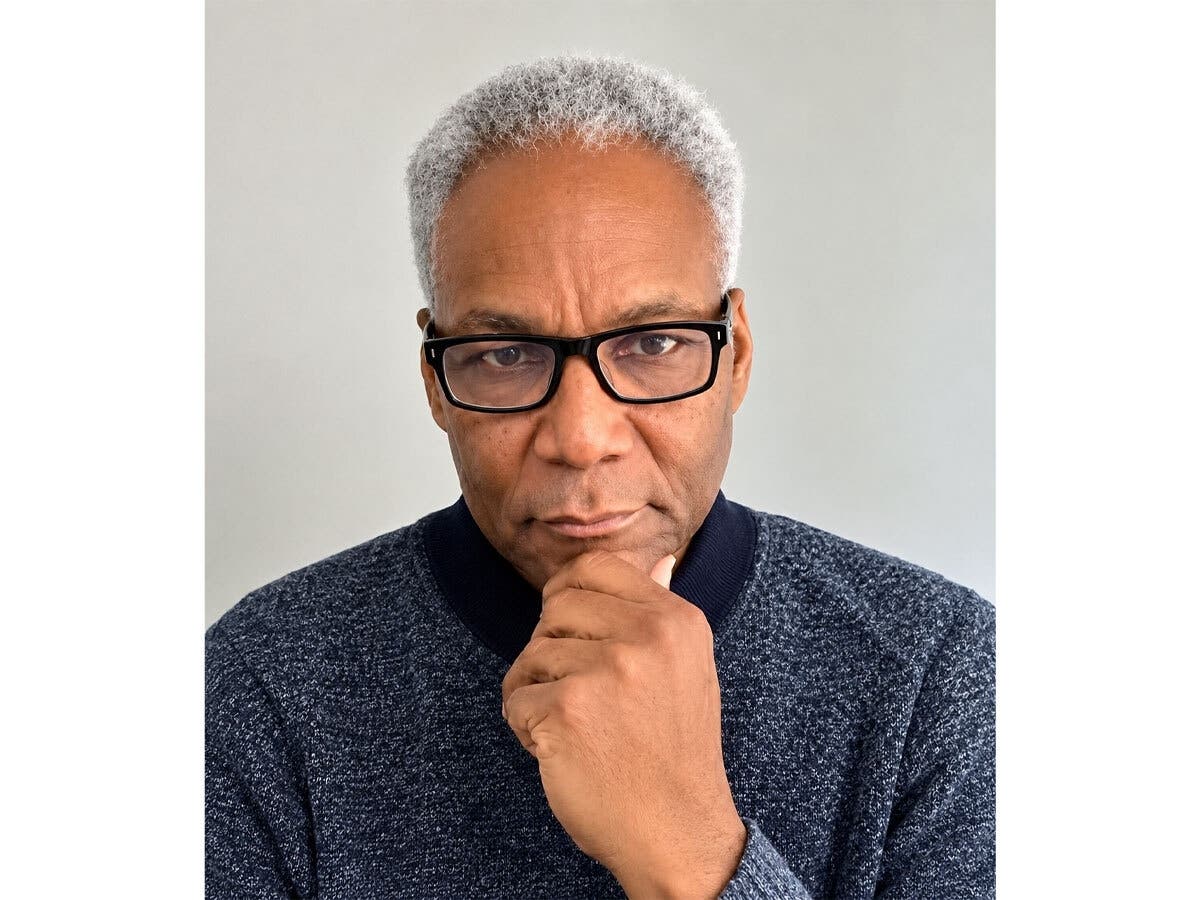
MERCER COUNTY, NJ —Winston Jordan, 69, of Hopewell Township, is running for New Jersey’s 12th Congressional District as an unaffiliated independent under the ballot slogan “Get Money Out.”
A U.S. Army veteran, Jordan has spent 40 years in technology leadership, including director-level roles and CIO duties, with a focus on cybersecurity, product quality and enterprise infrastructure. He said he has designed, built, relocated and operated large-scale data centers.
Jordan said he accepts no donations from individuals, corporations, PACs or other outside sources. Here's his Q&A with Patch:
Find out what's happening in Princetonfor free with the latest updates from Patch.
Name: Winston Jordan
Party: None
Find out what's happening in Princetonfor free with the latest updates from Patch.
Slogan: Get Money Out
Office sought: U.S. House of Representatives, New Jersey's 12th Congressional District
Age (as of Election Day): 69
Hometown or town of residence: Hopewell Township, NJ
Occupation: Technology executive and systems analyst; U.S. Army veteran
Campaign website: https://winstonforcongress.com
1. Why are you running for Congress, and what in your background shows you can do this job?
Congressional fundraising has become intertwined with legislative power. Members spend hours in party call centers soliciting contributions, and fundraising performance shapes committee assignments and leadership privileges. That is donor capture: wealthy contributors and organized interests finance the parties, leadership enforces caucus discipline, and donor-aligned agendas become law. This is not democracy. It is representation theft. I'm running to end representation theft in NJ-12. Writing laws, directing appropriations, and holding federal agencies accountable is complex systems work. Complex systems work is what I have spent my entire 40-year career doing in tech leadership. I find systemic failures, reconcile complex data, and build reliable systems. In Congress, that means auditing whether federal programs deliver what they were funded to deliver. I am also a U.S. Army veteran (Specialist 4, 1976–1978) who took an oath to support and defend the Constitution.
My first priority is H.R. 415, the Stop Act, which bars officeholders from directly soliciting contributions and shuts down the call centers. I will push to separate committee assignments from fundraising performance, and spend my time on constituent services, oversight, and maximizing federal resources for NJ-12 pilot programs that actually scale to solve problems.
2. What are the biggest differences between you and the other candidates on the ballot?
I am the only nonpartisan, zero-donor candidate in this race. The Democratic, Republican, and Green candidates run under party affiliations and the fundraising organizations that come with them. I run as an unaffiliated independent under the ballot slogan “Get Money Out,” accept no donations, and answer directly to the voters of NJ-12, with no party intermediary. Party politics works like a transactional marketplace: donor capture on one side, whipped votes on the other. Investigative reporting and nonpartisan research show that Congress effectively runs a telemarketing operation, and that access and influence follow the money. In the Citizens United era, corporate special interests and wealthy donor networks pour their capital into national party fundraising organizations. In return, party leadership uses the whip to enforce discipline on the House floor. That pressure pushes members to vote for special-interest carve-outs, infrastructure subsidies, and industry deregulation regardless of what their constituents need. This system compromises independent representation. A member who breaks ranks can lose committee privileges and access to institutional resources, or face a primary challenger the party funds. Tracking the money is hard. Donors give to party committees and leadership PACs, not to the member, so their names appear on the party’s report, not the member’s. Federal earmarking rules cover only donations designated for a named candidate, so a party can credit a member for money it never transfers. Leadership effectively keeps a second set of books: an informal tally of who raised what and who gets rewarded for it. That gives party-affiliated representatives every incentive to serve the donor networks behind their leadership. That independence carries into how I will govern. Because I accept no donations, donors have no hold on me, and party whips have far less. I will keep my legislative priorities and floor votes free of party organizations, donor networks, and national agendas that don’t benefit NJ-12. I will judge every bill, appropriation, and regulation by its constitutional merits, the evidence, and its consequences for our district. To dismantle this circuit, I will champion H.R. 415, the Stop Act, to end congressional call time and prohibit federal officeholders from personally soliciting campaign cash. My campaign is financed entirely from my personal savings, with no donations at all. In office, I will keep that zero-donor commitment and spend my time on constituent services, oversight, appropriations, and measurable results for NJ-12. Democracy belongs to the families of South Brunswick and NJ-12, not to the highest bidder. By proving you can run a campaign on personal integrity and zero donor obligations, we can begin building a government that is truly of, by, and for the people.
3.Taxes and electric bills are among the top concerns for New Jersey voters. What can a member of Congress realistically do to lower them?
Congress controls federal appropriations and taxation, and I would use both to fund district pilots that deliver measurable relief to NJ-12.
- Electric Bills: A fully federally funded clean-energy pilot for NJ-12: residential and community solar, geothermal, and municipal battery storage. Federal appropriations cover installation and infrastructure, with the goal of driving household electricity costs toward zero and protecting ratepayers from commercial infrastructure costs like data centers.
- Property Taxes: A fully federally funded public education NJ-12 pilot covering pre-K through four years of community college. Federal appropriations would replace 100 percent of local property-tax revenue for public education, removing the school levy from municipal bills. Since school budgets are the majority of local levies in our district, this cuts overall property tax bills while preserving school quality, teacher pay, and facilities.
- Federal Tax Policy: I support ending preferential tax treatment for the wealthiest 1 percent and corporate conglomerates: reforming taxation of extreme wealth, closing corporate loopholes, and ensuring profitable corporations pay their fair share.
- SALT Deduction: Repeal the cap immediately and permanently. The 2025 law raised it to $40,000 but phases down for higher earners and snaps back to $10,000 in 2030, a temporary patch rather than a fix. New Jersey sends far more to Washington than it gets back, and the cap double-taxes income already paid in state and local taxes. Restoring the full deduction keeps hard-earned money in our district.
- Social Security: Lift the payroll tax cap on earnings over $400,000, with an explicit exemption for income between $200,000 and $400,000. This brings in substantial new revenue from the highest earners to guarantee the program's future, without raising taxes.
- Funding and Accountability: Progressive revenue reforms, taxing extreme wealth and closing corporate loopholes, fund these NJ-12 pilots. Each will have published budgets, implementation milestones, independent evaluation, and transparent reporting.
4. A large data center is being built in South Brunswick, and residents have raised concerns about air pollution, water use and electric costs. Should Congress pause, ban or regulate data centers? What would you do?
Congress should strictly regulate data centers, investigate the circular financing behind this construction boom, and pause permits, loan guarantees, and subsidies for projects that cannot demonstrate verifiable economic viability. The American approach to artificial intelligence relies on brute-force computing for global dominance. Input costs for power, water, cooling, hardware, and capital far exceed what the retail market can ever pay for the resulting inference. That makes the U.S. AI business model permanently unprofitable on its own terms. As documented by investigative tech reporter Ed Zitron in "Where’s Your Ed At," the AI compute market suffers from catastrophic customer concentration, with upwards of 70 percent of cloud AI infrastructure revenue originating from just two unprofitable labs: OpenAI and Anthropic. These labs are heavily subsidized by tech giants and venture capital to purchase hardware they cannot afford, which in turn props up hyperscaler growth metrics. Concurrently, foreign competitors - especially China - have built highly efficient architectures that deliver comparable inference at a fraction of the cost. Building massive data centers is how the industry attempts to scale itself into a position of being "too big to fail". Each new facility manufactures the appearance of growth and artificially inflates valuations, creating deep moral hazard: private investors capture the immediate upside while the public absorbs the long-term downside. Physical construction also shifts public attention toward localized zoning fights and NIMBY press coverage, deliberately drawing scrutiny away from the core problem of structural obsolescence and the systemic financial risk building underneath it. When this bubble inevitably deflates, the public will be left as investment bag holders, burdened with spiking electric bills, drained aquifers, polluted air, and stranded real estate.
For South Brunswick and New Jersey, I will champion a federal Digital Infrastructure Accountability Act:
- Grid and Power Costs: Developers must pay 100 percent of their substations, interconnection lines, and transmission upgrades upfront. Residential ratepayers must be legally shielded from subsidizing commercial tech power.
- Water Safeguards: Mandate closed-loop cooling and strict public metering to protect municipal drinking water aquifers from depletion.
- Air Standards: Enforce stringent emissions caps and continuous, transparent monitoring on large-scale commercial diesel backup generators.
- Financial Assurances: Require developers to post upfront decommissioning bonds so local taxpayers are never left paying to remediate or demolish abandoned facilities.
- Financing Disclosure: Ban hidden off-balance-sheet data center debt. Require full public disclosure of capital structures, circular financing arrangements, cloud-credit swaps, and investor loss-recovery mechanisms before any federal approvals are granted.
5. After recent federal changes to Medicaid funding, what is your plan for health care costs?
Cuts to federal health care support increase pressure on patients, hospitals, state budgets, and working families. When people lose coverage, they delay treatment until conditions become emergencies. I propose a Veterans Health Administration Plus Community Care Network NJ-12 pilot for eligible NJ-12 residents to establish a public alternative that removes corporate profit motives from clinical decisions. This VHA+/CCN model explicitly gets ahead of corporate vertical healthcare integrations - such as Cigna, CVS/Aetna, and UnitedHealth/Optum. These predatory consolidated structures mandate that front-line physicians and healthcare decision-makers report directly to insurance company profit models. By utilizing existing public infrastructure, the VHA+/CCN pilot bypasses these corporate gatekeepers entirely. The VHA already operates hospitals, clinics, electronic health records, and a large network of community providers. Federal law already provides mechanisms for interagency health care arrangements. A civilian NJ-12 pilot would use this existing infrastructure to expand access without point-of-service charges.
Four core elements:
- Dedicated Funding: Congress appropriates funds specifically for civilian participants, with transparent eligibility criteria and strict financial oversight.
- Expanded Access: Participating residents receive care through VHA facilities where capacity permits. If the pilot cannot fulfill an appointment within the statutory 20-day wait time or 30-minute drive time standard, participants are immediately eligible to receive care through the authorized VA Community Care Network (CCN) of local providers.
- Veteran Priority: Veterans' existing entitlements, clinical priorities, and specialized services remain fully protected. Civilian services require separate funding and dedicated capacity safeguards.
- Measurable Outcomes: Transparent public reporting on waiting times, preventive care access, clinical quality, patient outcomes, and per-person costs.
6. Many young families say they can't afford to buy or rent in Central Jersey. If elected, what would you do to help people in their 20s and 30s stay in the district, and where do you stand on building more housing?
Young families and working adults in their twenties and thirties face an affordability crisis driven by stagnant wages and a severe housing shortage. Keeping the next generation in NJ-12 means addressing purchasing power, new construction, and neighborhood preservation at the same time.
- Guaranteed income floor: I will champion a federal NJ-12 pilot establishing a $50,000 guaranteed income floor. A solid economic baseline gives young families immediate stability, the ability to qualify for leases and mortgages, and the security to build roots locally.
- Housing supply: The current crisis is intensified by a system of manufactured scarcity, where institutional land hoarders, private equity firms, and restrictive local regulations artificially choke the housing supply to drive up asset valuations and lock working families into permanent rent tenancy. I stand for a comprehensive surge in supply using modern construction methods alongside targeted rehabilitation.
- Rehabilitating older housing: Dedicated, fully funded HUD capital grants to restore, modernize, and weatherize existing housing in Trenton, Plainfield and established township neighborhoods.
- Non-profit community partnerships: Scale up localized home building by establishing a federal funding framework with established affordable housing non-profits like Habitat for Humanity. Providing federal land transfers and direct material grants to these organizations accelerates the deployment of community-driven housing pipelines, utilizing volunteer and sweat-equity models to lower final acquisition costs for lower-income families.
- Modern prefabrication and construction: Deploy direct federal capital grants to fully fund and accelerate advanced architectural methods including modular housing, 3D-printed homes, mass timber, and modern tiny homes. These modern prefabrications bypass traditional land-use bottlenecks, drastically cut build times, reduce material waste, and lower capital costs for first-time buyers.
- Flexible living formats: Expand federal incentives for co-housing, micro-apartments, community land trusts, and pre-approved accessory dwelling units that let multigenerational families build wealth directly on their own property.
- Adaptive reuse: Convert obsolete office parks and vacant commercial corridors along Route 1, Route 18, and Route 27 into vibrant, mixed-use residential villages.
- Transit-connected development: Build walkable starter homes, duplexes, and townhomes around commuter rail hubs in Trenton, Princeton Junction and Plainfield.
- Protecting neighborhoods from speculation: Enact strict federal tax rules to prevent Wall Street private-equity funds from buying up single-family housing inventory, ensuring local homes remain available to resident owner-occupants.
7. Confidence in elections is a national issue, with NJ being in the news for voter registration blunder. What would you do to instill voters' trust in the results?
Voter confidence requires accurate voter rolls, secure infrastructure, and verifiable results. As a career systems analyst, I see recent New Jersey Motor Vehicle Commission registration errors as a predictable systems failure. Congress enacted the National Voter Registration Act (the Motor Voter law) in 1993. It was designed for a world of paper files and batch processing and has serious technological gaps. When automated motor vehicle systems transmit data through legacy database channels without modern cryptographic verification, record synchronization errors are inevitable. Under the Constitution, states hold primary authority over the times, places, and manner of elections. Federal jurisdiction exists to guarantee that federal contests meet baseline standards for security, data accuracy, and civil rights. Trust is restored when federal technical standards support state election administration while respecting state control.
Five concrete federal priorities:
- Modernize the National Voter Registration Act via Blockchain Technology: Overhaul the 33-year-old statute to mandate modern cryptographic data architecture, specifically utilizing blockchain technology to build tamper-proof distributed ledgers for data exchanges between state motor vehicle commissions and election boards. Bypassing vulnerable centralized servers, a decentralized ledger eliminates central attack surfaces, prevents unauthorized alterations, provides real-time data reconciliation, and creates a permanent, chronologically immutable audit trail for every single registration update.
- Depoliticize mail-in ballot delivery at the USPS: Insulate the United States Postal Service from partisan manipulation by establishing independent operational standards dedicated to election mail. I will champion legislation creating a direct, fast-track pipeline coordinated between the USPS Inspector General and the Department of Justice (DOJ).
- Auditable hand-marked paper ballots: Every jurisdiction conducting federal elections must use voter-verified, hand-marked paper ballots as the official ballot of record, with accessible ballot-marking devices for voters with disabilities. A physical paper trail is an essential safeguard against digital tampering.
- Fund mandatory risk-limiting audits: Direct, fully funded federal capital grants for states to run post-election risk-limiting audits that verify paper ballots before certification and prove mathematically that tallies match cast ballots.
- Coordinate federal technical assistance: Deliver cybersecurity guidance through the Election Assistance Commission and NIST so local clerks and state election directors have the tools to safeguard voting infrastructure without federal overreach into state operations.
8. How is your campaign funded, and what would you change about money in politics?
My campaign is funded entirely from my personal savings. Total spending remains in the hundreds of dollars, below $5,000, and I accept no donations. I am building a campaign that answers directly to the voters of NJ-12. Congress operates within an institutional fundraising system that compromises independent representation. Research by Issue One documents the pressure on members to spend hours each day soliciting contributions through party call-time operations. Those contributions flow to party organizations, which also wield influence over committee assignments, leadership positions, and legislative priorities. Expecting party leadership to voluntarily surrender this source of power is unrealistic. The practical remedy is to elect zero-donor candidates who enter office owing no one.
Four reforms I will champion:
- End fundraising-based allocation of committee seats. Committee assignments, chairmanships, and leadership roles should be based on expertise, district representation, and the public interest. I support rules or legislation prohibiting party leadership from tying assignments or institutional privileges to fundraising quotas or party dues.
- Pass the Stop Act. H.R. 415, introduced by Representative Brendan Boyle, prohibits federal officeholders from directly soliciting political contributions. It would end congressional call time by removing officeholders from direct solicitation, freeing them to focus on constituent services, legislative work, and oversight.
- Stop the two sets of books. Party committees report their receipts and expenditures to the FEC. Separately, party leadership can keep informal tallies of members’ fundraising and use them to award committee seats and leadership roles. Because money is fungible, a party committee can credit a member for contributions that never pass through that member’s campaign account, and the credit may leave no public record. The Stop Act addresses this by removing officeholders from the direct solicitation that feeds the tally, which reduces both the incentive and the opportunity for fundraising to shape representation.
- Close conduit reporting gaps and strengthen enforcement. Tighten the regulatory standards governing the direction and control of contributions under 11 C.F.R. § 110.6.
9. Prices at the grocery store, the gas pump and the utility meter are still a worry for many families. What would you do in Congress to bring them down, and what is your position on tariffs?
Central Jersey working families face severe economic strain from a convergence of global and domestic forces: escalating war in the Middle East driving energy shocks, Federal Reserve monetary policies struggling to contain structural inflation, corporate market concentration, speculative development, and runaway utility charges. Lowering grocery bills and securing our food supply requires a district-first approach that defends local agriculture alongside national market and monetary reforms. Federal farm policy and the Farm Bill heavily favor massive Midwestern commodity operations and corporate factory farms, while small, diversified family farms across Mercer, Middlesex, and Somerset counties are starved of capital and squeezed out of local markets.
Five structural actions:
- Protect and revitalize local family farms: Reallocate federal agricultural funding directly to regional family farms in Mercer, Middlesex, and Somerset counties. Provide direct federal capital grants to fully fund cold storage, local processing, and regional food hubs so growers can sell directly to schools, hospitals, and farmers markets. Defend productive farmland against speculative warehouse and data center sprawl.
- Dismantle monopoly pricing power in food distribution: Four multinational conglomerates control over eighty percent of meat processing and dominate regional distribution. They inflate grocery prices while underpaying independent growers, using general inflation as a pretext for corporate profiteering. I will champion federal legislation to lower the legal threshold for breaking up corporate monopolies, use the congressional appropriations process to fully fund the Antitrust Divisions of the DOJ and FTC, and leverage committee oversight to ensure executive agencies aggressively penalize anti-competitive price coordination.
- Reclaim Article I authority against the Imperial Presidency, unilateral tariffs, and unauthorized war: Article I, Section 8 of the Constitution explicitly assigns the power to levy tariffs, regulate foreign commerce, and declare war exclusively to Congress. Congress has engaged in a dangerous, bipartisan abdication of these core constitutional responsibilities, ceding near-absolute authority to the executive branch. This continuous transfer of power fuels the unconstitutional "Imperial Presidency" - a hyper-centralized structure codified in authoritarian blueprints like Project 2025, which utilize a radical "Unitary Executive" theory to strip away congressional checks and balances. Unilateral executive tariffs function as an arbitrary, undemocratic national sales tax that raises the cost of groceries, tools, auto parts, and farm equipment without a single vote in Congress. Concurrently, the executive branch routinely bypasses the War Powers Resolution to deploy American forces and engage in military operations overseas without explicit congressional authorization. I will vote to strip the executive branch of unilateral tariff authority, reject the Unitary Executive framework, and demand that any foreign trade decision or military deployment undergo transparent congressional legislation, full oversight, and mandatory floor debate.
- Lower utility bills and protect the gas pump from energy shocks: Ongoing, unauthorized military entanglements and war in the Middle East expose American consumers to volatile global oil cartels, instantly driving up prices at the local gas pump and utility meter. Congress must insulate consumers by building domestic energy resilience. Locally, regional utilities are compounding this by shifting the infrastructure costs of commercial AI data centers onto residential meters. I will introduce legislation prohibiting utilities from charging residential customers for commercial data center grid upgrades, and I support direct federal funding for residential solar, geothermal, and community battery storage across NJ-12.
- Establish a $50,000 income floor NJ-12 pilot to counter Federal Reserve policy: The Federal Reserve routinely combats inflation by raising interest rates - a blunt macroeconomic tool that intentionally slows the economy and punishes working-class families by depressing wages. Lowering prices requires strengthening household purchasing power. I support a federal income floor NJ-12 pilot to guarantee that full-time workers and working households maintain baseline economic security when central bank policies squeeze consumer liquidity.
10. What is the one local infrastructure or quality-of-life problem in your district that a member of Congress could help fix, such as transit, flood protection or roads?
While the question frames this as "choose one", the reality is that NJ-12 faces multiple urgent, systemic infrastructure crises that demand immediate, parallel action. We cannot delay road safety to fix our grid, nor can we abandon flood mitigation to pave our highways. However, for the sake of prioritizing the single most acute threat to public health, my primary infrastructure priority is safe and reliable drinking water, centered on the full remediation of Trenton Water Works. They serves roughly 225,000 residents across Mercer County - including Trenton, Ewing, and Hopewell in NJ-12, plus Hamilton and Lawrence in NJ-3. Decades of deferred maintenance and compliance failures have exposed families to contaminated water and more than 20,000 lead service lines needing urgent replacement. Clean drinking water is a non-negotiable human right. Because the utility spans two congressional districts, I will partner directly with the representative of NJ-3 on a coordinated federal effort for all 225,000 residents. Together we will secure 100 percent federal funding for capital remediation, eliminating the burden on local taxpayers and water bills. This effort will be coordinated with the Department of Environmental Protection, local mayors, and community representatives under strict accountability:
- Full lead line elimination and system modernization: Fund the replacement of every lead service line across the impacted customer municipalities of Trenton, Ewing, Hamilton, and Lawrence, and modernize filtration plants, pump stations, and distribution mains to achieve full regulatory compliance.
- Public dashboard accountability: Launch a public online dashboard tracking weekly milestones, pipes replaced, contractor expenditures, and real-time water quality results.
- Local union labor: Infrastructure construction contracts will prioritize local union labor and NJ-12 hiring pipelines.
Running concurrently with this water offensive, I will aggressively pursue the district's other parallel infrastructure needs:
- Commuter traffic and toll relief: Secure direct, 100 percent federal highway grants to synchronize signals and ease gridlock along the Route 1, Route 18, and Route 27 corridors, optimizing throughput at critical I-287 interchanges alongside expanded express bus service.
- Commuter rail and grid modernization: Modernize the Northeast Corridor through Trenton, Princeton Junction, and New Brunswick, and prohibit utility monopolies from passing commercial data center transmission costs onto residential ratepayers.
- Regional flood mitigation: Partner with the U.S. Army Corps of Engineers on flood control, wetland restoration, and voluntary buyouts along the Millstone and Raritan river basins to protect vulnerable neighborhoods from chronic flooding.
Have a correction or news tip? Email sarah.salvadore@patch.com
Get more local news delivered straight to your inbox. Sign up for free Patch newsletters and alerts.