Health & Fitness
Child's Death Confirmed As NJ's First Flu Fatality In 2019
The state Department of Health has offered details on the first death in what has become a widespread flu problem in NJ and nationwide.



A child has died because of the flu, the first fatality caused by the illness in New Jersey this season, state officials say.
The New Jersey Department of Health announced Tuesday that it received notification of a confirmed pediatric flu death.
“I am deeply saddened for the family of this young child, who experienced an unthinkable loss,” said Health Commissioner Shereef Elnahal.
Find out what's happening in Princetonfor free with the latest updates from Patch.
The child, from the central region of the state, died in late December. Citing medical privacy, the department said it will not be releasing additional information.
The number of flu cases in New Jersey are on the rise this year as New Jersey is one of 15 states to report having "high" activity, according to the Centers for Disease Control and Prevention and the state Department of Health.
Find out what's happening in Princetonfor free with the latest updates from Patch.
A dangerous strain that was behind a 2009 pandemic has re-emerged in a big way in New Jersey, according to the state Department of Health (see numbers below).
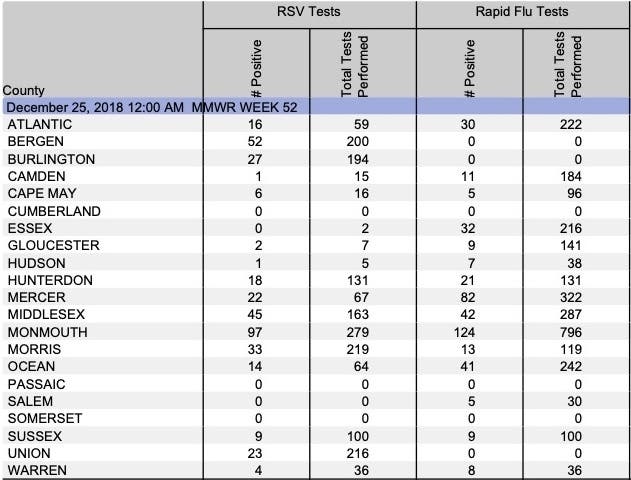
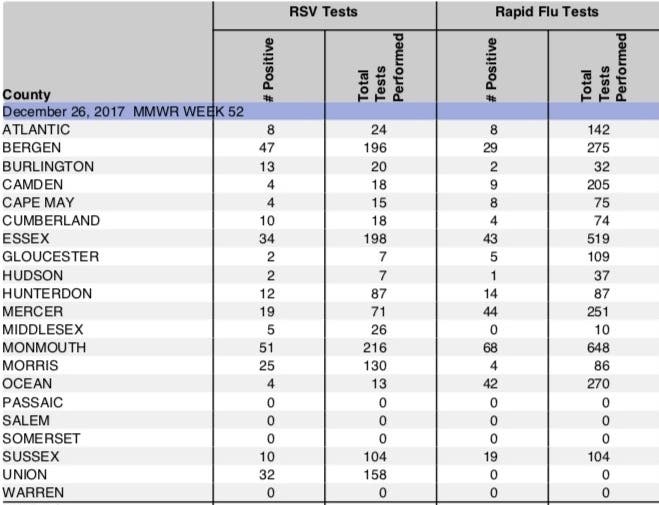
Some counties, such as Atlantic, Mercer Monmouth, have had high numbers of positive rapid flu tests compared to last year based on surveys conducted by the state Department of Health.
This is a developing story. Patch will have more information as it comes in.
It’s important for those who have not yet gotten a flu shot—especially health care workers—to get one, state officials say.
The Department of Health also recommends that people take the necessary precautions during this flu season: Wash or disinfect your hands frequently, cover any coughs and sneezes, stay home and call your health care provider if you are sick (especially with a fever).
Residents can find flu vaccination clinics near them by calling their local health department or by visiting https://www.cdc.gov/flu/freeresources/flu-finder-widget.html. Local health department contact information can be found on this site: www.localhealth.nj.gov
To learn more about flu, please visit https://nj.gov/health/cd/topics/flu.shtml. Flu Information for Parents can be found on the Department’s website.
The statewide flu data, meanwhile, is based on state Department of Health laboratory specimens dating back to the beginning of the season, which officials say was October 2018.
Last year, New Jersey had an especially bad season that was attributed to infections from a flu strain known as H3N2. It responds poorly to vaccinations and is particularly dangerous to young children and older adults over the age of 65.
This year, New Jersey has had a high number of H1N1 virus, otherwise known as the "swine flu."
H1N1 swine flu isn't always severe, but when it's bad, "it's really bad," according to WebMD. Patients hospitalized with pandemic flu have an 11 percent fatality rate, data from California suggested in the publication.
So far, the health department surveys have found at least 2,078 positive flu tests in New Jersey compared to at least 1,207 cases at this time last year. Here is the breakdown:
Dec. 29, 2018:
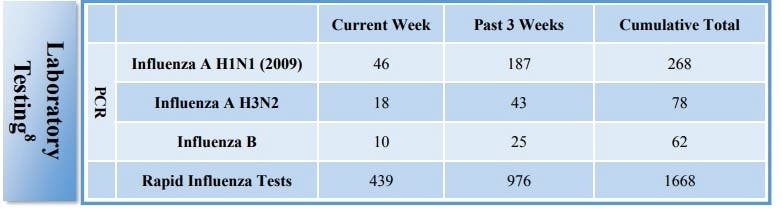
Dec. 30, 2017:

Here are the New Jersey counties with the most and least affected positive rapid flu tests from the health department's surveillance.
As of Dec. 25, 2018:
As of Dec. 26, 2017:
Symptoms of the flu include fever, cough, body aches, headaches and fatigue. The flu virus is spread through the air, from coughing and sneezing, or by touching something that someone with the virus has touched.
You can pass the flu to someone else both before and while you are sick. Adults may be able to infect others beginning one day before symptoms develop and as many as five to seven days after becoming ill, according to the Pennsylvania Department of Health. Some people, especially young children and those with weakened immune systems, may be able to infect others for an even longer time.
To treat the flu, use over-the-counter medications like ibuprofen or cough syrup to relieve symptoms. Rest in bed and drink lots of fluids. If you contact your doctor within 48 hours of onset of symptoms, you may be able to take an antiviral drug that will reduce the severity of symptoms and the length of illness.
Here are some additional tips:
- Stay home if you are sick.
- Avoid touching your face — your mouth, nose, and eyes.
- Wash your hands frequently.
- Avoid others who are sick.
- Cough and sneeze into your sleeve or a tissue.
Patch photo
Get more local news delivered straight to your inbox. Sign up for free Patch newsletters and alerts.